

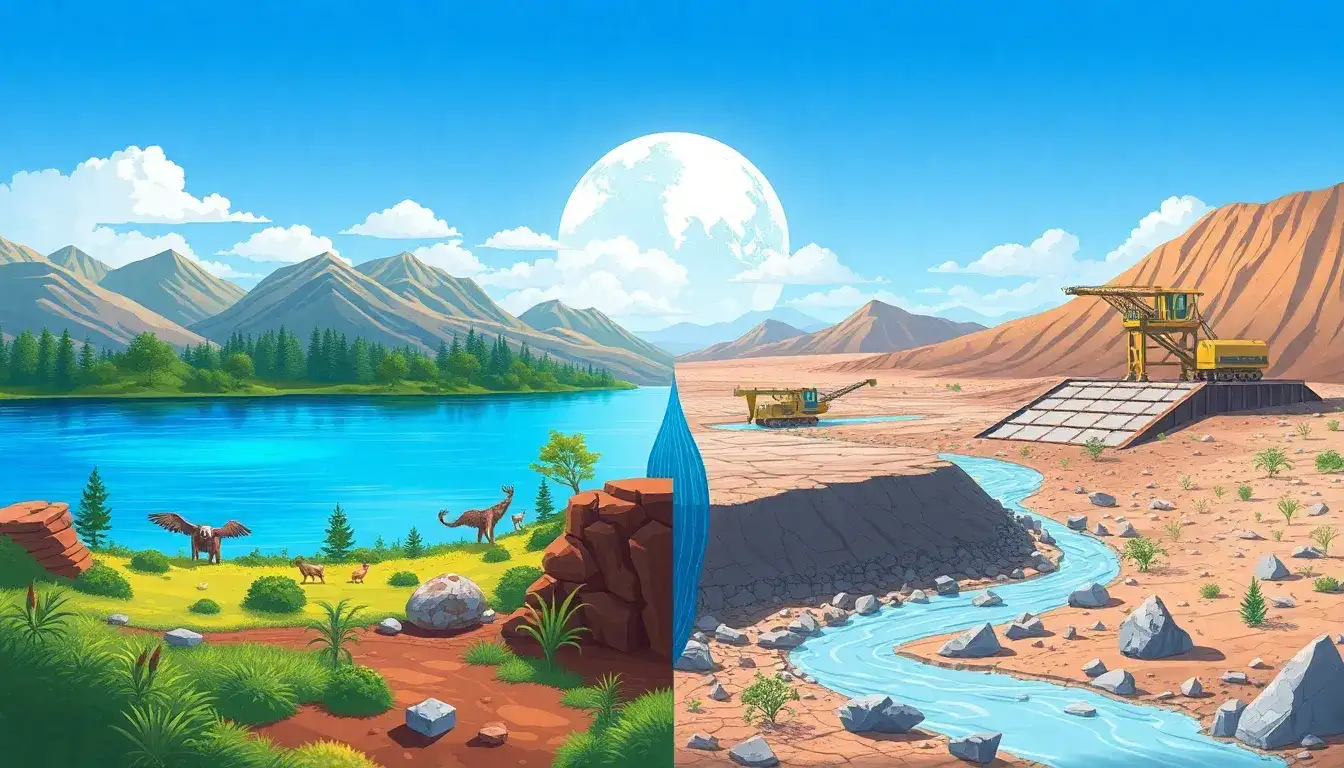
The extraction of lithium has significant impacts on water resources, mainly due to the large volumes of water used and the contamination risks involved.
Water Consumption and Depletion
- Lithium extraction, especially from brine deposits in areas like the “Lithium Triangle” in the Andes, is highly water-intensive. Each tonne of lithium requires around 2 million liters of water to evaporate during extraction processes.
- This vast water use can drastically lower local water tables, reducing the availability of fresh groundwater for surrounding ecosystems and communities.
- In Chile’s Salar de Atacama, lithium and copper mining together have reportedly consumed over 65% of local water supplies, severely affecting Indigenous farming communities in an already water-scarce region.
- Over-extraction of brine water can cause fresh water to flow into saltwater aquifers, leading to salinization of fresh water sources and depletion of both surface and groundwater.
Water Contamination
- Lithium extraction commonly involves chemicals to separate lithium from other elements. Improper management of these chemicals can contaminate nearby water bodies, harming aquatic life and polluting water available to local populations.
- Toxic waste from lithium operations has been reported to contaminate surface and groundwater used for drinking, livestock, and agriculture in affected areas.
- The drying up of wetlands and surface water bodies due to water extraction also impacts biodiversity and ecosystem health.
Emerging Solutions
- New technologies like Direct Lithium Extraction (DLE) aim to reduce water use and contamination by extracting lithium directly from brine without evaporation ponds, thus lowering water withdrawal and reducing toxic waste leaks.
- Microbial technologies are being developed to treat mining wastewater for reuse onsite, helping to lower overall water consumption and limit contamination risks.
In summary, lithium extraction exerts heavy pressure on local water resources by consuming vast amounts of water, lowering water tables, and causing water quality deterioration through chemical contamination and salinization. These impacts threaten ecosystems, biodiversity, and the livelihoods of local communities dependent on freshwater. However, emerging extraction technologies hold promise to mitigate some of these adverse water impacts.
This tension highlights the need to balance lithium’s role in clean energy transitions with sustainable water management in mining regions.
Original article by NenPower, If reposted, please credit the source: https://nenpower.com/blog/how-does-the-extraction-of-lithium-impact-water-resources/

