

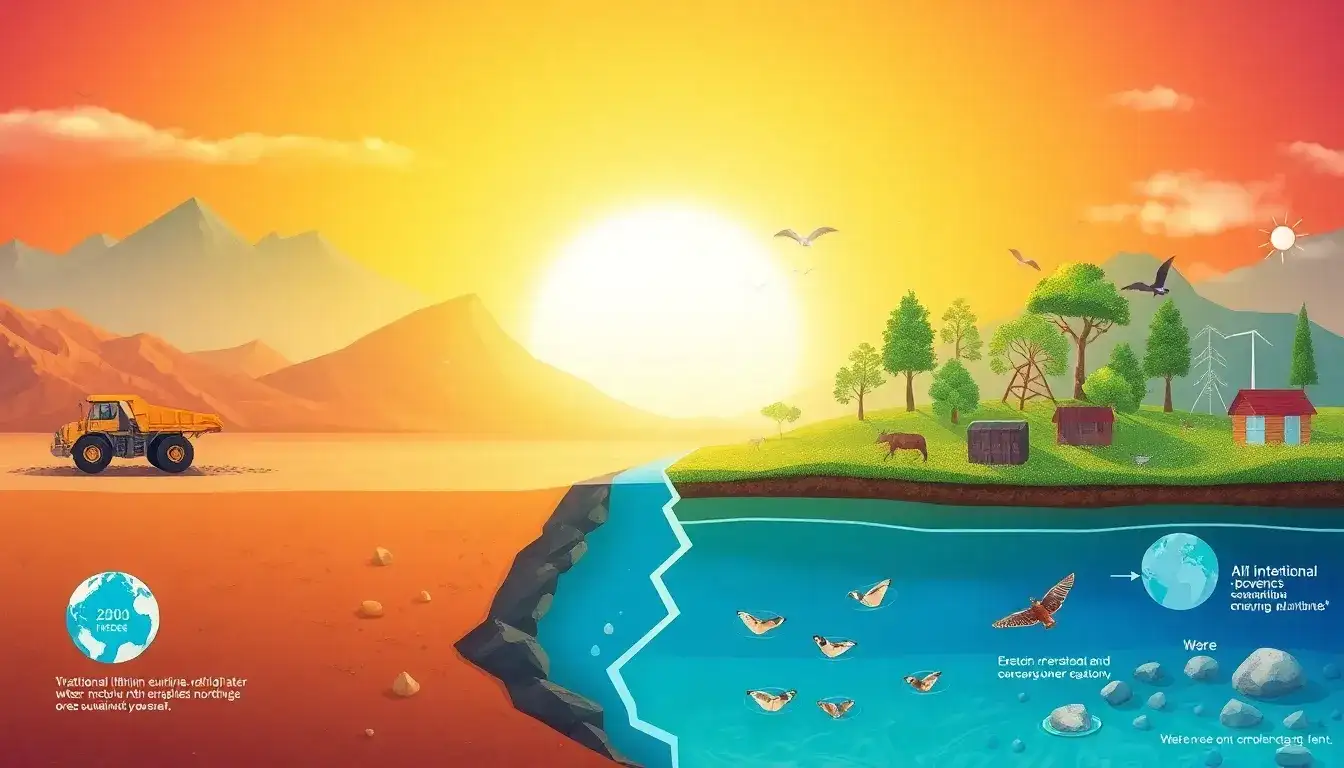
Lithium Mining Methods and Their Environmental Impacts
Brine Mining
- Method: This involves extracting lithium from underground saltwater reserves. Water is pumped to the surface, evaporated, and lithium is extracted from the resulting brine.
- Environmental Impacts: High water consumption (about 500,000 gallons per tonne of lithium), potential water pollution, and habitat disruption are significant concerns. Brine mining in regions like Chile’s Salar de Atacama has consumed up to 65% of the local water supply, exacerbating water scarcity issues.
Hard Rock Mining
- Method: This method involves extracting lithium from hard rock ore using open-pit or underground mining techniques.
- Environmental Impacts: Hard rock mining leads to deforestation, soil erosion, and habitat destruction. It requires large land areas (about 115 acres per 1,000 metric tons of lithium carbonate equivalent), contributing to biodiversity loss and ecological damage.
Direct Lithium Extraction (DLE)
- Method: This is an innovative method aimed at reducing water consumption by directly extracting lithium from brine without the need for large-scale evaporation ponds.
- Environmental Impacts: DLE significantly lowers water usage—up to 96% compared to traditional methods—reducing the environmental footprint and potential for water pollution.
Comparative Environmental Impact
| Method | Water Consumption | CO2 Emissions | Land Degradation | Energy Consumption |
|---|---|---|---|---|
| Brine Mining | High | Moderate | Moderate | High |
| Hard Rock Mining | Lower | Moderate | High | High |
| DLE | Very Low | Lower | Minimal | Lower |
Overall, while all lithium extraction methods have environmental impacts, DLE and other advanced technologies offer promising reductions in water and energy consumption, making them more sustainable than traditional methods.
Recommendations for Sustainability
- Adoption of Sustainable Technologies: Transitioning to more efficient and environmentally friendly extraction methods like DLE can minimize water usage and reduce environmental damage.
- Regulatory Frameworks: Implementing strict environmental regulations can ensure that lithium extraction complies with sustainable standards.
- Recycling and Alternatives: Exploring battery recycling and alternative materials can reduce the demand for mined lithium and mitigate environmental impacts over time.
Original article by NenPower, If reposted, please credit the source: https://nenpower.com/blog/how-does-the-extraction-of-lithium-from-different-sources-compare-in-terms-of-environmental-impact/

