

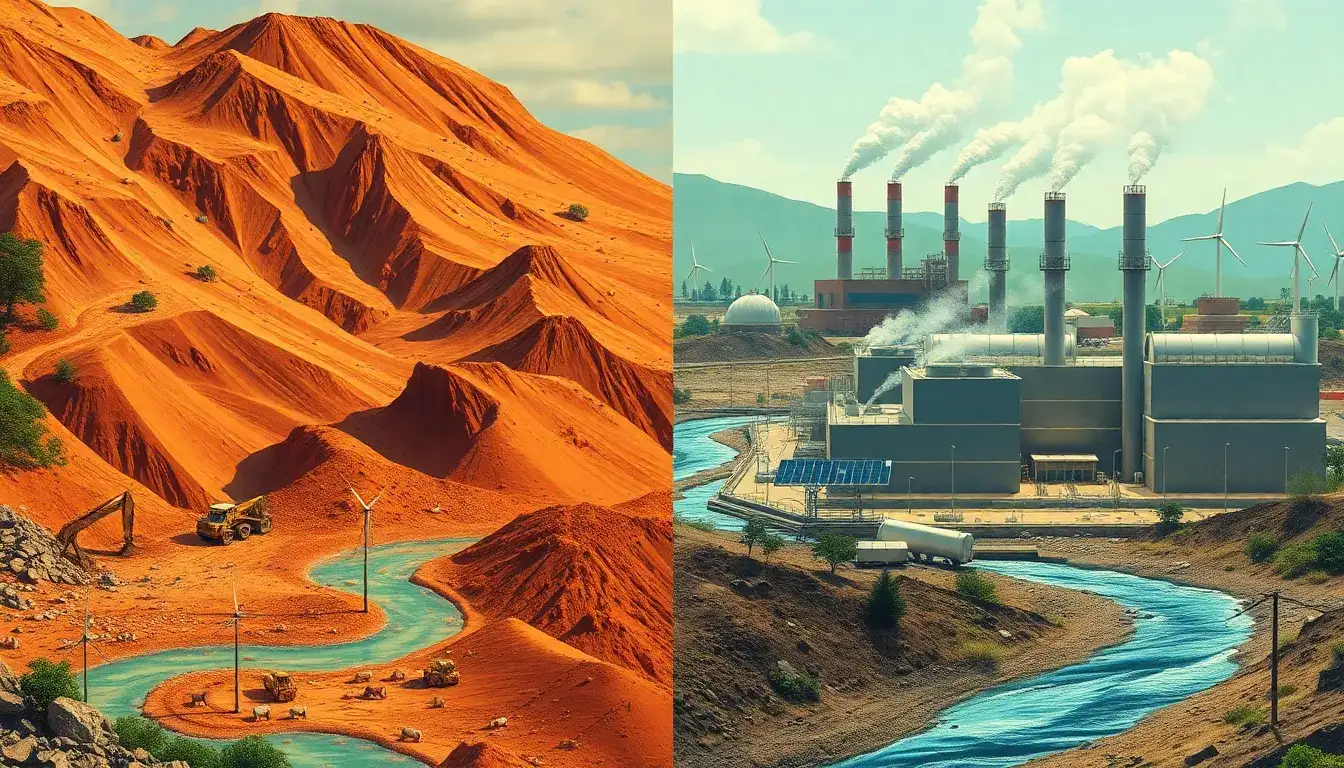
Environmental Impact of Raw Material Extraction
Habitat Destruction and Ecosystem Disruption
Mining for key EV materials such as lithium, cobalt, nickel, and rare earth metals often leads to habitat destruction and ecosystem disturbance. Land clearance for mining can displace local flora and fauna, and in some cases, indigenous communities are also forced to relocate due to land use change, especially notable in copper mining operations.
Water Consumption and Pollution
The extraction process is typically water-intensive, which strains local water resources and can cause water pollution. Toxic fumes and chemicals used or released during mining may contaminate water bodies and soil, impacting local wildlife and communities.
Greenhouse Gas Emissions
Mining and processing require substantial energy, often sourced from fossil fuels, particularly coal, making the process carbon-intensive. For example, China’s dominance in EV battery production involves high greenhouse gas emissions partly because 60% of its electricity is coal-based. The production of lithium-ion batteries emits more CO2 than producing gasoline vehicles of similar size, largely due to raw material extraction and processing.
Environmental Impact of Processing Raw Materials
Energy-Intensive Manufacturing Processes
Refining minerals and manufacturing battery cells consume significant energy, generating high levels of greenhouse gases. The manufacture of one electric vehicle battery can release several tonnes of CO2, although over time EVs offset this by using energy more efficiently than combustion engine vehicles.
Toxic Byproducts and Waste
Battery manufacturing can produce toxic byproducts and liquid waste if not properly managed. However, innovations in recycling technologies are reducing these impacts by cutting energy use, water consumption, and harmful emissions compared to new material refining.
Mitigation and Sustainable Practices
Efforts to mitigate environmental damage include:
- Developing more sustainable mining practices that minimize habitat impact and protect water sources.
- Increasing recycling of EV batteries to reduce the need for new mining, which can cut water use and emissions by over 60% compared to raw material processing.
- Transitioning manufacturing to cleaner energy sources and improving resource efficiency to reduce overall environmental footprint.
In summary, while the extraction and processing of raw materials for EVs present significant environmental challenges such as habitat damage, water pollution, and greenhouse gas emissions, advancements in sustainable mining, recycling, and cleaner manufacturing can help reduce these impacts. EVs still offer overall environmental advantages over traditional vehicles due to their greater energy efficiency during use, but addressing the upstream impacts remains crucial.
Original article by NenPower, If reposted, please credit the source: https://nenpower.com/blog/how-does-the-extraction-and-processing-of-raw-materials-for-evs-affect-the-environment/

