

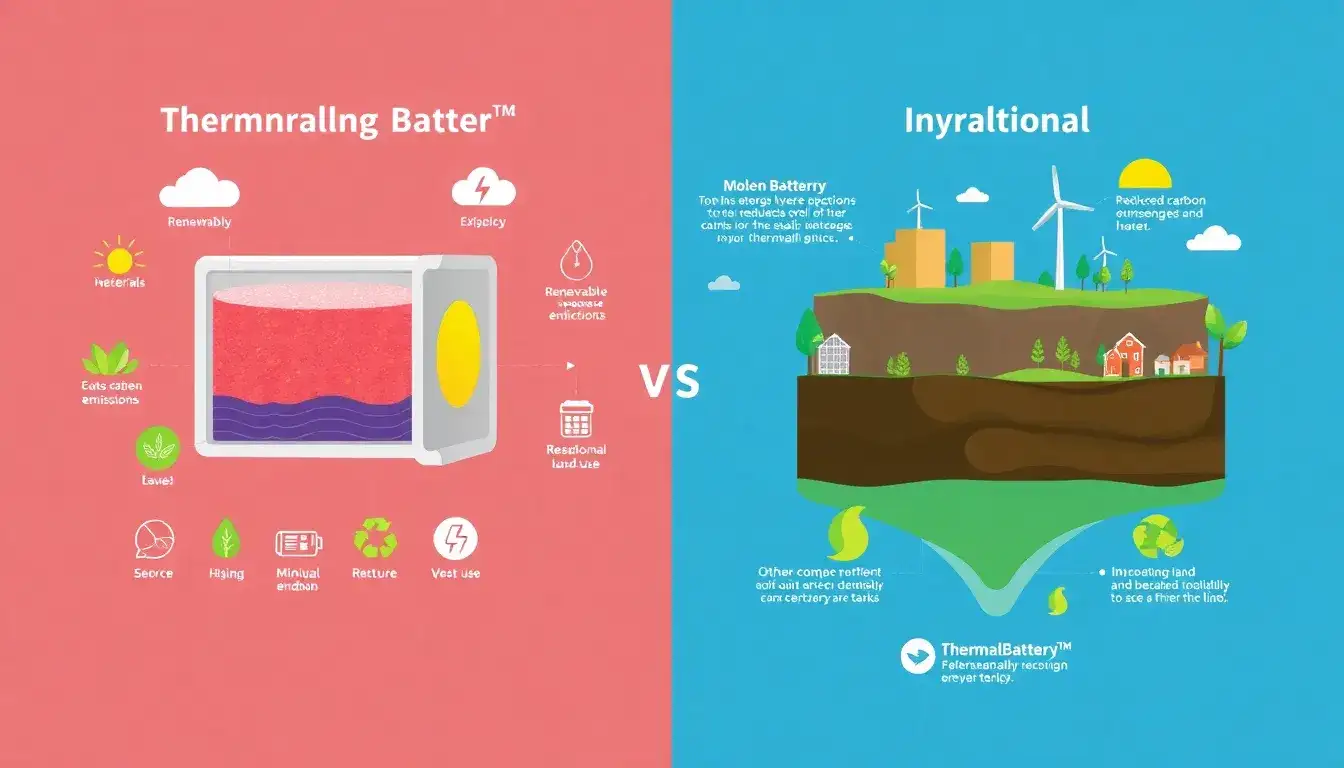
To compare the environmental impact of ThermalBattery™ with other thermal energy storage technologies, we need to consider several factors such as material usage, energy efficiency, waste production, and integration with renewable energy sources.
ThermalBattery™
- Advantages:
- Environmental Sustainability: Thermal batteries can store excess renewable energy, which helps in reducing emissions and reliance on fossil fuels.
- Efficiency: By supporting a high renewables grid, they can mitigate the need for fossil fuels and cut industrial greenhouse gas emissions.
- Material Usage: Information on the specific materials used in ThermalBattery™ is not provided, but generally, thermal batteries aim to use environmentally friendly materials.
Comparison with Other Thermal Energy Storage Technologies
Molten Salt Systems
- Advantages: These systems are highly efficient, store energy well over extended periods, and are often used in concentrated solar power plants. They can be designed to minimize environmental impact by using non-toxic materials like salt.
- Disadvantages: High initial costs, and the large land area required can have environmental implications.
Phase Change Materials (PCMs)
- Advantages: PCMs are versatile, can be highly efficient, and use a variety of materials. They can be designed to be environmentally friendly and have low toxicity.
- Disadvantages: Some materials may have higher environmental impacts during production, and they can be less efficient than molten salt systems.
Sensible Heat Storage Systems
- Advantages: These systems are simpler and often use water or other environmentally benign materials. They are cost-effective but may require large volumes of material.
- Disadvantages: Energy density is typically lower than other storage methods, which may result in larger overall environmental footprints due to the scale of systems needed.
Conclusion
ThermalBattery™ appears to align with broader trends in the industry toward using renewable energy and reducing emissions, similar to other advanced thermal energy storage technologies. However, a detailed comparison requires specific information on materials and production processes for each technology. Generally, thermal batteries and similar technologies offer promising paths toward decarbonization by supporting renewable energy integration and reducing fossil fuel dependency.
Original article by NenPower, If reposted, please credit the source: https://nenpower.com/blog/how-does-the-environmental-impact-of-thermalbattery-compare-to-other-thermal-energy-storage-technologies/

