

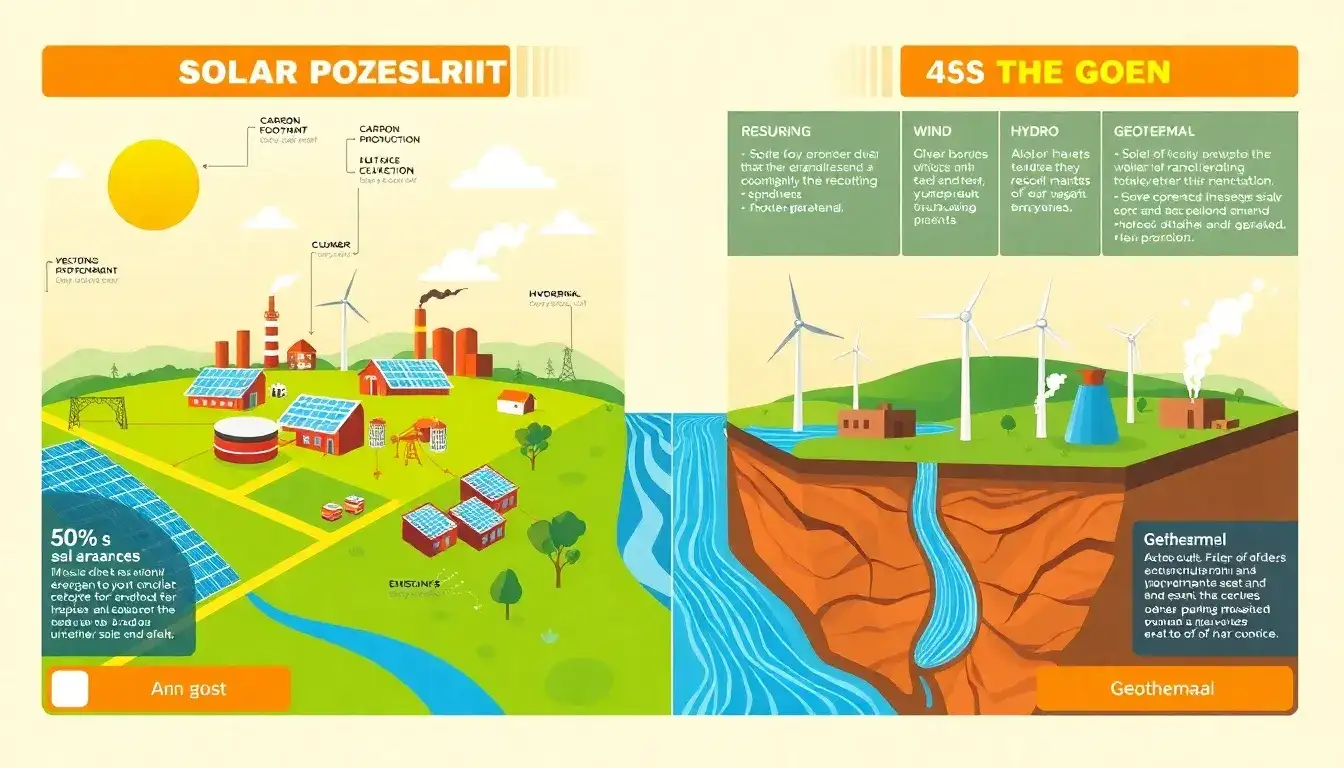
Environmental Impacts of Renewable Energy Sources
1. Solar Energy
- Production Impact: Solar panel production involves the extraction of materials like silicon, silver, and aluminum, which can lead to habitat destruction and greenhouse gas emissions.
- Operation Impact: Once operational, solar panels produce no emissions or pollution.
- End-of-Life Considerations: Solar panels can contain hazardous materials like lead and cadmium, requiring careful disposal and recycling to mitigate environmental risks.
2. Wind Energy
- Production Impact: The production of wind turbines requires metals like steel and aluminum. While this process has environmental implications, it generally has a lower carbon footprint compared to solar panel manufacturing.
- Operation Impact: Wind turbines operate cleanly without emissions but can have visual impacts and affect bird populations.
- End-of-Life Considerations: Wind turbines contain recyclable materials, and there are efforts to improve recycling processes.
3. Hydro Energy
- Production Impact: The construction of dams for hydroelectric power can lead to significant habitat disruption, displacement of communities, and alterations to natural water flows.
- Operation Impact: Hydroelectric power plants operate with minimal emissions or pollution, offering a clean source of energy.
- End-of-Life Considerations: Dams can have long-lasting impacts on ecosystems, but decommissioning and removal are complex and less common than for solar panels.
4. Geothermal Energy
- Production Impact: Geothermal energy involves drilling into the Earth’s crust, which can have localized environmental impacts and risks of induced seismicity.
- Operation Impact: Geothermal plants emit some gases, but the emissions are much lower than those from fossil fuels.
- End-of-Life Considerations: Geothermal systems can be designed to be sustainable over long periods with minimal waste concerns.
Comparison Summary
| Energy Source | Production Impact | Operation Impact | End-of-Life Impact |
|---|---|---|---|
| Solar | Material extraction impacts; greenhouse gas emissions during production. | No emissions during operation. | Hazardous materials require recycling. |
| Wind | Lower carbon footprint in production; some metal usage. | Minimal visual and species impact during operation. | Recyclable materials, improving recycling processes. |
| Hydro | Significant habitat disruption and community impacts. | Minimal emissions during operation. | Long-lasting ecosystem impacts; complex decommissioning. |
| Geothermal | Localized drilling impacts; induced seismicity risks. | Low emissions during operation. | Sustainable with minimal waste concerns. |
In summary, each renewable energy source has unique environmental impacts throughout its lifecycle. Solar energy production has environmental costs associated with material extraction and manufacturing, but it operates cleanly without emissions. Wind energy is generally more environmentally friendly during production but can have operational impacts. Hydro and geothermal energy have significant production impacts but are clean during operation. Overall, renewable energy sources are critical for reducing reliance on fossil fuels and mitigating broader environmental challenges like climate change.
Original article by NenPower, If reposted, please credit the source: https://nenpower.com/blog/how-does-the-environmental-impact-of-solar-panel-production-compare-to-other-renewable-energy-sources/

