

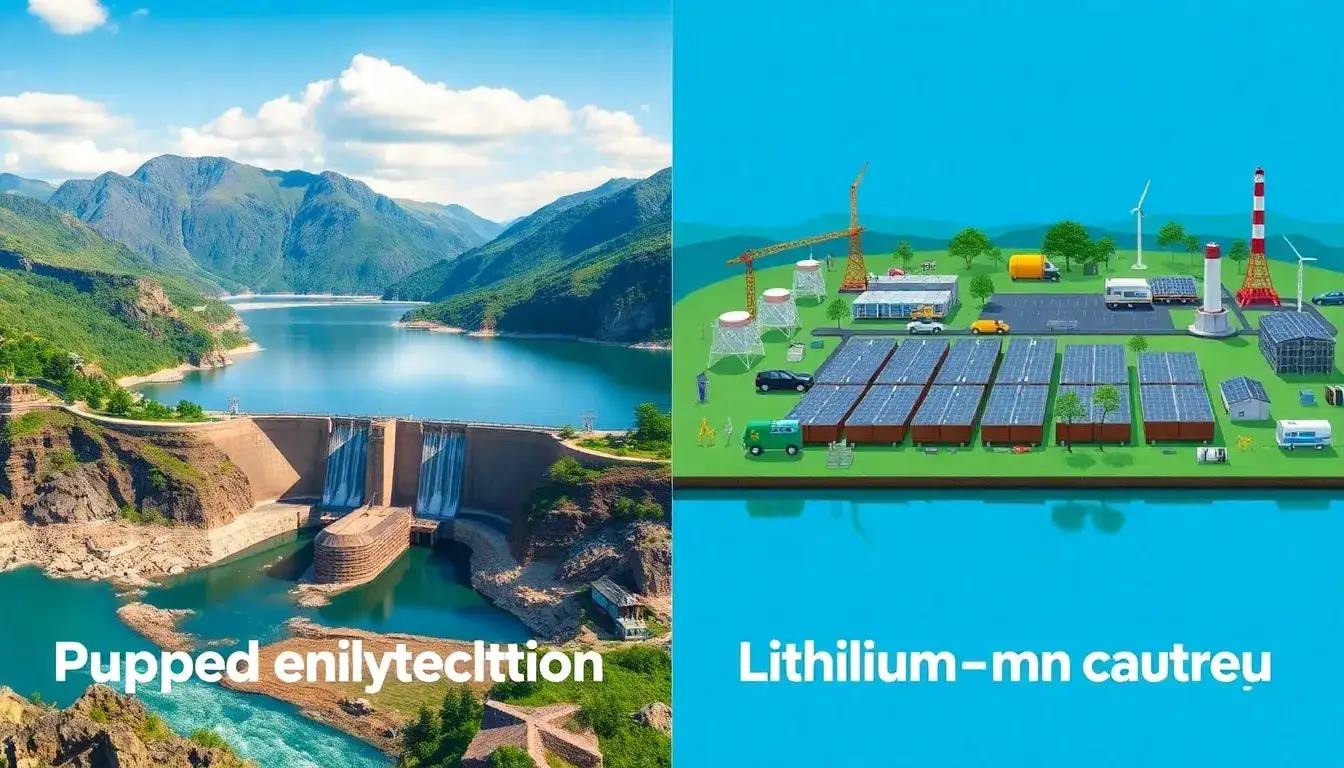
Pumped hydroelectric energy storage (PHES) and lithium-ion batteries are both significant energy storage technologies, but they differ substantially in terms of their environmental impact. Here’s a comparison of the two:
Environmental Impact of Pumped Hydroelectric Energy Storage (PHES)
- Greenhouse Gas Emissions: PHES, particularly closed-loop systems, have been found to have very low greenhouse gas emissions, often considered among the lowest of energy storage technologies.
- Water Usage and Aquatic Impacts: PHES requires large water reservoirs. Closed-loop systems do not directly impact natural water flows but can have complex water rights issues and potential impacts on local ecosystems.
- Material Use: The construction phase involves significant use of materials like concrete and steel, which contribute to environmental burdens.
- Energy Efficiency and Loss: PHES has inherent energy losses during charging and discharging cycles, which can contribute to environmental impact, mainly through the energy mix used during charging.
Environmental Impact of Lithium-Ion Batteries
- Greenhouse Gas Emissions: The production of lithium-ion batteries involves substantial energy use and material extraction, leading to higher greenhouse gas emissions compared to PHES.
- Material Extraction and Waste: Lithium mining, along with other metals like cobalt and nickel, raises concerns about resource depletion, water pollution, and potential human rights issues.
- Recycling and Waste Management: Lithium-ion batteries require effective recycling strategies to mitigate environmental impacts at their end-of-life.
- Energy Efficiency: Lithium-ion batteries generally have higher round-trip efficiency compared to PHES, which means less energy loss during charging and discharging cycles.
Comparison Summary
- Emissions: PHES generally has a lower carbon footprint due to its renewable nature and fewer emissions during operation.
- Material Use and Waste: Lithium-ion batteries involve critical material extraction with significant environmental implications, while PHES uses substantial materials in construction but does not involve ongoing resource extraction like batteries.
- Efficiency and Loss: Lithium-ion batteries tend to have higher efficiency in terms of energy storage and release.
In summary, while both technologies have environmental impacts, PHES is often considered greener in terms of greenhouse gas emissions and potential for long-term sustainability, whereas lithium-ion batteries face challenges related to material extraction and end-of-life management.
References
Since you did not provide specific search results for lithium-ion batteries, some general points were included based on common knowledge about the technology. For further detailed comparison, studies or reports specifically comparing environmental impacts of both technologies would be beneficial.
Note: For lithium-ion batteries, more detailed environmental impact studies would be needed for a comprehensive comparison. General points are based on common knowledge about the technology.
Original article by NenPower, If reposted, please credit the source: https://nenpower.com/blog/how-does-the-environmental-impact-of-pumped-hydroelectric-energy-storage-compare-to-lithium-ion-batteries/

