

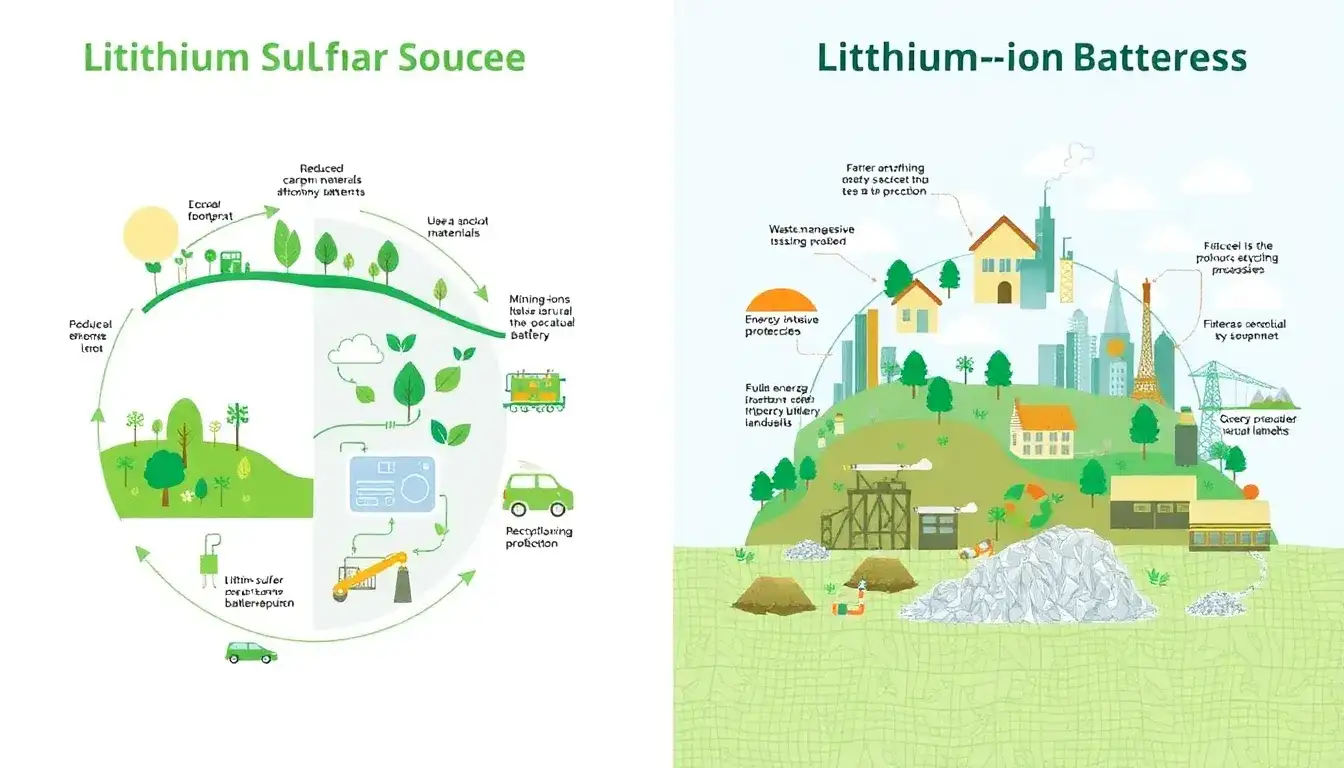
Environmental Impact Comparison: Lithium-Sulfur vs. Lithium-Ion Batteries
Overview
Comparing the environmental impact of lithium-sulfur (Li-S) batteries and lithium-ion (Li-ion) batteries reveals several key differences, particularly in terms of resource usage, toxicity, and potential for recycling.
Lithium-Sulfur Batteries
- Materials and Toxicity: Li-S batteries use sulfur, which is non-toxic and abundant, reducing dependence on rare and toxic metals like cobalt and nickel found in Li-ion batteries. This makes Li-S batteries more environmentally friendly from a material perspective.
- Energy Density: Li-S batteries can achieve higher energy densities than Li-ion batteries, potentially reducing the amount of material needed for battery packs.
- Challenges: While Li-S batteries have a lower environmental impact from materials, they still contain lithium, which contributes to extensive mining impacts, including water usage and habitat destruction. Additionally, current manufacturing processes for Li-S components, such as modifying carbon nanotubes, can be energy-intensive.
Lithium-Ion Batteries
- Materials and Toxicity: Li-ion batteries rely on metals like cobalt, nickel, and lithium. Cobalt mining, in particular, is associated with significant environmental and social issues in regions like the Democratic Republic of Congo.
- Resource Impact and Waste: The extraction of lithium for Li-ion batteries leads to large land degradation and water depletion, notably in places like the Atacama Desert. Moreover, the disposal of Li-ion batteries poses risks due to only about 5% being recycled globally.
- Energy Use and Production Footprint: The production of Li-ion batteries results in higher carbon emissions compared to traditional vehicle batteries and often relies on non-renewable energy sources for manufacturing.
Comparative Environmental Impact
- Life Cycle Assessment: Studies indicate that Li-S batteries can have a lower environmental impact compared to Li-ion batteries when considering factors like energy efficiency and resource usage once they are scaled up and optimized. However, both types of batteries have significant environmental footprints related to lithium mining and the energy used in their production.
- Future Improvements: For Li-S batteries to fully realize their environmental benefits, advancements in recycling methods and sustainable manufacturing processes are necessary to reduce their overall environmental footprint.
Conclusion
Lithium-sulfur batteries offer promising environmental advantages over lithium-ion batteries due to their use of abundant and less toxic materials. However, both battery types face challenges related to lithium mining and energy-intensive manufacturing. As technology evolves, focusing on sustainable production practices and recycling will be crucial for minimizing the environmental impact of both battery types.
Original article by NenPower, If reposted, please credit the source: https://nenpower.com/blog/how-does-the-environmental-impact-of-lithium-sulfur-batteries-compare-to-lithium-ion-batteries/

