

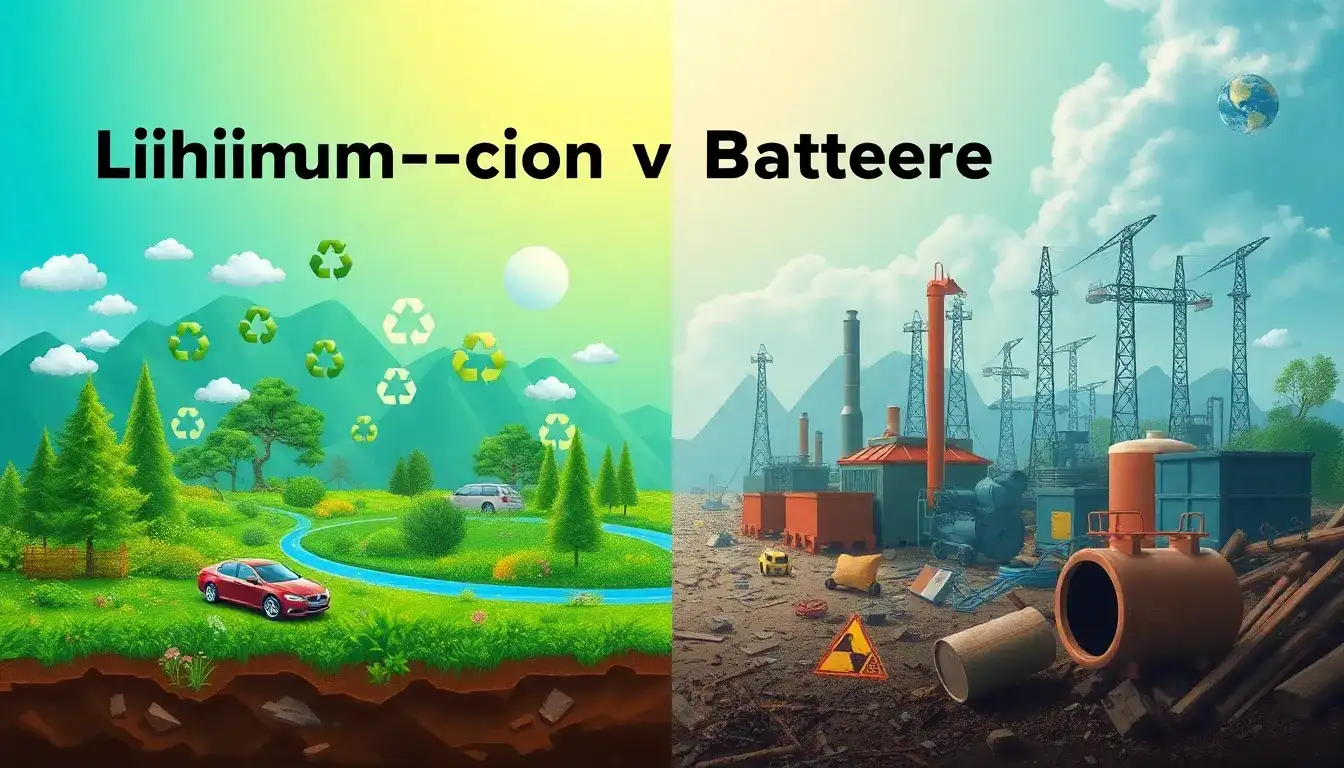
Comparing the environmental impacts of lithium-ion (Li-ion) batteries and nickel-cadmium (Ni-Cd) batteries reveals a complex scenario, with both types of batteries presenting unique environmental challenges.
Environmental Impact Comparison
Nickel-Cadmium (Ni-Cd) Batteries
- Toxicity: Ni-Cd batteries contain cadmium, a highly toxic substance that poses significant environmental risks during production, use, and disposal. Cadmium is known for its adverse effects on human health and the environment.
- Recycling: The high toxicity of cadmium means that improper disposal can lead to cadmium leaching into the environment, contaminating soil and water. However, Ni-Cd batteries are relatively more recyclable compared to Li-ion batteries.
- Usage: They are less commonly used today due to environmental regulations and the availability of safer alternatives like Li-ion batteries.
Lithium-ion (Li-ion) Batteries
- Toxicity: While Li-ion batteries do not contain toxic materials like cadmium, they involve the mining of critical materials such as lithium, cobalt, and nickel, which can have harmful environmental effects. Cobalt mining, for instance, is associated with severe environmental degradation and social issues, particularly in Africa.
- Resource Usage: Lithium extraction requires vast amounts of water, particularly in arid regions, and can lead to soil degradation and air pollution.
- Disposal and Recycling: Only about 5% of Li-ion batteries are recycled globally, with most ending up in landfills, where they can cause fires or leach toxic metals into the soil. However, recycling efforts are increasing, and it is noted that recycling significantly reduces energy, water usage, and greenhouse gas emissions compared to mining new materials.
- Emissions: Manufacturing Li-ion batteries contributes to greenhouse gas emissions, largely due to the energy-intensive mining and processing of raw materials. However, when powered by renewable energy sources, Li-ion batteries can support a reduction in fossil fuel dependence.
Conclusion
In summary, while both types of batteries have environmental drawbacks, Li-ion batteries are generally considered to have a lower toxic impact than Ni-Cd batteries, but their production and disposal pose other significant challenges related to resource extraction and recycling efficiency. Recycling and sustainable manufacturing practices are crucial to mitigating these impacts.
Original article by NenPower, If reposted, please credit the source: https://nenpower.com/blog/how-does-the-environmental-impact-of-lithium-ion-batteries-compare-to-nickel-cadmium-batteries/

