

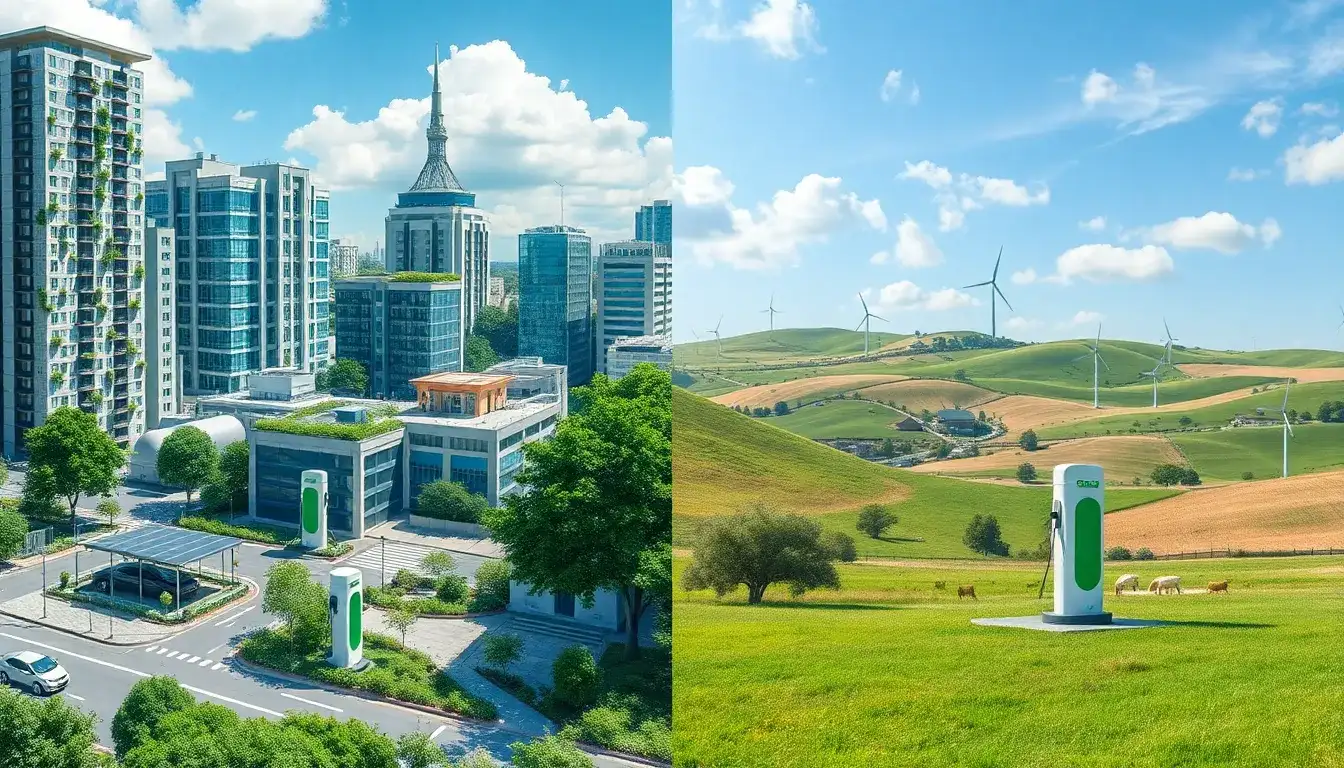
The environmental impact of EV charging stations varies significantly by location due to differences in energy sources, grid composition, charging behaviors, and infrastructure deployment:
1. Energy Source Variability
The carbon intensity of electricity generation directly influences emissions:
- Renewable-rich regions (e.g., California, hydro-dependent areas) yield <0.1 lbs CO₂/mile for EVs charged with wind/solar, versus >1.0 lbs CO₂/mile for gasoline vehicles.
- Fossil-dependent grids (e.g., parts of the Midwest/South U.S.) result in higher EV emissions due to coal/natural gas dominance.
- Smart charging aligned with low-emission periods (e.g., midday solar surplus) can reduce emissions by ~6% compared to passive charging.
2. Grid Composition and Marginal Emissions
- Marginal emissions factors (the power source activated to meet added demand) often differ from grid averages. For example, evening charging may rely on fossil “peaker” plants, negating emission savings.
- Regional generation mixes dictate external costs: a 2013 Ohio study found solar-powered stations achieved 90% lower CO₂ than evening grid charging.
3. Land Use and Infrastructure
- Site selection affects ecosystems. Poorly planned stations risk habitat destruction or deforestation.
- Material sourcing (e.g., metals, concrete) and construction practices further influence localized environmental footprints.
4. Policy and Regulatory Frameworks
Regions with aggressive renewable mandates (e.g., EU nations) incentivize cleaner charging infrastructure, while areas without such policies lag in emission reductions.
Key Regional Comparison
| Factor | Low-Impact Regions (e.g., California, Norway) | High-Impact Regions (e.g., Coal-dependent grids) |
|---|---|---|
| CO₂/Mile | <0.1 lbs | Closer to gasoline vehicles |
| Charging Strategy | Daytime solar/wind alignment | Evening fossil-heavy charging |
| Land Use Impact | Mitigated via green siting | Higher ecosystem risks |
Smart charging and renewable integration are critical to minimizing location-based disparities.
Original article by NenPower, If reposted, please credit the source: https://nenpower.com/blog/how-does-the-environmental-impact-of-ev-charging-stations-vary-by-location/

