

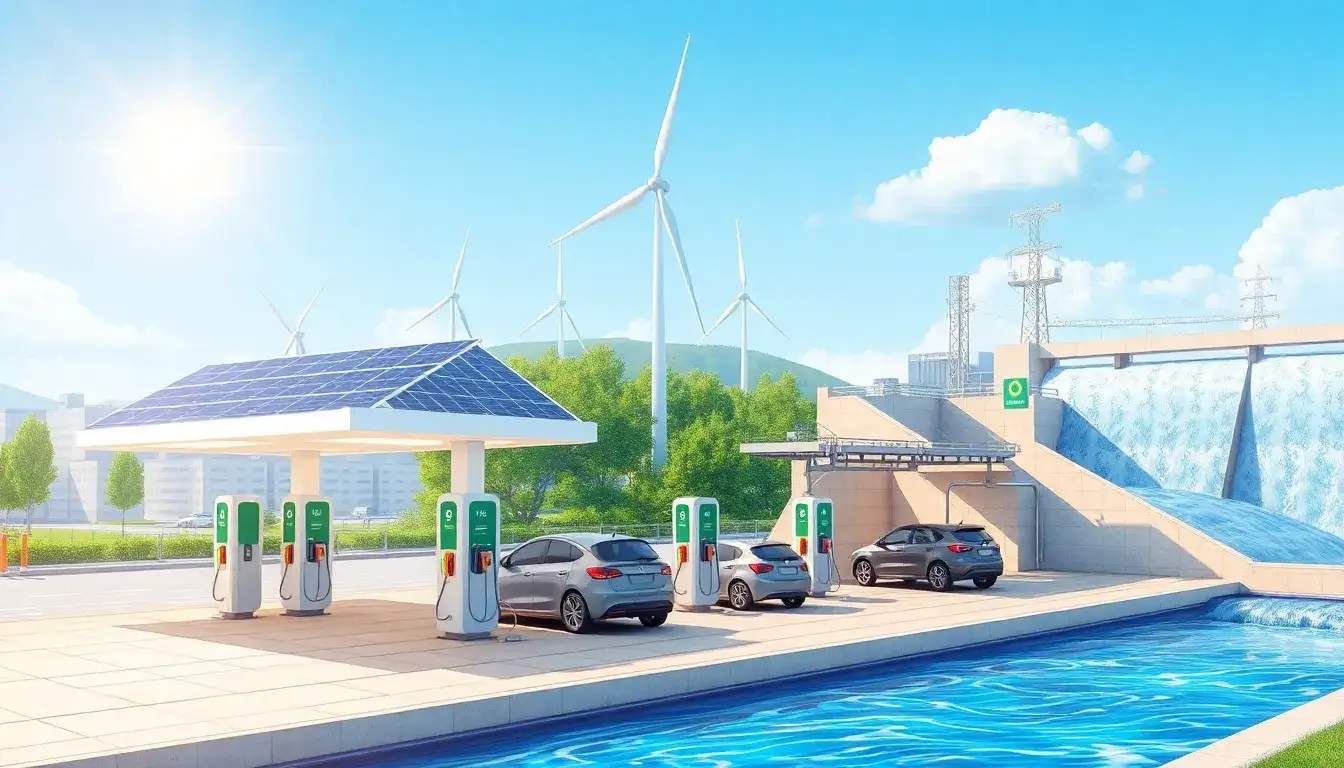
EV charging station energy sources significantly impact operational costs through infrastructure expenses, energy pricing models, and maintenance requirements. Here’s the breakdown:
Grid Electricity
- Cost stability: Grid-connected stations have predictable operational costs tied to local electricity rates, which vary regionally based on energy mixes (fossil fuels vs. renewables).
- Infrastructure advantage: Leverages existing electrical networks, avoiding upfront renewable installations but subject to utility demand charges during peak usage.
- Scalability: Easier to deploy at scale but lacks insulation from energy price volatility.
Renewable Energy (Solar/Wind)
- High initial investment: Requires solar panels, wind turbines, and battery storage systems, increasing capital costs.
- Long-term savings: Eliminates or reduces grid electricity purchases, with operational costs primarily tied to storage system maintenance.
- Grid independence: Off-grid renewable systems avoid demand charges but require overcapacity to compensate for intermittency, increasing equipment costs.
Hybrid Systems
- Balanced approach: Combines grid power with on-site renewables to reduce peak demand charges and enhance reliability.
- Battery optimization: Stores surplus renewable energy for high-demand periods, lowering grid dependence and operational costs.
| Energy Source | Key Cost Factors |
|---|---|
| Grid | Utility rates, demand charges, grid maintenance fees |
| Renewables | Installation costs, battery replacements, weather-dependent energy output |
| Hybrid | System complexity, dual maintenance, but lower peak energy purchases |
Renewables offer lower long-term operational expenses but require careful planning to offset higher upfront investments, while grid reliance provides immediate affordability with less price stability.
Original article by NenPower, If reposted, please credit the source: https://nenpower.com/blog/how-does-the-energy-source-for-ev-charging-stations-affect-their-operational-costs/

