

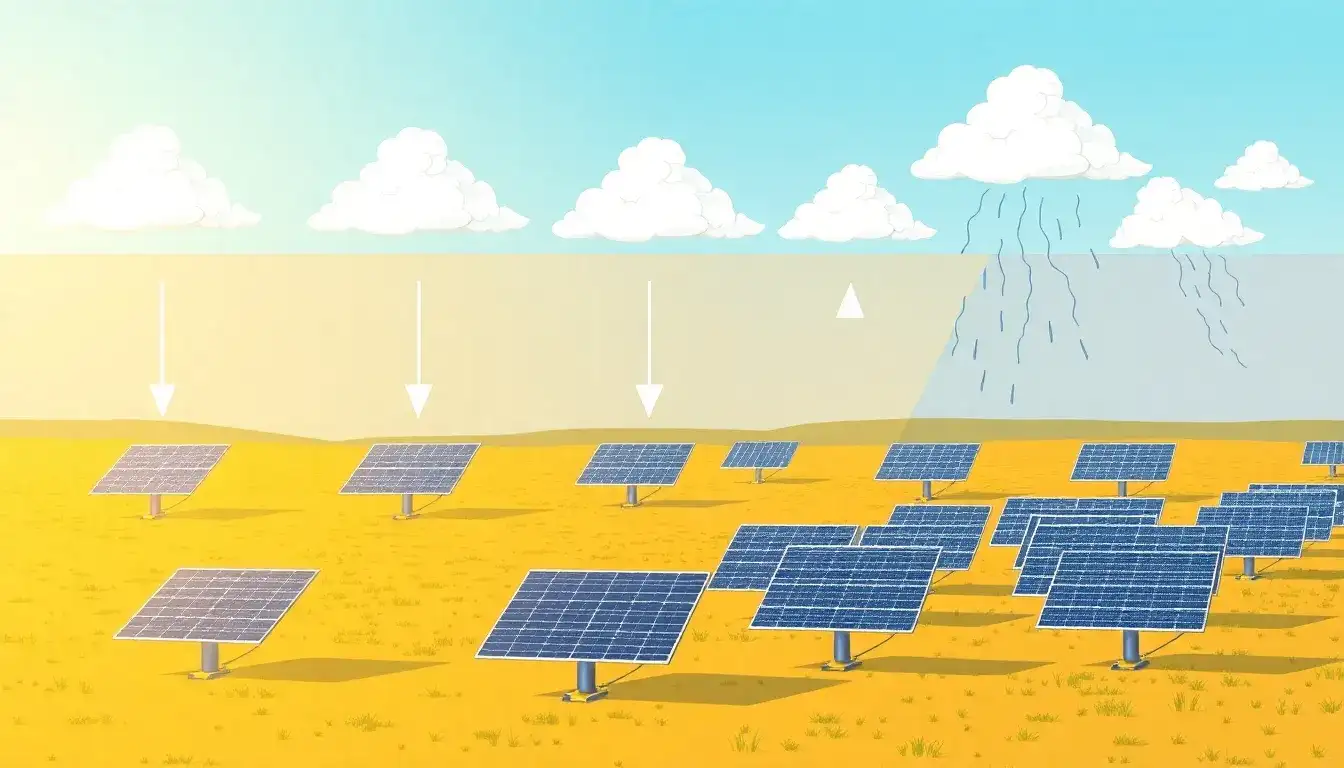
Single-axis solar trackers adjust the orientation of solar panels to optimize energy production by aligning with the sun’s path, which enhances energy output compared to fixed systems. However, the performance of these trackers under different types of cloud cover can vary due to the reduced intensity and variability of sunlight.
Energy Production under Different Cloud Conditions
- Clear Skies: In clear conditions, single-axis trackers can significantly boost energy production by ensuring the panels face the sun at the optimal angle, capturing maximum sunlight. The energy gain is typically around 20-25% compared to fixed systems.
- Partly Cloudy Conditions: In partly cloudy conditions, single-axis trackers can still optimize energy output by adjusting to the sun’s path when it is visible. However, the energy gain may be less consistent due to intermittent shading from clouds.
- Fully Cloudy or Overcast Conditions: In fully cloudy or overcast conditions, the benefits of single-axis trackers are reduced because sunlight is diffused and less intense. While the trackers can still help by positioning panels to capture as much diffuse light as possible, the overall energy gain is significantly lower compared to clear conditions. However, advanced techniques like machine learning can help estimate optimal angles to maximize energy production even in cloudy conditions, potentially offering a small annual energy gain.
Advanced Techniques for Optimizing Energy Under Cloud Cover
- Machine Learning Algorithms: Techniques like using machine learning models with sky imaging can estimate optimal tracking angles under cloudy conditions, potentially improving energy output by optimizing panel orientation for diffuse light capture.
- TrueCapture Technology: Some systems employ advanced tracking algorithms that adjust based on site conditions and weather, which can help mitigate losses in energy yield due to clouds by optimizing tracking to capture more diffuse light.
Overall, while single-axis trackers can enhance energy production under various conditions, their effectiveness is diminished under heavy cloud cover. However, with advanced technologies, there are opportunities to optimize performance even in such conditions.
Original article by NenPower, If reposted, please credit the source: https://nenpower.com/blog/how-does-the-energy-production-of-single-axis-trackers-vary-with-different-types-of-cloud-cover/

