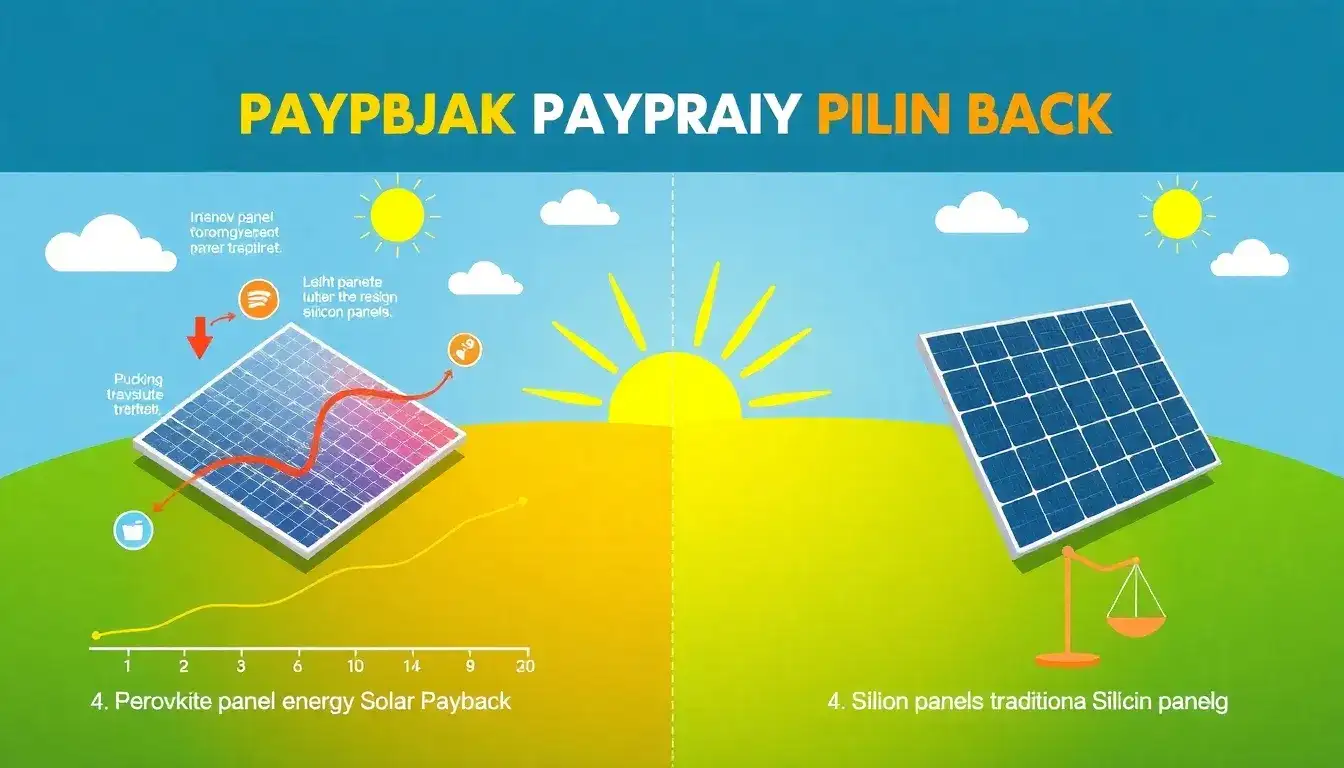
The energy payback period (EPBT) of perovskite solar panels is significantly shorter than that of conventional silicon solar panels.
- Silicon solar panels typically have an energy payback period around 1.5 to 2 years. This is due largely to the energy-intensive process required to purify silicon and manufacture crystalline silicon wafers in high-temperature furnaces and clean rooms.
- In contrast, perovskite solar panels can be manufactured using low-temperature, less energy-intensive processes such as screen-printing, which drastically reduces the energy input needed for production. Studies have shown that perovskite-perovskite tandem solar cells can achieve an energy payback time as low as about 0.35 years (roughly four months), which is about 4 to 6 times faster than silicon panels.
- Perovskite-silicon tandem cells have a slightly higher energy payback period than perovskite-only cells but still outperform silicon-only panels, with an EPBT of approximately 1.44 years compared to 1.52 years for silicon.
- Some research indicates perovskite modules might return their energy investment within two to three months, making them the fastest among current solar technologies to recoup their manufacturing energy costs.
In summary, perovskite solar panels have a much shorter energy payback period compared to traditional silicon panels—often by a factor of four to six times—due to their less energy-intensive manufacturing processes and high efficiency, which makes them greener and potentially cheaper over their lifecycle.
Original article by NenPower, If reposted, please credit the source: https://nenpower.com/blog/how-does-the-energy-payback-period-of-perovskite-solar-panels-compare-to-silicon-panels/