

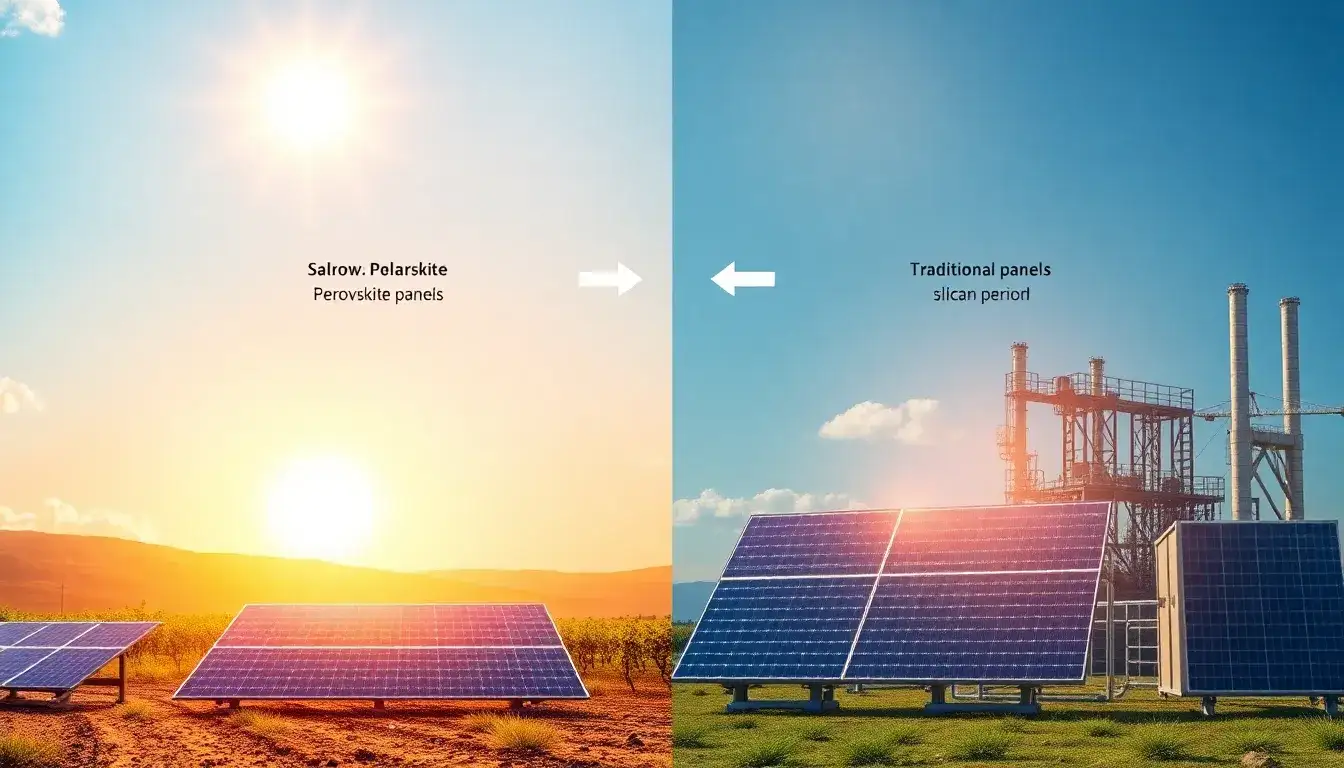
The energy payback period (EPP) is a crucial metric in evaluating the efficiency and environmental impact of solar panels. It refers to the time required for a solar panel to generate the same amount of energy that was used in its manufacture.
Energy Payback Period Comparison
- Silicon Solar Panels: The energy payback period for silicon solar panels typically ranges between 1.5 to 4 years, depending on the manufacturing process and efficiency of the panels. For example, the average EPP for silicon panels is about 1.52 years, while older or less efficient multicrystalline modules may take longer, up to 4 years.
- Perovskite Solar Panels: Perovskite solar panels, particularly those made with all-perovskite configurations, have significantly shorter energy payback periods. The EPP for perovskite-perovskite tandems is as low as 0.35 years (about four months), which is far quicker than silicon panels. This is attributed to the use of low-temperature processes that are less energy-intensive and costly.
Key Factors Influencing EPP
- Manufacturing Process: The energy-intensive purification of silicon is a major factor contributing to the longer EPP of conventional silicon panels. In contrast, perovskites require much less energy in their manufacturing process.
- Efficiency and Technology: Higher efficiency in perovskite panels, especially in tandem configurations, allows them to generate more power per unit area, contributing to a faster energy payback.
- Life Cycle Assessment: Evaluating the entire lifecycle from raw material extraction to end-of-life disposal shows perovskite technology offers quicker energy returns and potentially lower environmental impacts compared to traditional silicon technology.
Overall, perovskite solar panels demonstrate a significant advantage over silicon panels in terms of energy payback period, making them a promising technology for sustainable energy production.
Original article by NenPower, If reposted, please credit the source: https://nenpower.com/blog/how-does-the-energy-payback-period-compare-between-perovskite-and-silicon-solar-panels/

