

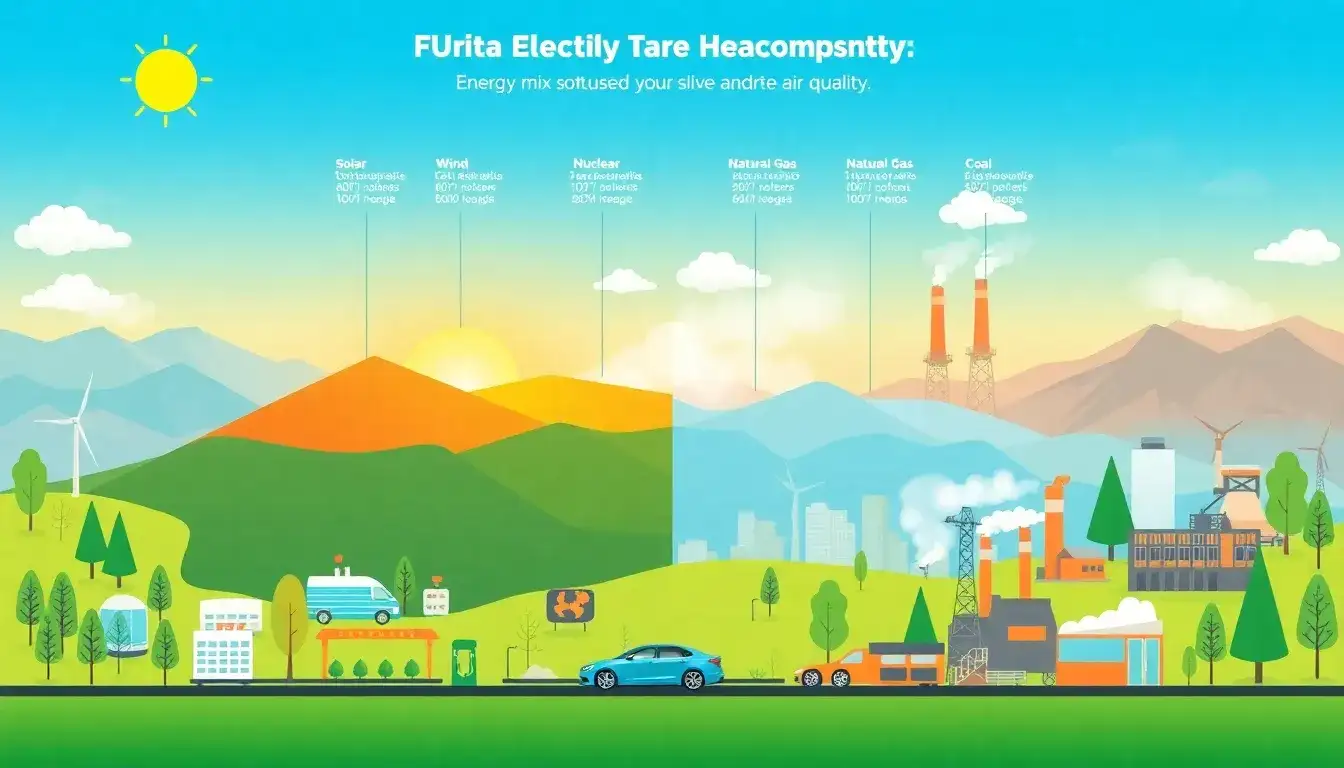
The impact of the energy mix used to charge electric vehicles (EVs) on air quality varies significantly by region due to differences in how electricity is generated. This relationship shapes both the environmental and public health outcomes of EV adoption.
Key Insights on Energy Mix and Air Quality from EV Charging
- Reduction in Carbon Emissions and Health Benefits
Overall, electrifying vehicles tends to reduce carbon dioxide (CO2) emissions, even in regions where electricity is generated primarily from carbon-intensive sources such as coal. This leads to significant health and climate benefits nationwide, with estimates suggesting that 25% EV adoption in the U.S. could prevent around $17 billion in health and climate damages annually. - Regional Variation Linked to Power Generation Mix
The air quality benefits of EV adoption depend heavily on the regional electricity mix. In areas where electricity generation relies on cleaner, emission-free sources (like renewables or nuclear), switching to EVs results in pronounced reductions in pollutants such as particulate matter (PM2.5) and ozone (O3), which are linked with cardiovascular and respiratory diseases. Conversely, regions dependent on fossil fuel-dominant grids, especially coal, may see smaller benefits or even localized increases in certain pollutants during times of high electricity demand for charging. - Marginal vs. Average Emissions Approach
Research shows that emissions impacts depend not only on the average electricity mix but on the marginal power source that meets the additional load from EV charging. For example, charging during peak demand periods in coal-heavy grids can cause higher emissions compared to off-peak charging or charging in grids with high renewable energy penetration. However, some studies found that shifting charging times (e.g., night charging) may not significantly affect air quality metrics if the underlying generation mix remains unchanged. - Seasonal and Urban Contexts
EV adoption can lead to substantial reductions in urban PM2.5 concentrations, particularly in winter months when particulate pollution tends to worsen, as shown in the Beijing-Tianjin-Hebei region in China. Seasonal variations in air quality benefits are common because electricity generation sources and pollution dispersion vary across seasons. - Health Impacts Focused on Premature Mortality
Studies assessing premature mortality related to exposure to PM2.5 and ozone find that the health gains from EVs are sensitive to the regional mix of power generation. Cleaner grids enhance co-benefits by reducing cardiovascular and respiratory risks associated with air pollution.
Summary Table: Influence of Charging Energy Mix on Air Quality
| Electricity Generation Mix | Air Quality Impact When Charging EVs | Health & Climate Outcome |
|---|---|---|
| High renewables or emission-free | Significant reduction in PM2.5, O3, CO2 emissions | Large public health and climate benefits |
| Natural gas-dominant mix | Moderate reductions in pollutants | Moderate health benefits with some variability |
| Coal and other carbon-intensive | Smaller or mixed benefits; possible increases in some pollutants during peak loads | Limited or mixed health benefits; regional trade-offs |
| Mixed grid with high peak coal use | Localized pollution spikes during EV charging peaks | Potential for adverse regional air quality effects |
In conclusion, the energy mix used to charge EVs critically shapes air quality outcomes: the cleaner the electricity generation, the greater the benefits to air quality and public health. Regions with carbon-intensive grids gain less from EV adoption without concurrent decarbonization of their power sector. Thus, coupling EV deployment with cleaner energy sources maximizes the environmental and health co-benefits.
Original article by NenPower, If reposted, please credit the source: https://nenpower.com/blog/how-does-the-energy-mix-used-to-charge-evs-impact-air-quality-in-different-regions/

