

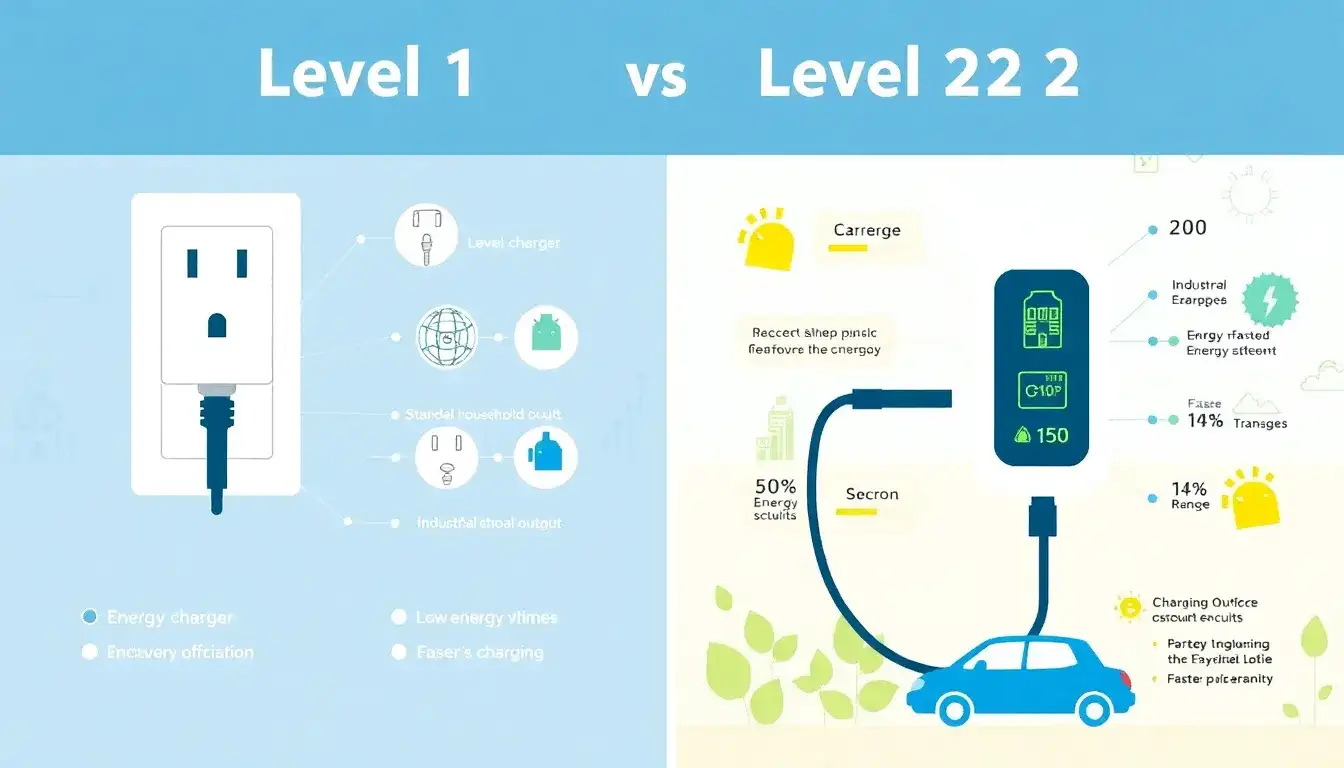
Energy Efficiency Comparison: Level 1 vs Level 2 EV Chargers
Overview
The energy efficiency of EV chargers is crucial for both cost and environmental impact. Level 1 and Level 2 chargers differ significantly in terms of efficiency, charging speed, and usage context.
Efficiency
- Level 1 Chargers: These chargers operate at lower voltage (120V) and have a typical efficiency of about 80%, meaning they suffer from higher energy losses. Users pay for more energy than they receive due to inefficiencies in the charging process.
- Level 2 Chargers: Level 2 chargers offer higher efficiency, typically around 90%. They operate at 240V, which results in less energy loss during charging. This efficiency translates to more effective use of purchased electricity compared to Level 1.
Charging Speed and Range
- Level 1 Chargers: Provide approximately 3-5 miles of range per hour of charging and can take 40-50 hours to charge a battery electric vehicle (BEV) to 80% from empty.
- Level 2 Chargers: Offer significantly faster charging, delivering about 20-30 miles of range per hour, and can charge a BEV to 80% in 4-10 hours.
Usage Context
- Level 1 Chargers: Suitable for slow, overnight charging and often used in situations where only a standard household outlet is available. They are the most basic and widely available but slower.
- Level 2 Chargers: Ideal for frequent charging, especially in residential and commercial settings where higher power outlets are available. They are more cost-effective in the long run due to their efficiency and speed.
In summary, Level 2 chargers are more energy-efficient and faster than Level 1 chargers, making them a preferred choice for regular or heavy electric vehicle users. However, Level 1 chargers remain practical for occasional use or when higher power outlets are not available.
Original article by NenPower, If reposted, please credit the source: https://nenpower.com/blog/how-does-the-energy-efficiency-of-level-2-chargers-compare-to-level-1-chargers/

