

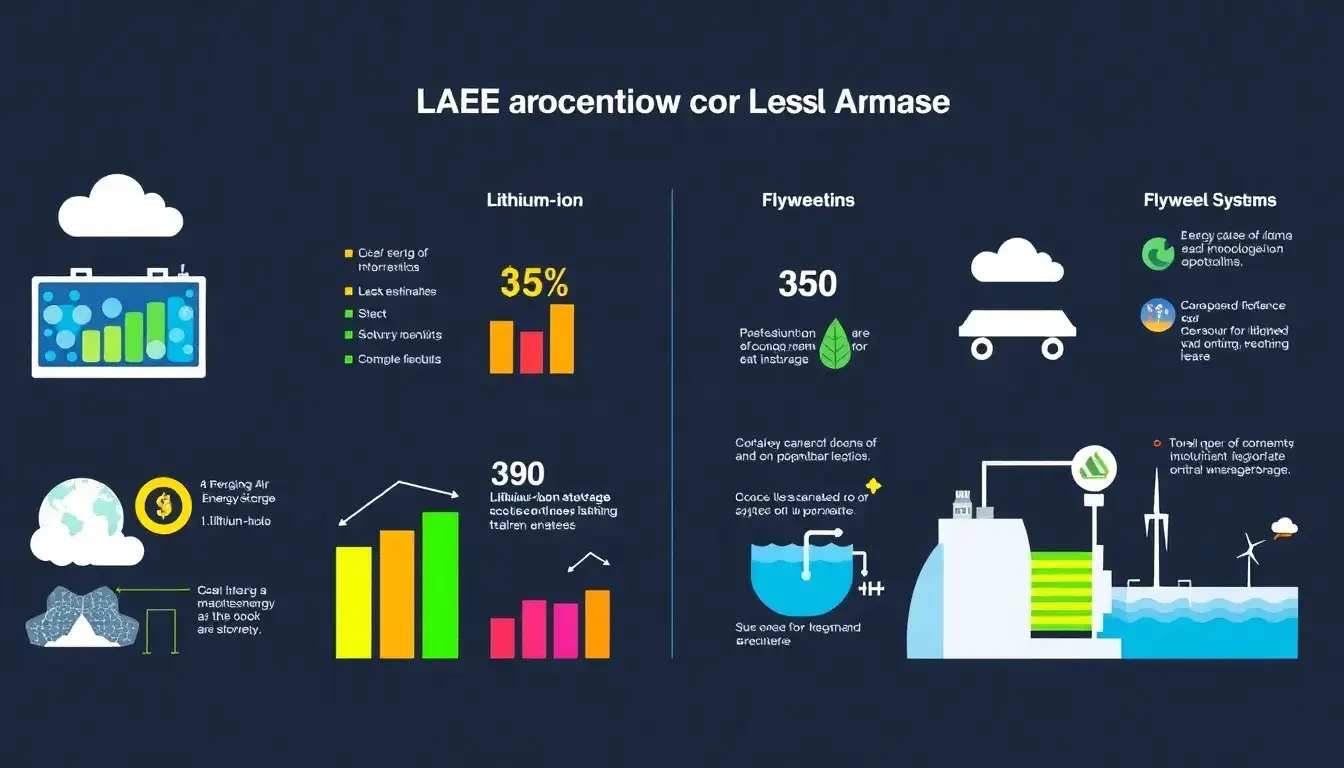
Liquid Air Energy Storage (LAES) offers a distinct profile in terms of energy efficiency compared to other energy storage technologies like Compressed Air Energy Storage (CAES), Pumped Hydro Storage (PHS), and lithium-ion batteries.
Energy Efficiency Comparison
- Round-Trip Efficiency: LAES systems demonstrably outperform CAES by about 15% in round-trip efficiency, meaning that LAES can return more usable energy compared to CAES after the energy is stored and then released. However, LAES typically has lower round-trip efficiency compared to pumped hydropower storage (PHS) and lithium-ion batteries, which generally achieve higher round-trip efficiencies than LAES.
- Energy Density and Storage Volume: LAES benefits from higher energy density than CAES and PHS, allowing it to store large amounts of energy in a more compact form without relying on particular geographic features such as large reservoirs or underground caverns. This geographic independence is a strategic advantage for LAES over technologies like PHS.
- Improvements and Challenges: Research is ongoing to enhance LAES efficiency through integrating external thermal systems or using fuels to improve heat recovery during the discharge process. However, these approaches have trade-offs. For example, they may require proximity to thermal plants or introduce CO2 emissions, which can undermine sustainability. Additionally, using waste or cryogenic cold recovery in LAES can provide added value through cogeneration opportunities like refrigeration.
- Economic Efficiency and Cost: While round-trip efficiency may be lower than some alternatives, LAES shows promise in economic terms. The Levelized Cost of Storage (LCOS) for LAES has been modeled at around $60 per megawatt-hour, which is about one-third the cost of lithium-ion battery storage and half that of pumped hydro storage, indicating a strong potential economic advantage especially for grid-scale applications.
Summary Table: LAES vs Other Technologies
| Technology | Round-Trip Efficiency | Energy Density | Geographic Constraints | Levelized Cost of Storage (LCOS) | Comments |
|---|---|---|---|---|---|
| LAES | Moderate (better than CAES, less than Li-ion/PHS) | High | Low | ~$60/MWh | Compact, flexible location, potential for cogeneration |
| Compressed Air Energy Storage (CAES) | Lower than LAES | Lower | High | Higher than LAES | Requires underground caverns or large air tanks |
| Pumped Hydro Storage (PHS) | High | Lower | High | Higher than LAES | Requires suitable water reservoirs and elevation |
| Lithium-ion Batteries | High | Moderate | Low | 3x higher than LAES | High efficiency but costlier and shorter lifespan |
In conclusion, while LAES currently has a lower round-trip efficiency compared to pumped hydro and lithium-ion batteries, it surpasses CAES and offers cost advantages, higher energy density, geographic flexibility, and potential for integrated thermal and cryogenic applications. These characteristics make LAES a promising and competitive option for large-scale energy storage, particularly where geographic or environmental constraints limit the use of other technologies.
Original article by NenPower, If reposted, please credit the source: https://nenpower.com/blog/how-does-the-energy-efficiency-of-laes-compare-to-other-storage-technologies/

