

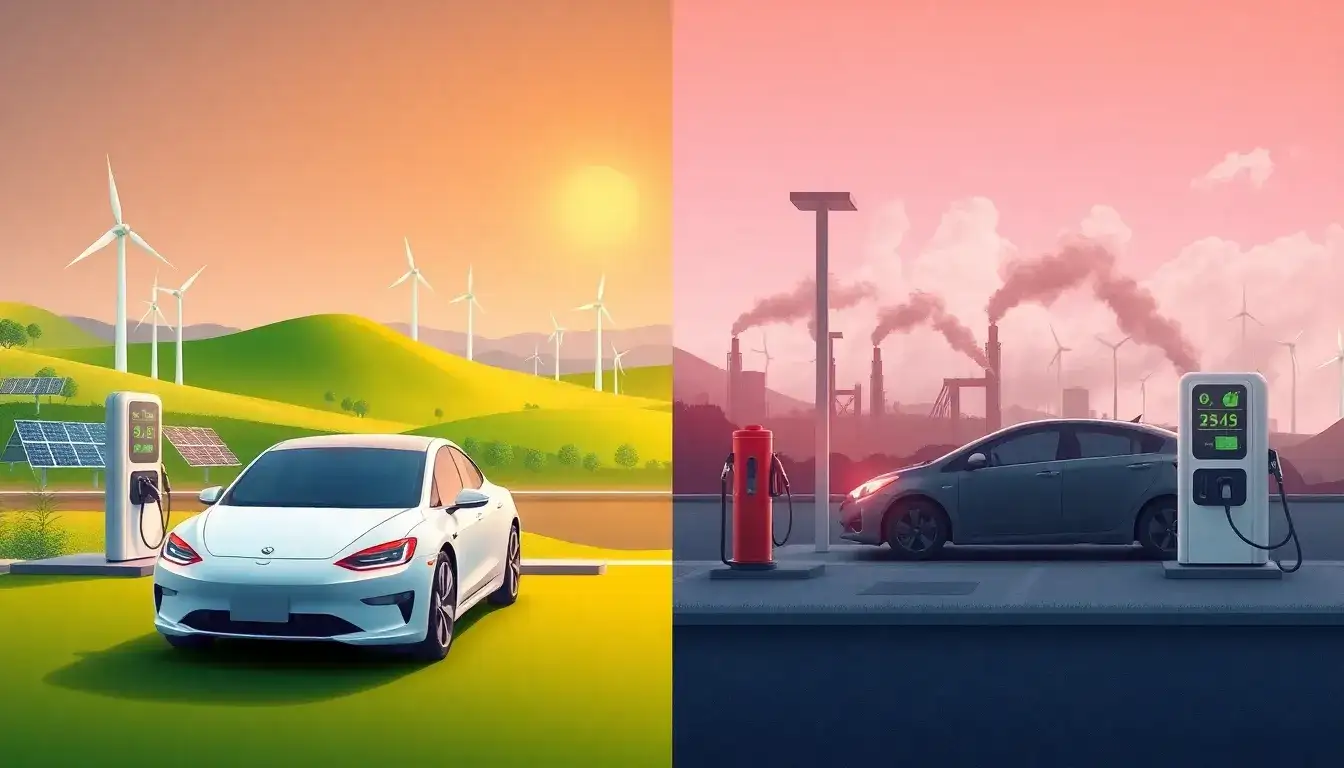
The energy efficiency of Electric Vehicles (EVs) significantly surpasses that of gasoline-powered cars. Here’s a detailed comparison:
Energy Conversion Efficiency
- EVs: These vehicles convert approximately 87%–91% of the electric energy from the battery into the movement of the vehicle. This includes the efficiency gained from regenerative braking.
- Gasoline Cars: Gasoline cars only convert about 16–25% of the energy in gasoline into movement, depending on the driving conditions (highway vs. city driving).
Overall Efficiency Ratio
On a combined drive cycle, all-electric vehicles are about 4.4 times more efficient than gasoline Internal Combustion Engine (ICE) vehicles. This efficiency advantage is particularly pronounced in city driving, reaching up to 5.1 times more efficiency.
Cost-Efficiency
From a cost perspective, EVs generally offer better fuel economy, leading to significant savings over gasoline cars. For example, driving an EV in the U.S. can save an average of $634.66 annually compared to a gasoline-powered vehicle, assuming an average driving distance of 15,000 miles per year.
Environmental Impact
While EVs have a higher manufacturing carbon footprint due to battery production, their overall carbon emissions are typically lower than those of gasoline cars, especially considering the potential for renewable energy sources for charging. The environmental benefits of EVs are most pronounced in regions with high renewable energy usage in the power grid.
Original article by NenPower, If reposted, please credit the source: https://nenpower.com/blog/how-does-the-energy-efficiency-of-evs-compare-to-gasoline-cars/

