

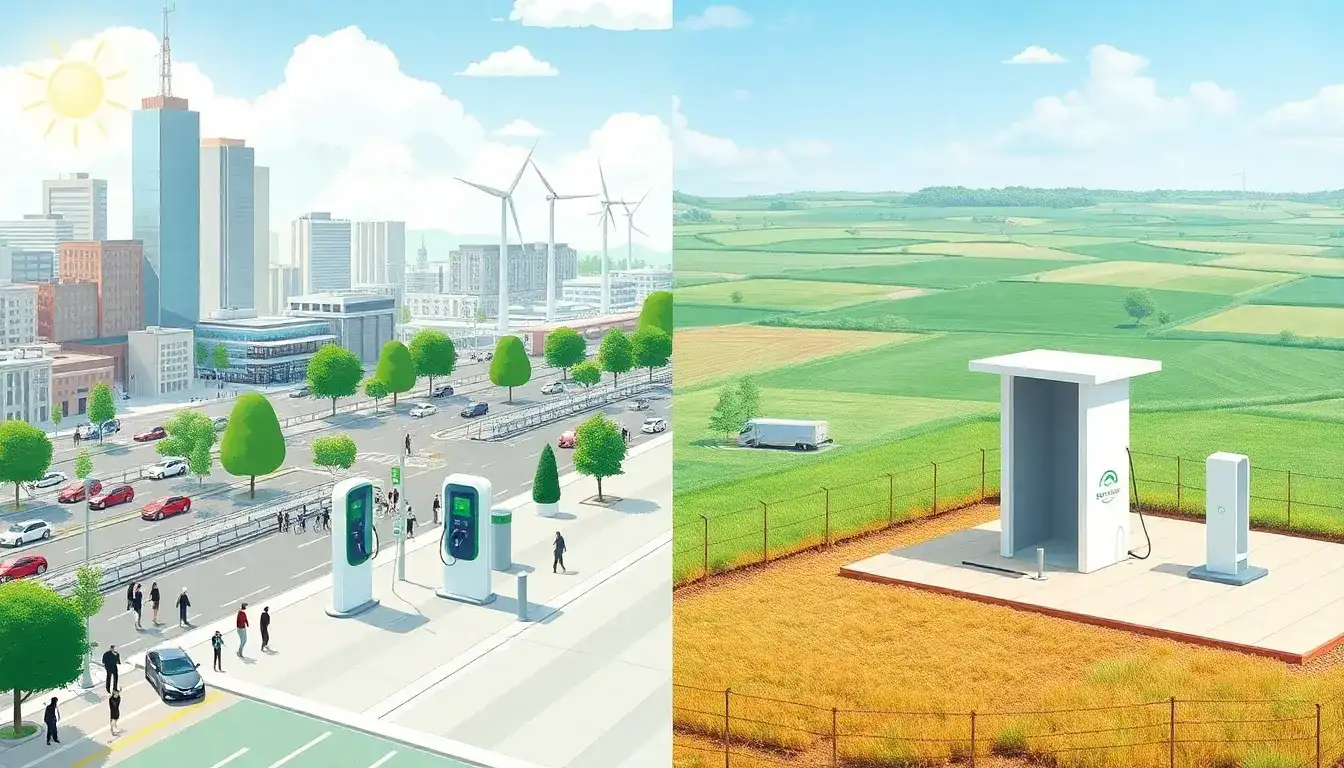
When comparing the energy efficiency of electric vehicle (EV) charging stations in urban and rural areas, several factors come into play, including usage patterns, charging infrastructure density, and operational costs.
Energy Efficiency Comparison
Charging Patterns:
- Urban Areas: Urban charging stations typically handle more frequent and shorter charges due to the higher density of users. The average charge consumption at urban stations is around 9.51 kWh, with a mean charge duration of about 130 minutes. This frequent usage helps maximize the efficiency of charging infrastructure.
- Rural Areas: Rural stations experience less frequent but potentially longer charges, as residents often drive longer distances. The average charge consumption is about 8.84 kWh, with a shorter mean charge duration of around 92.5 minutes. However, the overall plug-in time is longer due to less frequent use.
Infrastructure Density:
- Urban Areas: High-density charging networks in urban areas reduce range anxiety and provide multiple charging options, making it easier for drivers to find available and efficient charging spots. This density supports a more efficient distribution of energy across the network.
- Rural Areas: Rural areas have fewer charging stations, which can lead to longer charging times and less efficient energy distribution due to the distance between stations and lower usage rates.
Operational Costs and Efficiency:
- Urban Areas: Urban charging stations benefit from economies of scale due to higher usage rates, which can lead to more efficient operation and maintenance costs per user.
- Rural Areas: The cost of installing and maintaining charging infrastructure in rural areas is often higher per user due to lower population density and less frequent usage, which can affect operational efficiency.
Economic and Environmental Efficiency
Both urban and rural areas benefit from the environmental efficiency of EVs over traditional vehicles, with reduced greenhouse gas emissions. However, rural areas face unique challenges, such as higher installation costs and less infrastructure, which can impact overall efficiency.
In summary, while EV charging stations in urban areas are generally more efficient in terms of usage and infrastructure density, rural areas are starting to see growth in infrastructure that can improve efficiency over time. Recent legislation and incentives aim to address the disparities by encouraging more installations in rural settings.
Original article by NenPower, If reposted, please credit the source: https://nenpower.com/blog/how-does-the-energy-efficiency-of-ev-charging-stations-compare-between-urban-and-rural-areas/

