

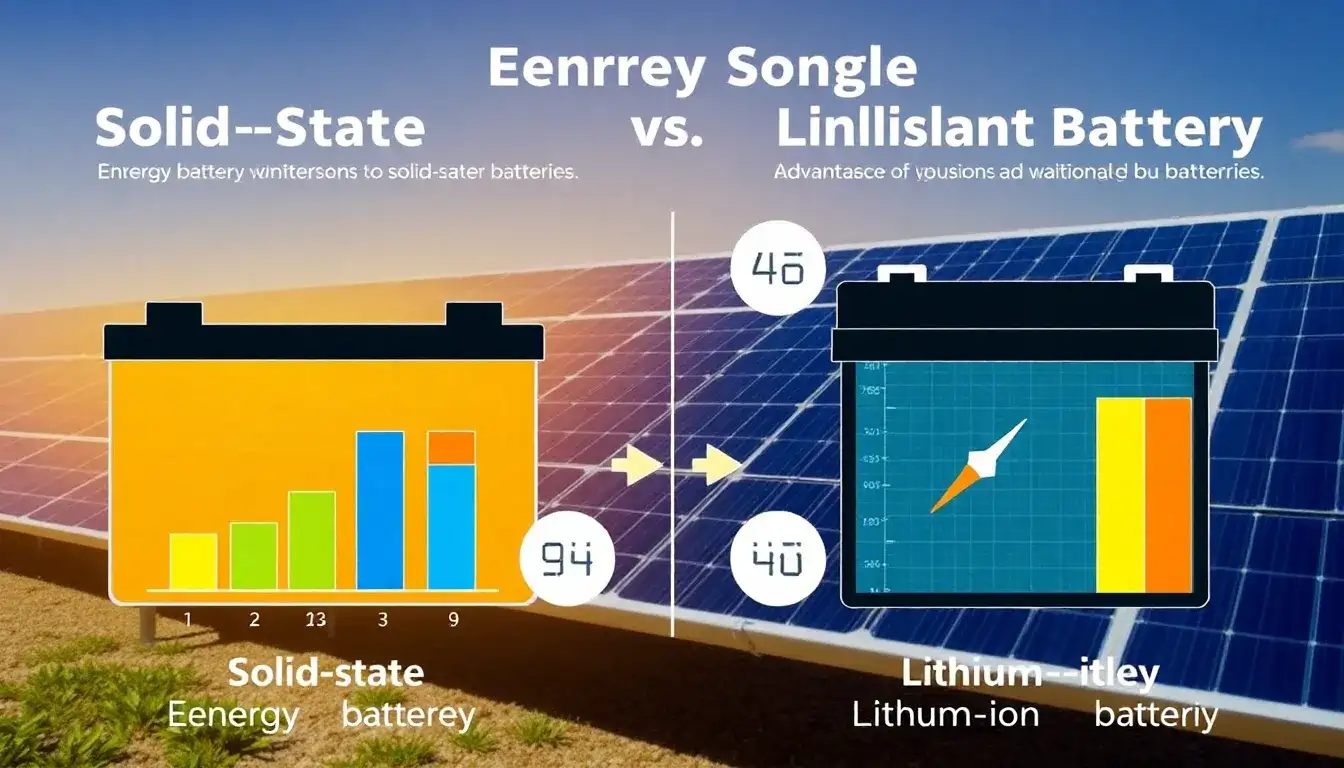
The energy density of solid-state batteries is significantly higher than that of traditional lithium-ion batteries, which makes them particularly attractive for solar energy applications where energy storage efficiency and weight are critical.
Energy Density Comparison
- Traditional Lithium-Ion Batteries: Typically range from about 160 to 325 Wh/kg depending on chemistry (e.g., LFP at ~160 Wh/kg, NMC at ~250 Wh/kg, up to 325 Wh/kg in some cases).
- Solid-State Batteries: Offer energy densities in the range of approximately 250 to 800 Wh/kg. More specifically:
- Thin-film solid-state batteries can reach 300-800 Wh/kg.
- Bulk solid-state batteries achieve around 250-500 Wh/kg.
- Some recent developments have demonstrated about 450 Wh/kg, which is about 30-50% higher than comparable lithium-ion batteries.
Implications for Solar Energy Applications
- Higher Energy Density: This means solid-state batteries can store more energy per unit weight and volume, allowing for smaller, lighter battery packs in solar energy systems. This efficiency is crucial for reducing space and material costs in both residential and commercial solar storage setups.
- Safety Factor: Solid-state batteries use a non-flammable solid electrolyte instead of the liquid electrolytes in lithium-ion batteries, which significantly reduces fire risk—an important consideration in large-scale solar installations.
- Charging Speed and Lifespan: Though still under development, solid-state batteries potentially offer faster charging and longer lifespan, which would improve the responsiveness and durability of solar energy storage systems.
Current Limitations
- Solid-state batteries are currently more expensive and less commercially mature than lithium-ion batteries, with mass production and technical challenges like crack formation still being addressed.
Summary Table
| Battery Type | Energy Density (Wh/kg) | Safety | Commercial Status |
|---|---|---|---|
| Lithium-Ion | 160-325 | Flammable liquid electrolyte | Mature, widely used |
| Solid-State | 250-800 | Non-flammable solid electrolyte | Emerging, early-stage |
In conclusion, for solar energy applications, solid-state batteries provide a substantial advantage in energy density—up to about twice that of lithium-ion batteries—along with improved safety and charging capabilities. However, their higher production cost and developmental status currently limit widespread adoption.
Original article by NenPower, If reposted, please credit the source: https://nenpower.com/blog/how-does-the-energy-density-of-solid-state-batteries-compare-to-traditional-lithium-ion-batteries-in-solar-energy-applications/

