

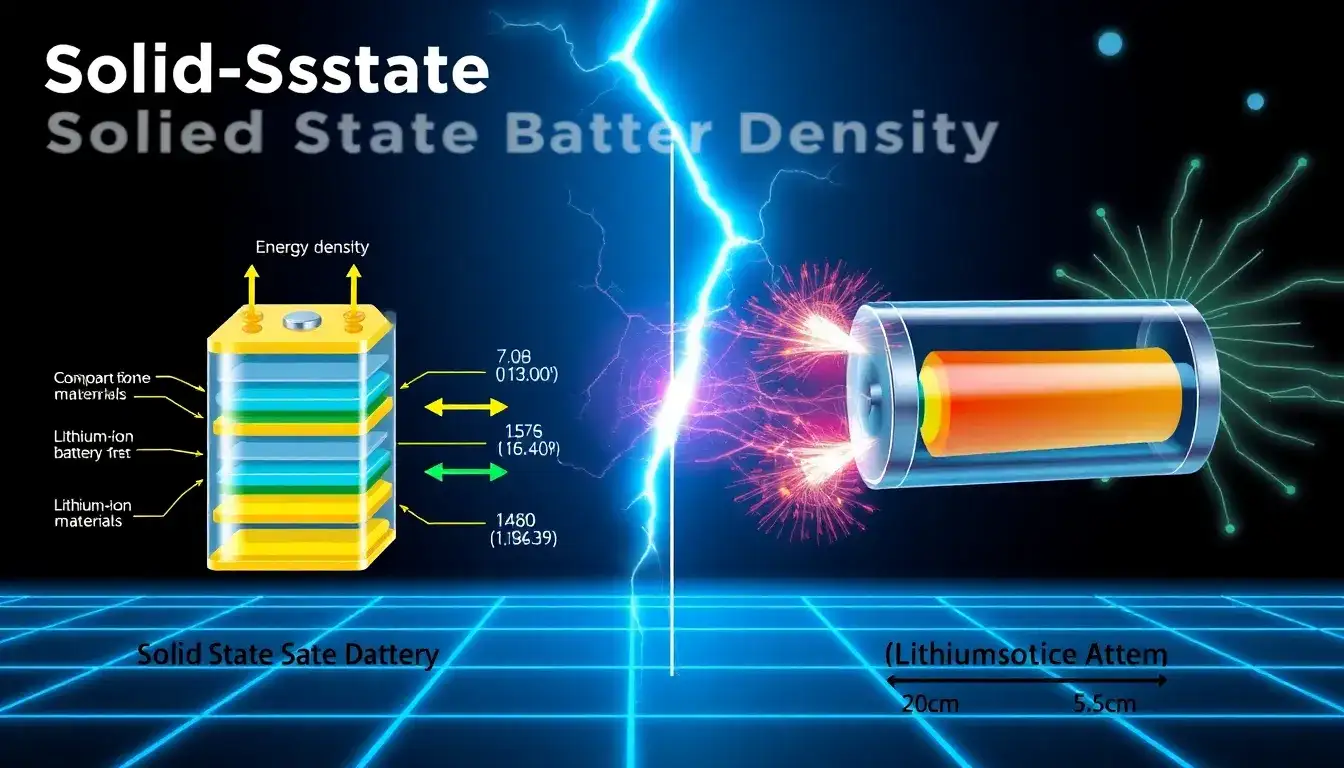
The energy density of solid-state batteries (SSBs) significantly surpasses that of conventional lithium-ion batteries.
Energy Density Comparison
- Lithium-Ion Batteries: Typically, lithium-ion batteries have energy densities ranging from 250 to 300 Wh/kg. Under optimal conditions, some advanced lithium-ion types may reach up to approximately 300 Wh/kg.
- Solid-State Batteries: In contrast, solid-state batteries can exceed energy densities of 350 Wh/kg, with some claims suggesting densities as high as 500 Wh/kg. Some advancements purport that solid-state batteries could achieve practical energy densities as high as 1,000 Wh/L (liters), which would significantly enhance their applications, especially in electric vehicles and portable electronics.
Key Advantages of Solid-State Batteries
- Higher Energy Density: The use of lithium metal anodes instead of the conventional graphite anodes in lithium-ion batteries is a crucial factor in achieving higher energy densities in solid-state batteries. This can lead to longer ranges for electric vehicles and reduced weight for portable devices.
- Safety: Solid-state batteries are inherently safer due to their solid electrolytes, which are non-flammable compared to the liquid electrolytes used in lithium-ion batteries. This reduces the risk of thermal runaway and fires, making solid-state batteries a safer alternative for high-energy applications.
- Temperature Tolerance: Solid electrolytes allow for greater operational temperature ranges. They can perform effectively at higher temperatures, which is critical for applications in various environments.
- Faster Charging: Solid-state batteries can potentially be charged faster than their lithium-ion counterparts due to improved ion conductivity provided by the solid electrolyte, which allows rapid movement of lithium ions during charging.
Current Status and Future Prospects
While solid-state battery technology shows great promise, it is still under development and not yet widely available in the market. Current lithium-ion technology remains the standard due to its established manufacturing processes and diverse applications. However, several companies, including major automotive manufacturers, are investing heavily in solid-state battery research and development, with mass production expected to ramp up within the next few years.
In summary, solid-state batteries offer a substantial improvement in energy density, making them a potentially transformative technology for energy storage solutions compared to traditional lithium-ion batteries.
Original article by NenPower, If reposted, please credit the source: https://nenpower.com/blog/how-does-the-energy-density-of-solid-state-batteries-compare-to-lithium-ion-batteries/

