

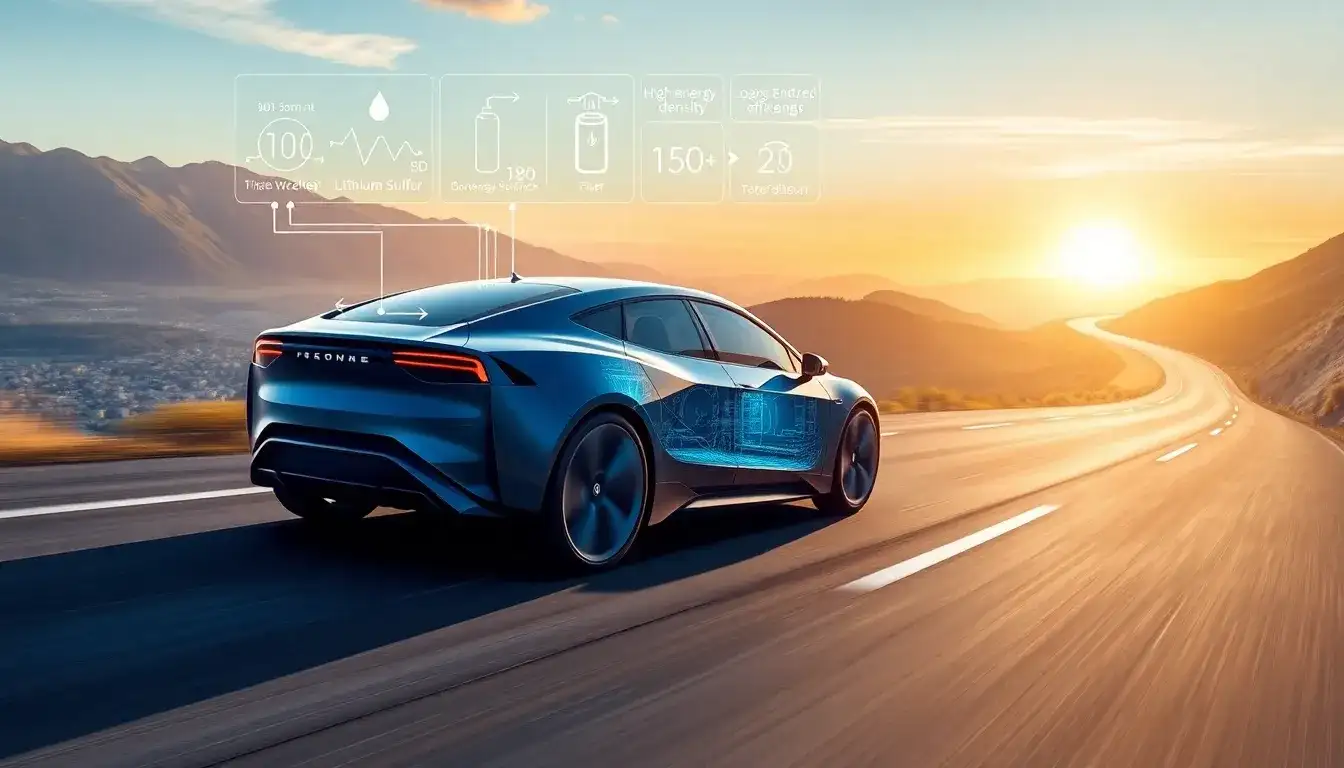
The energy density of lithium-sulfur (Li-S) batteries significantly impacts the range of electric vehicles (EVs) compared to traditional lithium-ion batteries. Here’s a breakdown of how their high energy density benefits EV range:
Key Points About Li-S Batteries
- Higher Energy Density: Li-S batteries have a theoretical energy density of up to 2,600 Wh/kg, which is significantly higher than the 150–260 Wh/kg of lithium-ion batteries. Even practical implementations like the 700 Wh/kg prototype by General New Energy or laboratory results around 400 Wh/kg are much higher.
- Abundant Materials: Sulfur is more abundant and less costly than some materials used in lithium-ion cells, such as cobalt. This could potentially reduce battery costs.
- Environmental Benefits: The use of sulfur instead of more expensive and environmentally challenging materials like cobalt and nickel makes Li-S batteries more environmentally friendly.
Impact on EV Range
- Increased Range: With higher energy density, Li-S batteries can store more energy per unit of mass. This means that EVs could travel farther on a single charge, improving the overall driving range and reducing concerns about range anxiety.
- Weight Reduction: Although Li-S batteries have a slightly higher density than water, their overall lighter weight compared to the same capacity in lithium-ion batteries can lead to better vehicle efficiency and handling.
- Design Flexibility: The lighter and more efficient batteries allow for more flexible design options, potentially leading to smaller and more aerodynamic vehicles, further enhancing range and efficiency.
However, the commercialization of Li-S batteries faces challenges such as poor cycle durability due to polysulfide dissolution and lithium anode corrosion. Once these technical hurdles are overcome, Li-S batteries could significantly enhance EV range and efficiency, making electric vehicles more viable for widespread adoption.
Original article by NenPower, If reposted, please credit the source: https://nenpower.com/blog/how-does-the-energy-density-of-lithium-sulfur-batteries-impact-ev-range/

