

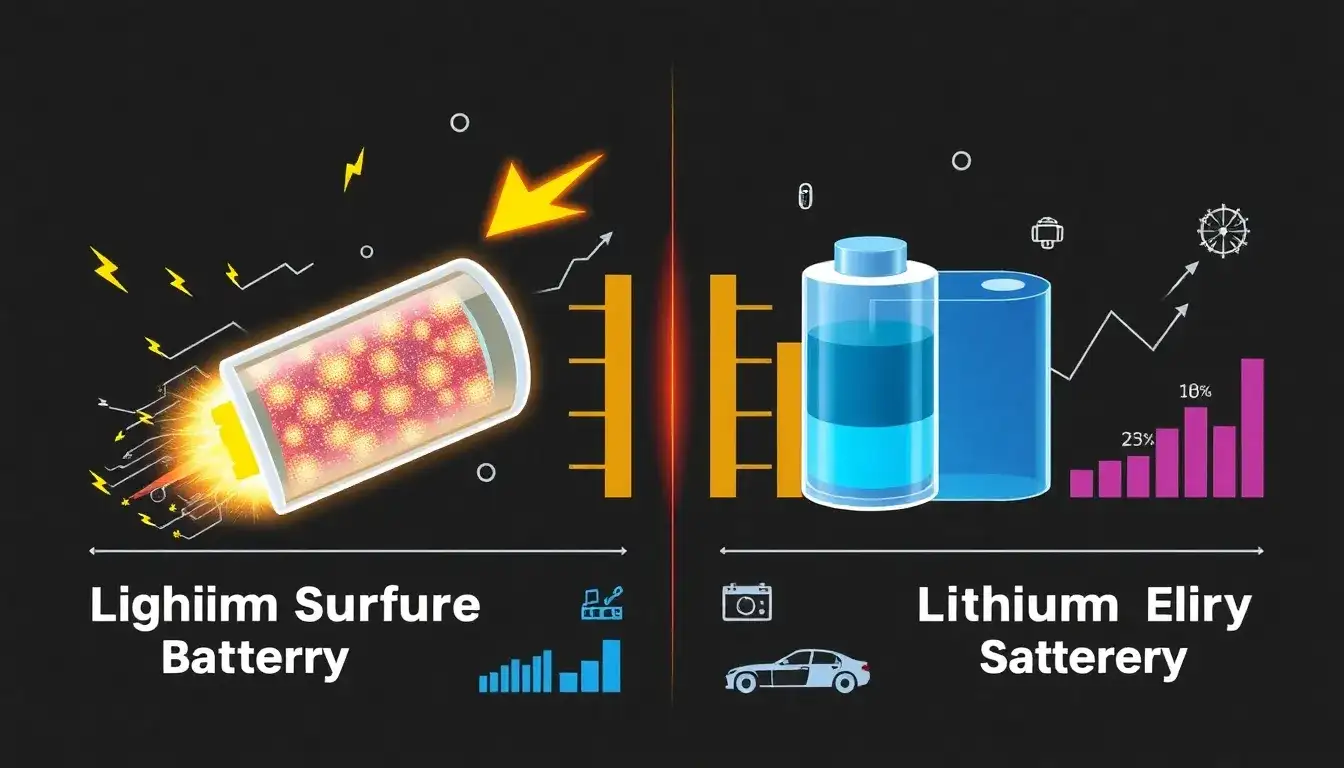
The energy density of lithium-sulfur (Li-S) batteries is significantly higher than that of lithium-ion (Li-ion) batteries.
Lithium-Sulfur Batteries
- Theoretical Energy Density: Li-S batteries have a theoretical energy density of up to 2,510 Wh/kg, with some estimates even higher than 600 Wh/kg.
- Practical Achievements: Currently, Li-S batteries have achieved practical energy densities of around 380 Wh/kg to over 400 Wh/kg in recent developments.
- Advantages: They offer potential cost savings due to the abundance of sulfur, and they do not rely on expensive metals like cobalt, nickel, or manganese.
Lithium-Ion Batteries
- Practical Energy Density: Li-ion batteries typically have a practical energy density ranging from 150 to 300 Wh/kg.
- Cost and Sustainability: They are more costly due to the use of rare metals, which also raises sustainability concerns.
In summary, lithium-sulfur batteries have the potential to significantly outperform lithium-ion batteries in terms of energy density while offering cost benefits. However, Li-S batteries still face challenges like polysulfide shuttling and lithium dendrite growth that need to be addressed for full commercialization.
Original article by NenPower, If reposted, please credit the source: https://nenpower.com/blog/how-does-the-energy-density-of-lithium-sulfur-batteries-compare-to-lithium-ion-batteries/

