

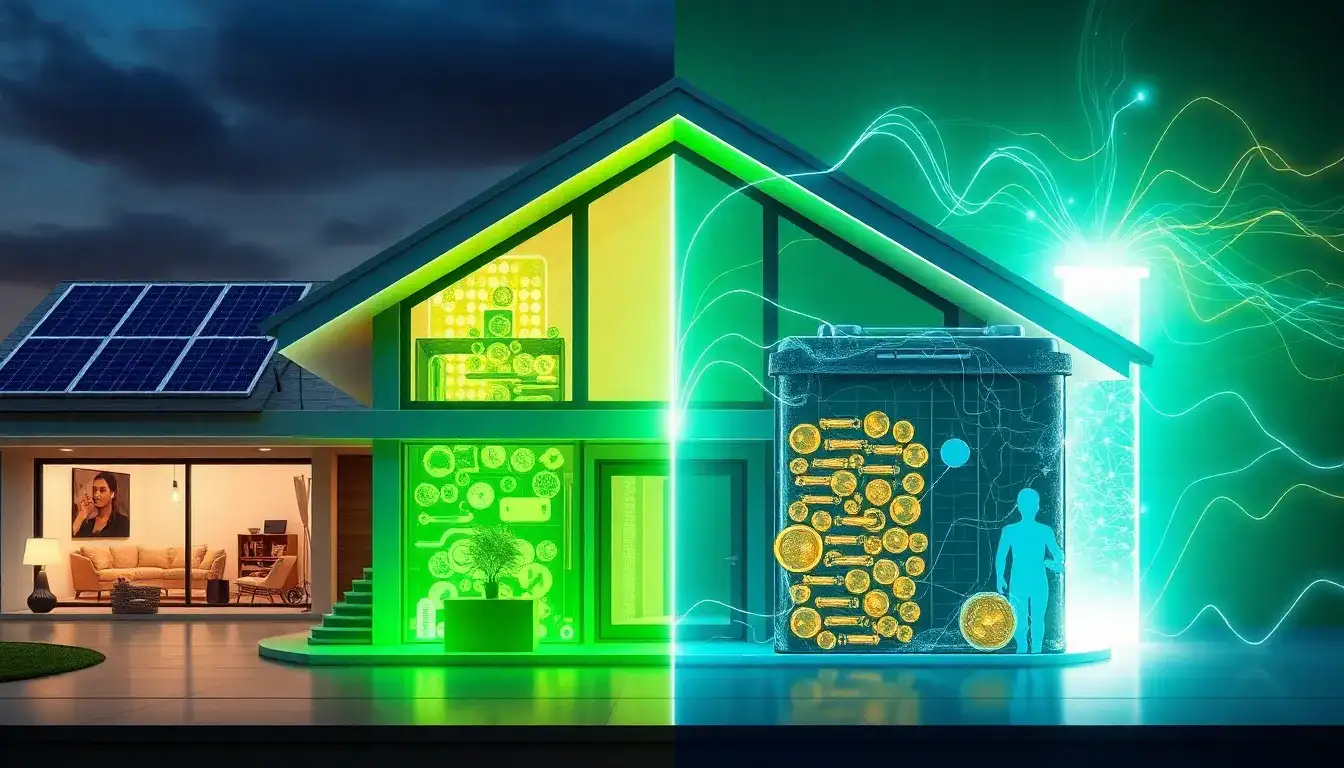
The energy density of lithium-ion batteries plays a significant role in their performance and lifespan in home energy storage systems, but it is not the direct factor influencing their lifespan. Instead, several other factors related to energy density, such as charge/discharge management and material durability, indirectly impact battery longevity. Here’s how energy density and related factors affect lithium-ion batteries in home energy storage systems:
Energy Density Overview
- Definition and Advantage: Energy density, measured in Wh/kg, determines how much energy a battery can store relative to its size. High energy density batteries like lithium-ion offer more stored energy per unit of mass, making them ideal for applications requiring compactness and high capacity.
- Application in Home Energy Storage: High energy density lithium-ion batteries allow homeowners to store more energy in smaller spaces, which is beneficial for applications with limited space or where high capacity is needed.
Factors Influencing Lifespan
While energy density itself doesn’t directly affect lifespan, other factors influenced by it do:
1. Depth of Discharge (DoD)
- Impact on Lifespan: The DoD is crucial for battery longevity. Avoiding full discharges (i.e., keeping it between 20% and 80% charged) can significantly extend the lifespan of lithium-ion batteries. This is more feasible with higher energy density batteries as they can provide necessary power without needing deep discharges.
- Practical Application: For home energy storage, maintaining a partial charge helps reduce stress on the battery, thus prolonging its life.
2. Temperature Management
- Impact on Lifespan: Elevated temperatures can degrade battery performance and lifespan. High energy density lithium-ion batteries are more prone to thermal issues due to their compact designs. Effective thermal management systems are essential for maintaining optimal operating conditions.
- Practical Application: Implementing cooling systems in home energy storage systems can help mitigate this effect.
3. Charging Practices
- Impact on Lifespan: Reducing peak charge voltage can double the cycle life of lithium-ion batteries, although this also reduces their capacity. This practice is particularly beneficial for high energy density batteries as it helps balance performance and longevity.
- Practical Application: In home storage systems, adjusted charging strategies can enhance battery lifespan while still delivering necessary energy during peak usage.
4. Cycle Life and Depth
- Impact on Lifespan: The number of cycles (charge-discharge) affects battery lifespan. High energy density batteries may endure fewer cycles without significant degradation compared to some alternatives like lithium polymer batteries, but they are still suited for most home energy needs.
- Practical Application: In home systems, managing the depth of discharge helps maintain a long cycle life, ensuring that batteries remain efficient over their operational lifespan.
In summary, while energy density itself doesn’t directly impact battery lifespan, managing factors related to high energy density—such as depth of discharge, temperature management, and charging practices—plays a critical role in extending the lifespan of lithium-ion batteries in home energy storage systems.
Original article by NenPower, If reposted, please credit the source: https://nenpower.com/blog/how-does-the-energy-density-of-lithium-ion-batteries-impact-their-lifespan-in-home-energy-storage-systems/

