

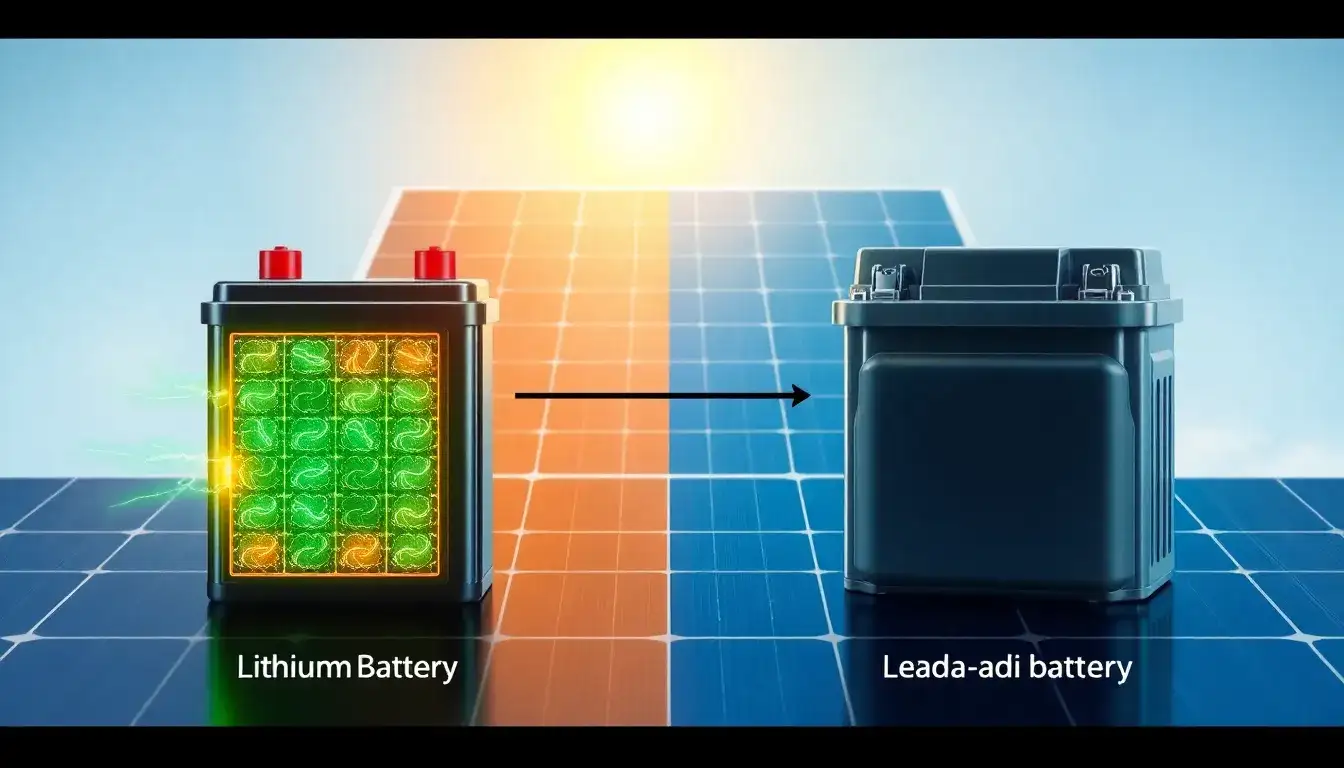
When comparing the energy density of lithium-ion batteries to lead-acid batteries used in solar systems, there is a significant difference:
- Lithium-ion Batteries: These have a much higher energy density, typically ranging from 125-600 Wh/L and 100-300 Wh/kg. This means lithium-ion batteries can store more energy per unit of weight and volume, making them ideal for applications where space and weight are critical, such as portable solar systems or installations where maximizing energy storage per space is required.
- Lead-acid Batteries: They have a lower energy density, usually between 20-50 Wh/L and 30-50 Wh/kg. While they are less efficient in terms of energy storage per volume and weight, they are generally less expensive to purchase and maintain compared to lithium-ion batteries.
In solar systems, lithium-ion batteries are preferred for their high energy density and efficiency, which allows for more reliable and efficient energy storage. However, lead-acid batteries remain a viable option due to their cost-effectiveness for larger installations where the footprint is not as constrained.
Original article by NenPower, If reposted, please credit the source: https://nenpower.com/blog/how-does-the-energy-density-of-lithium-ion-batteries-compare-to-lead-acid-batteries-used-in-solar-systems/

