

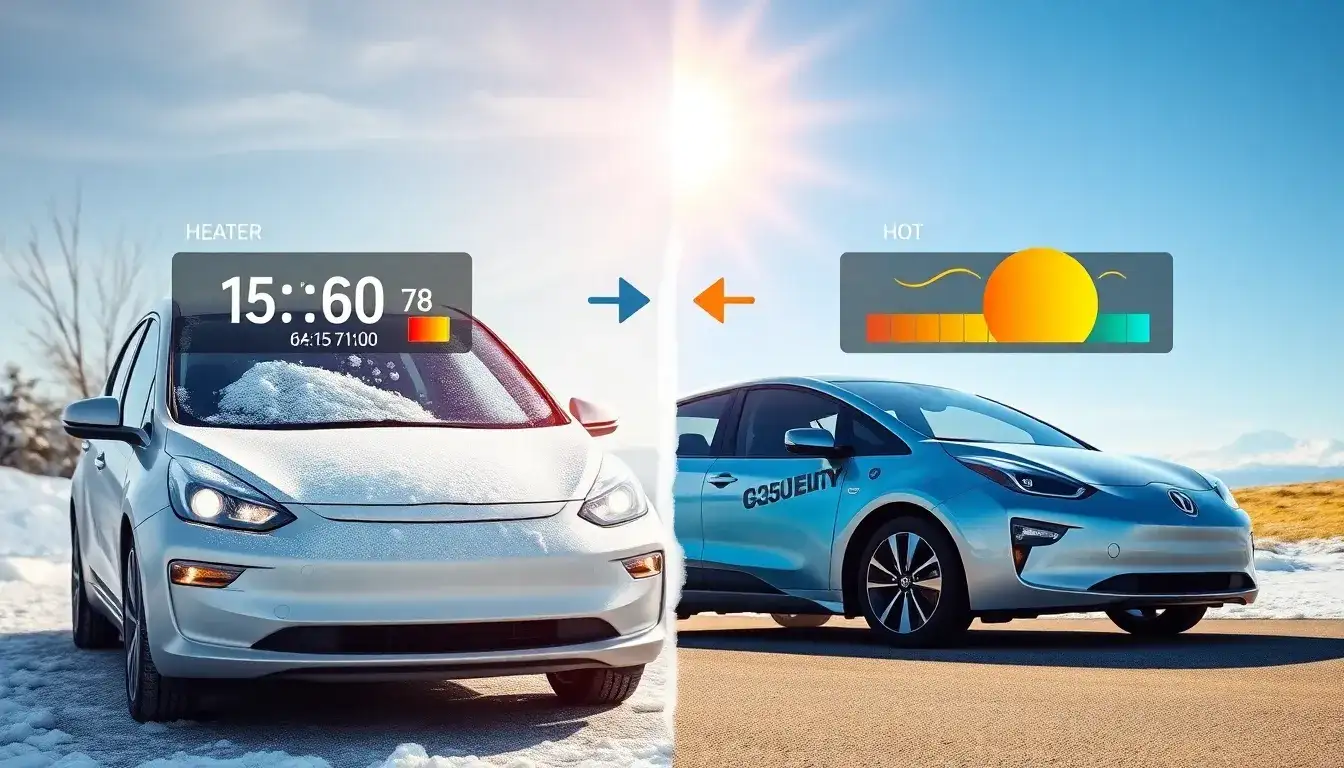
The energy consumption of electric vehicles (EVs) varies notably between cold and hot weather conditions, with cold weather having a significantly larger impact than hot weather.
Impact of Cold Weather on EV Energy Consumption
- Cold temperatures cause EV range to decrease substantially. For example, at around 4°C (39°F), EV range can drop by approximately 25% compared to moderate temperatures near 18°C (64°F).
- At typical cold conditions like 20°F (-7°C), EV range declines by about 41%, which is much larger than the roughly 10% decrease seen in conventional internal combustion engine vehicles (ICEVs).
- The main contributors to increased energy consumption in cold weather are:
- Higher power use by onboard heating, ventilation, and air conditioning (HVAC) systems aimed at maintaining cabin comfort (~72°F) which draws from the battery.
- Reduced battery efficiency and chemistry performance in cold temperatures leading to less usable battery capacity.
- Optimal driving speeds also vary with temperature; for example, optimal speed for maximizing range is higher in cold weather (37 mph at 32°F vs. 19 mph at 68°F) to offset efficiency losses caused by temperature.
Impact of Hot Weather on EV Energy Consumption
- Hot weather affects EV range much less significantly. Below 90°F (32°C), EV range loss is typically only 2% to 5%, generally unnoticeable for most drivers.
- Studies show that energy consumption is lowest at moderate ambient temperatures of about 20–30 °C (68–86 °F), with energy consumption increasing only slightly beyond this range.
- HVAC use for cooling in hot weather does consume additional energy, but the impact is less severe compared to heating in cold weather.
Summary
- EV energy consumption and range are most efficient at moderate temperatures (~20-25°C / 68-77°F).
- Cold weather drastically reduces EV range (up to 40% or more reduction) due to battery chemistry effects and heating demands.
- Hot weather causes only minor range reductions (2-5% below 90°F), caused primarily by air conditioning use.
This sensitivity difference means EV owners in cold climates face more significant range and energy consumption challenges compared to those in hot climates.
Original article by NenPower, If reposted, please credit the source: https://nenpower.com/blog/how-does-the-energy-consumption-of-evs-vary-between-cold-and-hot-weather-conditions/

