

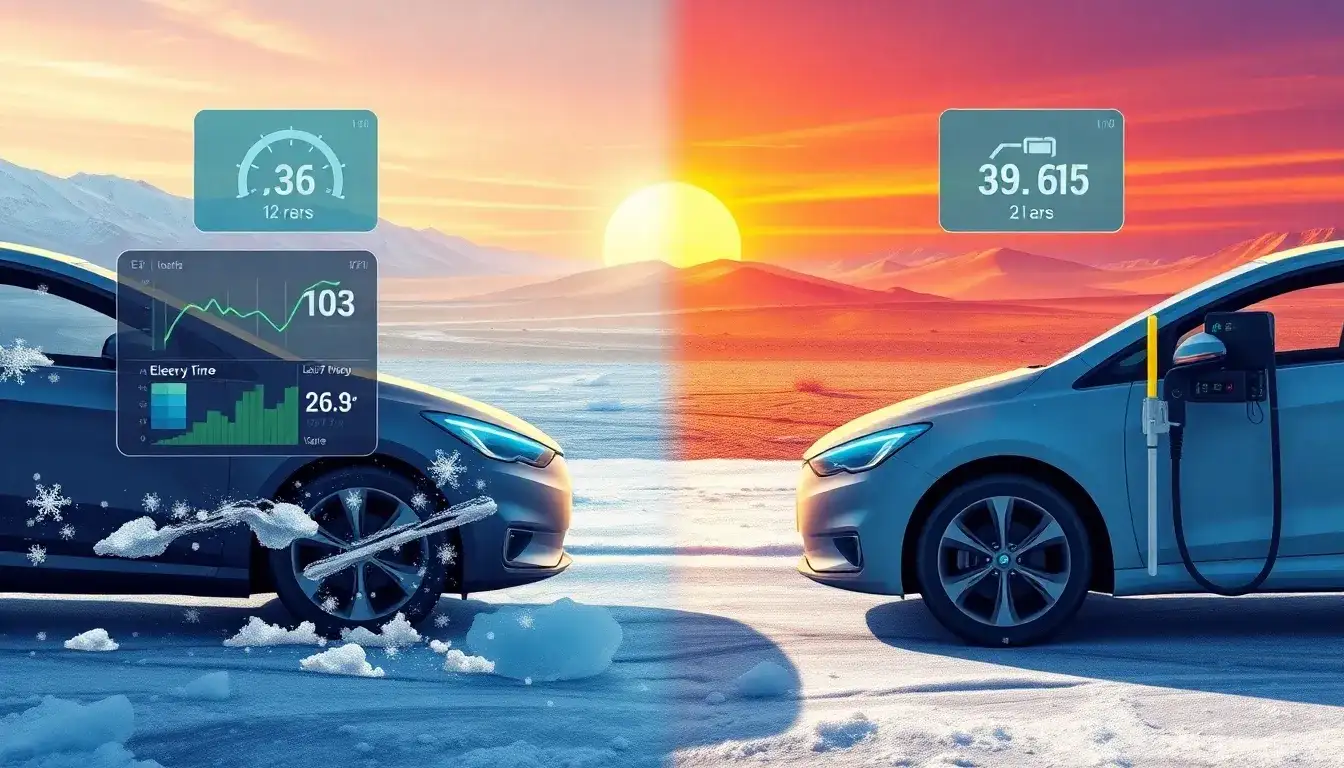
Energy Consumption of EVs vs. Gasoline-Powered Cars in Extreme Temperatures
Energy consumption in vehicles can be significantly affected by extreme temperatures. Here’s a comparison of how electric vehicles (EVs) and gasoline-powered cars perform under such conditions:
Electric Vehicles (EVs)
- Efficiency in Extreme Temperatures:
- Cold Weather: EVs tend to lose efficiency in cold temperatures. The performance of EV batteries can decrease significantly at low temperatures, impacting both range and charging time. This is because batteries operate best within a certain temperature range, and lower temperatures can slow down chemical reactions inside the battery, reducing their efficiency.
- Hot Weather: While high temperatures don’t generally reduce EV battery performance as much as cold, continuous exposure to heat can degrade battery health over time. However, immediate driving efficiency in hot conditions is not severely affected compared to cold.
- Heating and Cooling Systems:
- EVs use electric heaters, which consume some of the battery’s energy to warm the vehicle, further reducing efficiency in cold weather. In contrast, gasoline cars use waste heat from the engine to warm the interior, making them more efficient in this regard.
- Cooling systems in EVs are generally more efficient and don’t consume as much energy as heating systems.
Gasoline-Powered Cars
- Efficiency in Extreme Temperatures:
- Cold Weather: Gasoline vehicles experience some loss of efficiency in cold temperatures due to reduced engine performance and increased energy needed for heating systems. However, the primary source of heat is the engine itself, which is more efficient for heating purposes compared to electric heaters in EVs.
- Hot Weather: Gasoline vehicles maintain their efficiency relatively well in warm or hot conditions but may experience slightly increased fuel consumption due to air conditioning use.
- Heating and Cooling Systems:
- Gasoline vehicles use engine waste heat for interior heating, which is more energy-efficient compared to electric heaters in EVs.
- Cooling systems, primarily air conditioning, consume some engine power, reducing overall fuel efficiency.
Comparison of Energy Consumption
- General Efficiency: EVs are generally more energy-efficient than gasoline-powered cars under normal conditions, being about 4.4 times more efficient on average. However, in extreme temperatures, their efficiency advantage may be reduced, particularly in cold weather.
- Temperature Impact: EVs face significant efficiency challenges in cold weather due to battery performance issues, while gasoline-powered cars have more consistent efficiency across different temperatures, thanks to their heating systems.
In summary, while EVs typically offer better energy efficiency under normal conditions, their performance can be more affected by extreme temperatures—especially cold weather—due to battery limitations and heating system inefficiencies. Gasoline-powered vehicles maintain more consistent performance across different temperatures.
Original article by NenPower, If reposted, please credit the source: https://nenpower.com/blog/how-does-the-energy-consumption-of-evs-compare-to-gasoline-powered-cars-in-extreme-temperatures/

