

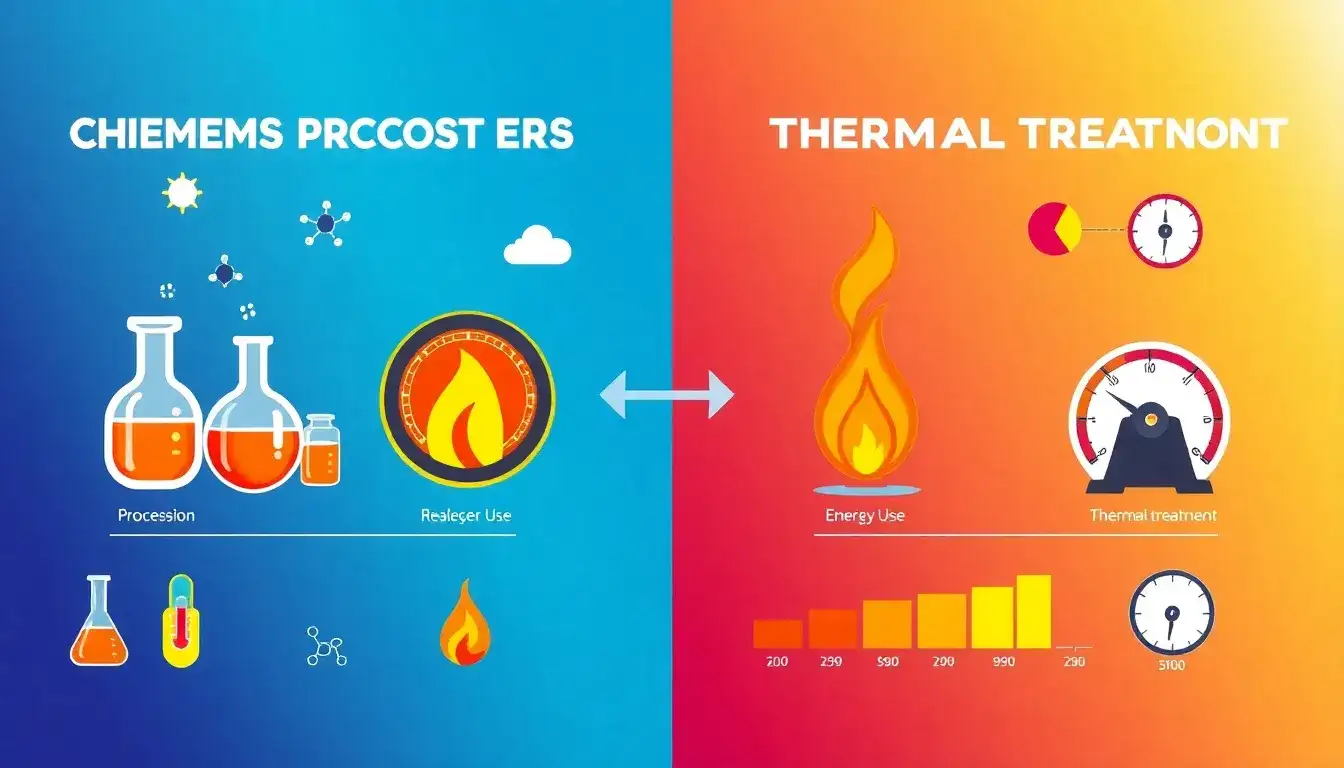
Chemical treatment generally consumes less energy compared to thermal treatment, but the difference depends on the specific processes and applications involved.
Energy Consumption in Chemical Treatment:
- The chemical manufacturing sector is highly energy-intensive, accounting for about 37% of manufacturing energy use in the U.S., with total energy consumption over 6 quadrillion Btu annually.
- Specific chemical processes, such as ammonia production, have an energy intensity around 40.9 GJ/tonne (including feedstock).
- Chlorine production, an electrolysis-based chemical process, is one of the highest electricity consumers in chemical manufacturing, using about 4380 kWh per tonne chlorine.
- Energy-efficient solutions in chemical handling, such as optimized pumping systems, can reduce power consumption while maintaining performance.
Energy Consumption in Thermal Treatment:
- Thermal treatment processes typically involve direct heating, often requiring significant energy input to reach and maintain high temperatures.
- While direct data on thermal treatment energy use is lacking, thermal processes (e.g., incineration, pyrolysis, or heat-based material processing) generally consume larger amounts of fuel or electricity due to the high temperatures needed.
- Thermal treatment energy use is often more intensive than chemical treatment for comparable volumes or effects because energy is used directly to supply heat rather than to induce chemical changes at lower energy levels.
Comparison:
| Aspect | Chemical Treatment | Thermal Treatment |
|---|---|---|
| Energy Intensity | High for certain processes (e.g., ammonia, chlorine) but varies widely | Generally higher due to heat requirements |
| Energy Source | Electricity and fuels; chemical feedstocks add to total energy footprint | Mostly fuels or electricity to generate heat |
| Efficiency & Optimization | Possible with energy-efficient pumping and tailored chemistry | Less efficient due to heat losses, but depends on technology |
| Typical Application Energy Use | Often a major share in manufacturing sector (37%) | Usually more energy-intensive per unit volume processed |
In summary, while chemical treatments are energy-intensive, especially in industrial manufacturing, thermal treatments typically require more direct energy input to generate heat, making them usually more energy-demanding. However, the actual consumption depends heavily on the specific technology and process scale. Chemical process optimization techniques can help reduce energy consumption significantly, whereas thermal treatments must focus on heat recovery and fuel efficiency to minimize energy use.
Original article by NenPower, If reposted, please credit the source: https://nenpower.com/blog/how-does-the-energy-consumption-of-chemical-treatment-compare-to-thermal-treatment/

