

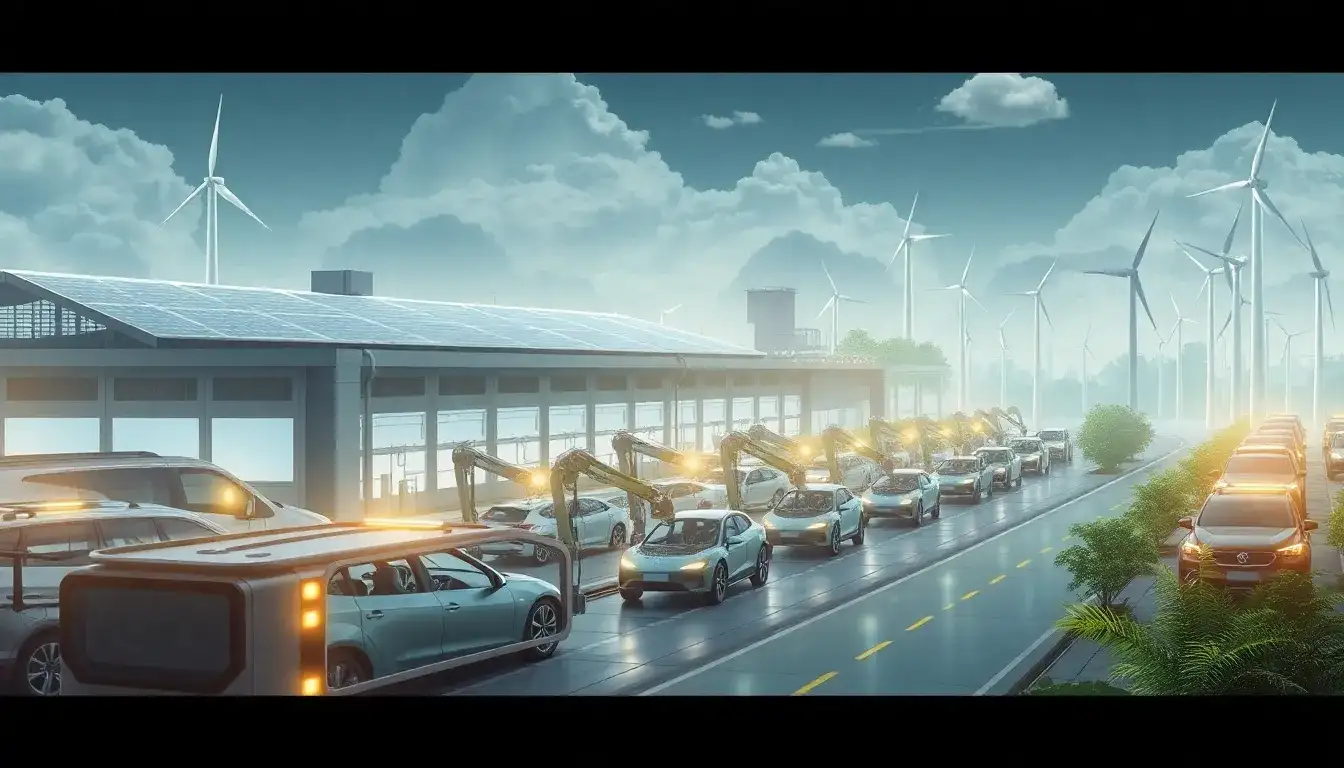
Energy consumption in EV manufacturing facilities significantly contributes to their carbon footprint through several factors:
Energy Consumption and Chemical Usage
- Manufacturing Processes: The production of electric vehicles involves various energy-intensive processes. This includes the production of components such as steel and aluminum, which are essential for vehicle structure, and lithium-ion batteries, which require considerable energy for their manufacture.
- Component Production: Steel and aluminum production, for instance, require significant energy inputs, contributing to greenhouse gas emissions. Additionally, the extraction and processing of raw materials for battery production, such as lithium and cobalt, add to the energy consumption and emissions.
- Chemical Usage: The use of chemicals in battery manufacturing further increases the environmental impact by contributing to pollution and energy usage.
Carbon Footprint Comparison
- Manufacturing Phase: Electric vehicles have a higher carbon footprint during manufacturing compared to conventional internal combustion engine (ICE) vehicles. This is primarily due to the energy-intensive processes involved in EV component manufacturing.
- Operational Phase: However, EVs produce zero tailpipe emissions, and when powered by renewable energy sources, they significantly reduce emissions during operation. Studies suggest that EVs can offset their higher manufacturing emissions within a few years of use, leading to a lower overall lifetime carbon footprint compared to ICE vehicles.
Mitigating Carbon Emissions
To reduce the carbon footprint of EV manufacturing, efforts are being made to:
- Improve Energy Efficiency: Enhancing energy efficiency in manufacturing plants by using more efficient technologies and renewable energy sources.
- Reduce Material Emissions: Developing processes to reduce emissions from material extraction and processing.
- Recyclability: Increasing the recyclability of components like batteries to minimize waste and reduce the need for new raw materials.
Original article by NenPower, If reposted, please credit the source: https://nenpower.com/blog/how-does-the-energy-consumption-in-ev-manufacturing-facilities-contribute-to-their-carbon-footprint/

