

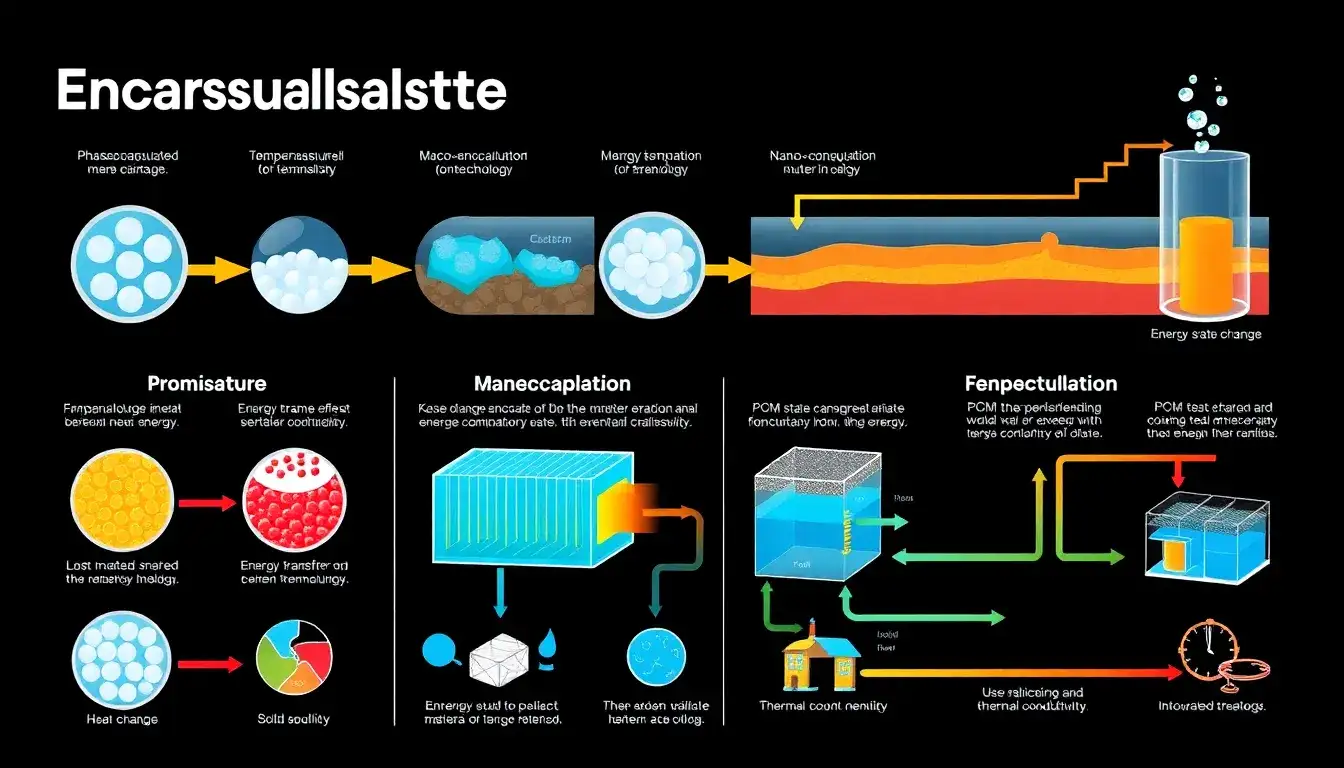
The encapsulation method of phase change materials (PCMs) significantly affects their performance in thermal energy storage by addressing several critical challenges and enhancing their overall efficiency.
Positive Effects on Performance:
- Prevention of Leakage: Encapsulation prevents PCMs from leaking, which can occur when PCMs are in direct contact with the surrounding environment. This is crucial for maintaining consistent thermal performance and avoiding material loss.
- Corrosion Protection: Encapsulation shields PCMs from corrosive environments, ensuring that the materials remain stable and functional over long periods.
- Improved Mechanical Strength: The encapsulation shell can be made from materials like polystyrene or hybrids, which enhance the mechanical strength of PCMs. This is particularly important for applications where physical stability is necessary.
- Enhanced Thermal Conductivity: Depending on the shell material used, encapsulation can also improve thermal conductivity, facilitating better heat transfer between the PCM and its surroundings.
- Form Stability: Encapsulation helps maintain the form stability of PCMs, ensuring they keep their shape and structural integrity even during phase transitions.
Techniques and Applications:
- Microfluidic Encapsulation: This method allows for precise control over the encapsulation process, resulting in uniform capsules or fibers with consistent thermal properties.
- Electrospinning: Techniques like coaxial electrospinning produce core-sheath nanofibers, which can effectively encapsulate natural phase change materials like lauric acid. These nanofibers demonstrate high heat storage capacities and excellent cycling stability.
- Applications in Building and Textiles: Encapsulated PCMs are increasingly used in building materials for insulation and energy storage, as well as in smart textiles for temperature regulation.
Conclusion:
Encapsulation methods not only protect phase change materials from environmental impacts but also enhance their mechanical and thermal properties, making them more reliable and efficient for thermal energy storage applications across various industries.
Original article by NenPower, If reposted, please credit the source: https://nenpower.com/blog/how-does-the-encapsulation-method-of-phase-change-materials-affect-their-performance-in-thermal-energy-storage/

