

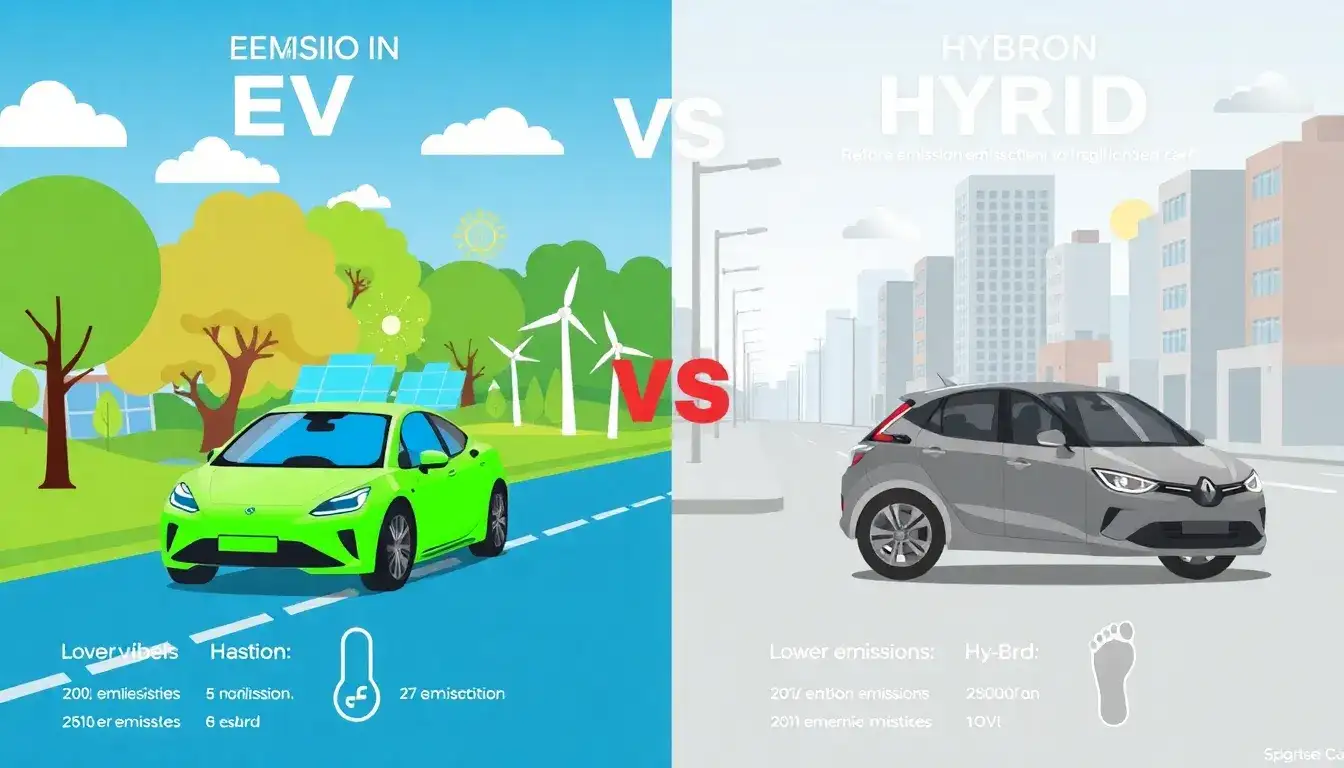
Electric vehicles (EVs) generally have a lower lifetime emissions profile compared to hybrid vehicles, but specific conditions can influence this comparison.
- Tailpipe vs. life cycle emissions: EVs produce zero tailpipe emissions, while hybrids still emit CO₂ through gasoline combustion. However, both vehicle types require analysis of upstream emissions from electricity generation (for EVs) and fuel production (for hybrids).
- Average emissions: Studies show EVs average ~200 grams of CO₂ per mile over their lifetime, compared to ~260 grams for hybrids (plug-in or traditional). The U.S. Department of Energy reports EVs generate 3,932 lbs. of CO₂ annually, versus 5,772–6,258 lbs. for hybrids (depending on type).
- Exceptions: Rare cases may favor hybrids, such as energy-intensive battery production paired with coal-dependent electricity grids, or hybrids driven predominantly in low-speed, regenerative-braking-heavy conditions where gasoline use is minimized.
- Regional factors: In areas with low-carbon electricity (e.g., hydro or nuclear), EVs significantly outperform hybrids. In regions with fossil-fuel-heavy grids, the gap narrows, though EVs typically retain an edge.
Hybrids reduce emissions by 20-35% compared to gasoline vehicles, but EVs achieve ~50-65% reductions under average conditions. While hybrid technology is currently more widespread, EVs represent the cleaner long-term solution as grids decarbonize.
Original article by NenPower, If reposted, please credit the source: https://nenpower.com/blog/how-does-the-emissions-profile-of-electric-vehicles-compare-to-hybrid-vehicles/

