

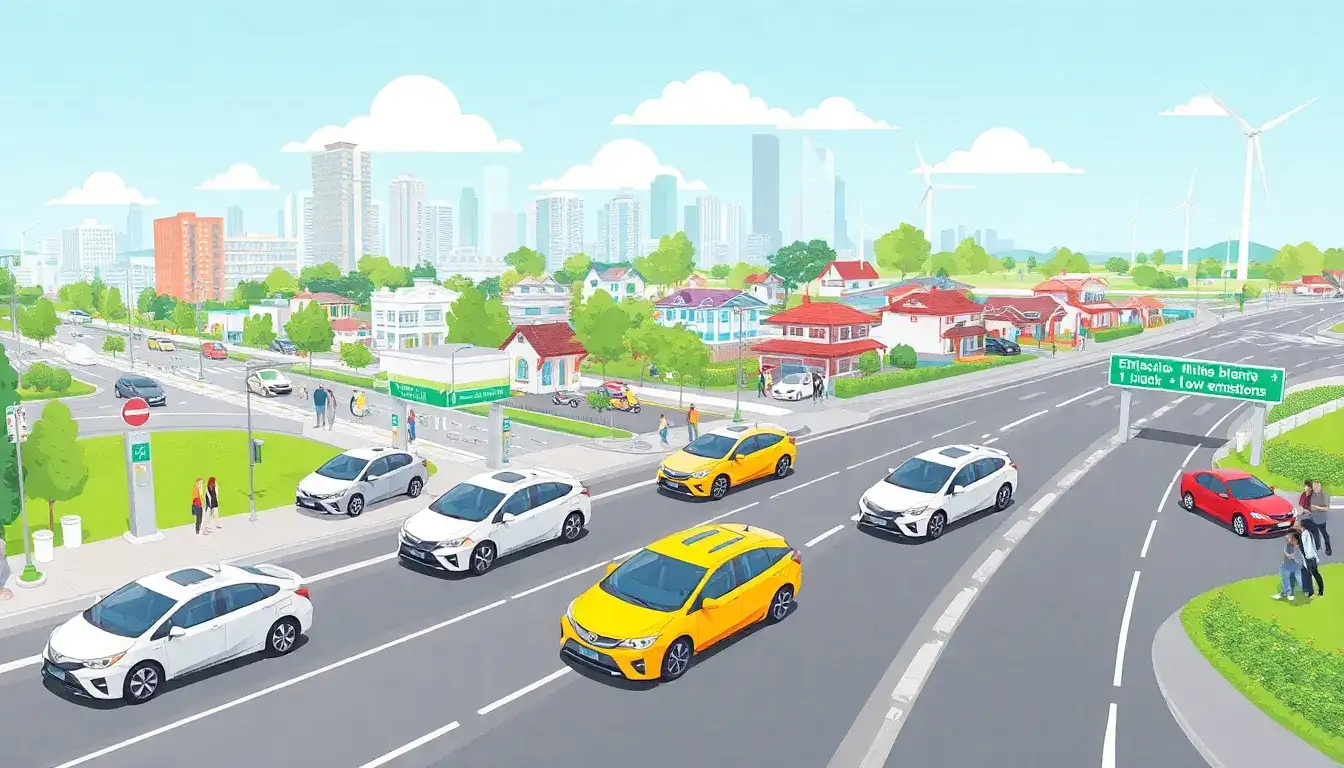
The electric range of plug-in hybrid electric vehicles (PHEVs) significantly impacts their overall emissions in urban environments, but the effects are nuanced and depend on actual usage patterns and vehicle capabilities.
Impact of Electric Range on Emissions
- Longer Electric Range Reduces Emissions: PHEVs with greater electric-only range can operate more frequently in all-electric mode, which produces zero tailpipe emissions. This reduces overall emissions, particularly in urban areas where trips tend to be shorter and electric operation is feasible. Each increase in electric system power (which correlates with electric range) reduces real-world CO2 emissions by around 2%–4% for every additional 10 kW of system power, reflecting lower fuel consumption.
- Dependence on Electricity Source: Although PHEVs running purely on electricity have zero tailpipe emissions, upstream emissions depend on the electricity generation mix. Cleaner electricity sources mean lower overall emissions.
Challenges in Real-World Urban Usage
- Reduced Effective Electric Range: Studies have shown PHEVs often achieve less than their advertised electric range in real-world urban driving. For example, Peugeot and BMW PHEV models reached only 53% and 74%, respectively, of their claimed electric range during city driving.
- Emissions Higher Than Expected: On-road tests have found that PHEVs can emit significantly more CO2 than laboratory or advertised figures indicate, even when starting with a full battery. In typical urban commuter routes, some models emitted 20% to 300% more CO2 than their official ratings.
- Limited Zero-Emission Operation: With electric ranges often limited to around 50 km per charge and lacking fast charging options, some PHEVs like the Renault Megane can only achieve zero-emissions driving on short urban trips. Beyond that electric range, the combustion engine activates, increasing emissions.
Summary
The electric range of PHEVs has a direct and meaningful impact on their overall emissions in urban environments by enabling zero tailpipe emissions operation during short trips. However, the actual emission benefits are often less than expected because real-world electric ranges can be shorter than advertised and many PHEVs rely partially on combustion engines in daily use. As a result, their urban emissions can be significantly higher than laboratory estimates, highlighting the importance of actual driving patterns and electric range capabilities in determining true environmental impact.
In conclusion, maximizing the electric range and encouraging regular charging are critical for reducing urban emissions from PHEVs, but current PHEV technology and usage often limit these potential benefits.
Original article by NenPower, If reposted, please credit the source: https://nenpower.com/blog/how-does-the-electric-range-of-phevs-impact-their-overall-emissions-in-urban-environments/

