

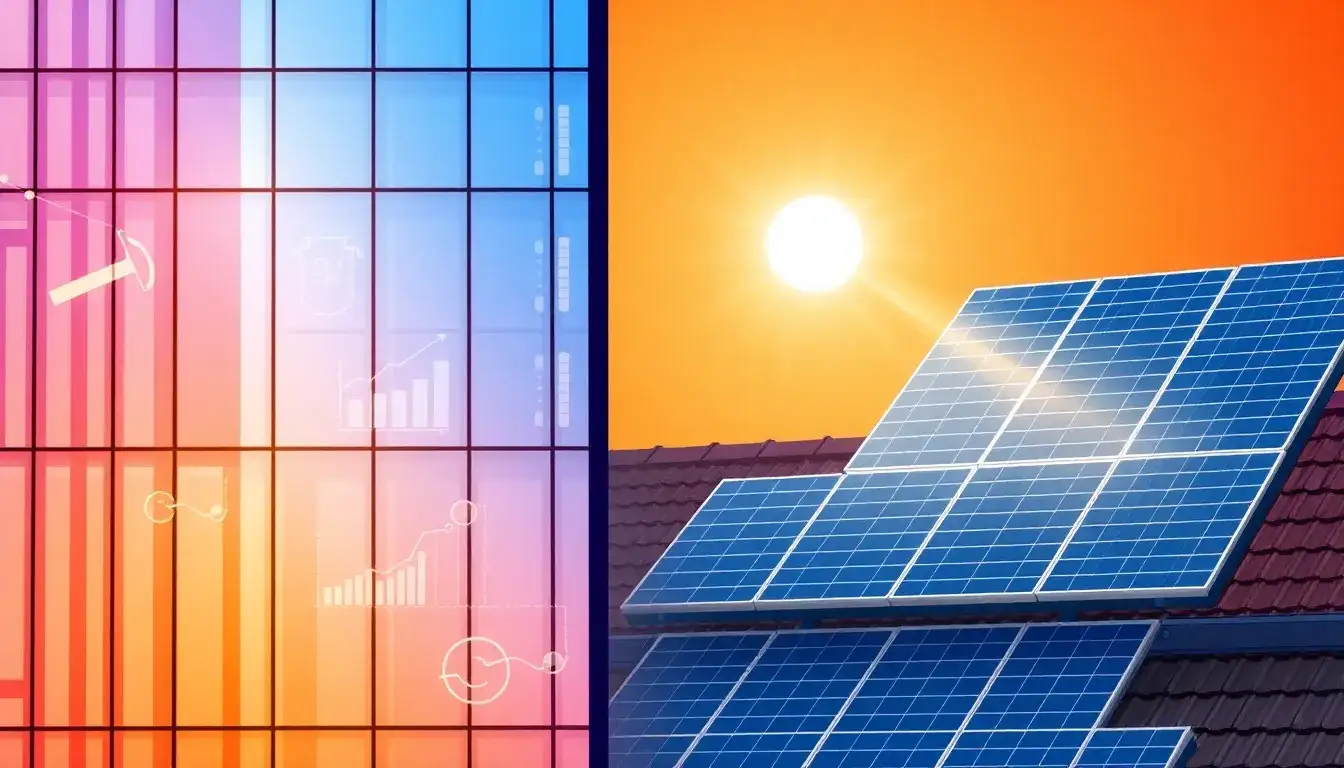
Thermochromic photovoltaic (PV) glass is an innovative solar technology that dynamically changes its transparency to control light and heat transmission, potentially integrating solar energy generation with building facades like windows. When comparing the efficiency of thermochromic photovoltaic glass to traditional solar panels, several key points emerge:
Efficiency of Traditional Solar Panels
- Traditional solar panels, particularly monocrystalline types, typically exhibit efficiencies ranging from about 18% to 24% in converting sunlight into electricity under standard test conditions.
- Polycrystalline panels generally have slightly lower efficiencies, around 13% to 20% depending on the source.
- Thin-film solar panels, often used for flexible or lightweight applications, have efficiencies ranging from about 7% to 15% but tend to degrade faster than crystalline panels.
- The highest-efficiency commercial solar cells (not thermochromic) currently achieve around 24% efficiency, with cutting-edge lab cells reaching above 40% under concentrated light but these are not widely deployed.
Efficiency of Thermochromic Photovoltaic Glass
- Thermochromic PV glass is still emerging technology, and specific efficiency figures are generally lower than standard solar panels because:
- It must balance electricity generation with visible light transmission to function as a window/glass facade.
- The dynamic tinting feature, which controls heat and light based on temperature, inherently reduces the amount of light reaching the photovoltaic cells when activated.
- Transparent or semi-transparent solar technologies, which thermochromic PV glass often falls under, currently have efficiencies typically between 1% and 10% depending on transparency level and material.
- Such glass aims not to replace traditional solar panels in pure energy efficiency but to integrate energy generation into building elements with additional benefits such as improved thermal comfort and reduced cooling loads.
Summary Comparison
| Feature | Traditional Solar Panels | Thermochromic Photovoltaic Glass |
|---|---|---|
| Typical Efficiency Range | 18% – 24% (commercial mono) | ~1% – 10% (transparent/thermochromic glass) |
| Key Benefit | High electricity output | Multi-functionality: electricity + shading/thermal control |
| Use Case | Roofs, ground mounts, fields | Windows, facades where transparency is needed |
| Technology Maturity | Mature, widely used | Emerging, still developing |
| Impact of Temperature & Light | Efficiency varies but optimized | Tinting reduces light transmission and PV output when active |
Conclusion
Thermochromic photovoltaic glass offers a multifunctional approach to solar energy integration by combining power generation with dynamic solar control in building facades, but generally at a significantly lower electrical conversion efficiency than traditional solar panels, which are optimized purely for power output. Traditional monocrystalline panels remain the most efficient and cost-effective choice for generating electricity, typically achieving efficiencies above 20%. Thermochromic PV glass efficiency is currently much lower, typically less than 10%, reflecting its trade-off between transparency and power generation.
Thus, the choice between them depends on application priorities: maximum electricity generation favors traditional panels, while integrated, adaptive building energy solutions favor thermochromic photovoltaic glass despite its lower efficiency.
Original article by NenPower, If reposted, please credit the source: https://nenpower.com/blog/how-does-the-efficiency-of-thermochromic-photovoltaic-glass-compare-to-traditional-solar-panels/

