

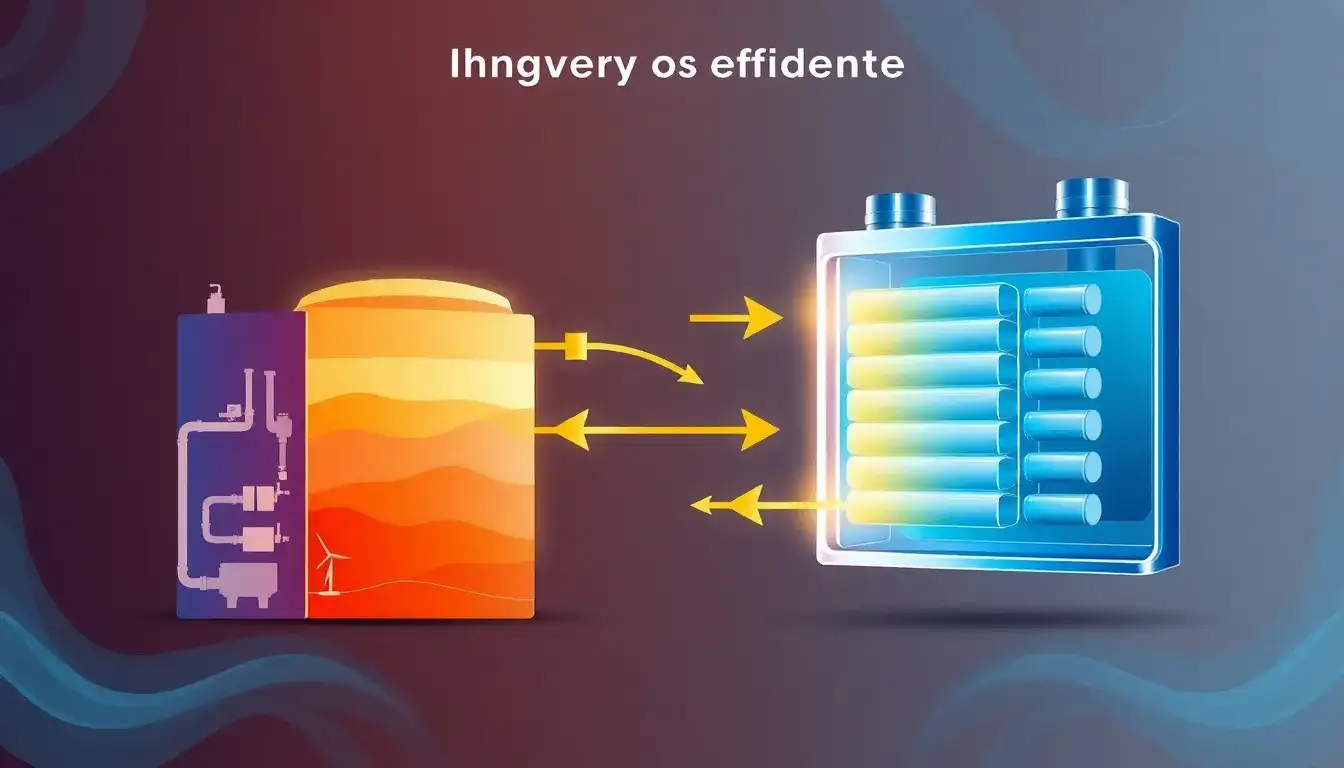
Thermal energy storage (TES) and lithium-ion batteries differ significantly in efficiency, application, and optimal use cases.
Efficiency Comparison
- Modern thermal energy storage technologies, particularly recent innovations like the radial flow packed-bed system using hot air and pebbles developed by KTH researchers, can achieve thermal efficiencies exceeding 90%. These systems store heat at high temperatures (e.g., up to 800°C) and improvements have reduced power losses related to heat transfer and air circulation, further boosting efficiency.
- More generally, thermal energy storage systems range widely in efficiency, typically from about 50% to 90%, depending on the specific technology used—whether sensible heat storage, phase change materials (PCMs), or thermochemical storage. Sensible heat storage systems often achieve efficiencies in the range of 50% to 90%, while phase change and thermochemical systems can reach efficiencies up to nearly 100% under ideal conditions.
- Lithium-ion batteries, on the other hand, typically have round-trip electrical efficiency between about 85% and 95%. This high efficiency means that most of the electrical energy put into the battery can be retrieved.
Key Differences and Complementarities
- TES is particularly efficient and cost-effective for storing thermal energy over long durations (hours to months), especially for direct use in industrial heat processes or coupling with power cycles for electricity production. It is also well-suited for large-scale, seasonal, or district-level energy storage, often using low-cost and abundant materials such as water, molten salts, or rocks.
- Lithium-ion batteries are best suited for short to medium duration electrical energy storage (minutes to hours), highly responsive grid services, and applications requiring high power density and fast discharge.
- While TES stores heat directly and is often integrated into heating and cooling systems or concentrated solar power plants, lithium-ion batteries store electrical energy, making them versatile for a wide range of applications including mobile, residential, and grid energy storage.
Summary Table
| Aspect | Thermal Energy Storage (TES) | Lithium-ion Batteries |
|---|---|---|
| Typical Efficiency | 50% to >90%, depending on technology | 85% to 95% round-trip efficiency |
| Storage Duration | Hours to months (long-term storage) | Minutes to hours (short to medium) |
| Energy Type Stored | Thermal energy (heat/cold) | Electrical energy |
| Typical Applications | Industrial heat, seasonal storage, district heating, CSP plants | Grid balancing, electric vehicles, portable electronics |
| Cost and Materials | Often lower cost, uses abundant materials like water, salts, rocks | Higher cost, uses critical raw materials like lithium, cobalt |
| Energy Density | Lower energy density compared to batteries | High energy density |
In essence, thermal energy storage offers very high efficiency for long-duration storage of heat energy, often surpassing 90% with advanced designs, making it ideal for applications requiring large-scale or long-term thermal management. Lithium-ion batteries provide somewhat higher round-trip electrical efficiencies and versatility for electric energy storage but at generally higher cost and shorter duration suitability. The choice between TES and lithium-ion batteries depends largely on the form of energy to store (thermal vs. electrical), duration needed, and specific application needs.
Original article by NenPower, If reposted, please credit the source: https://nenpower.com/blog/how-does-the-efficiency-of-thermal-energy-storage-compare-to-that-of-lithium-ion-batteries/

