

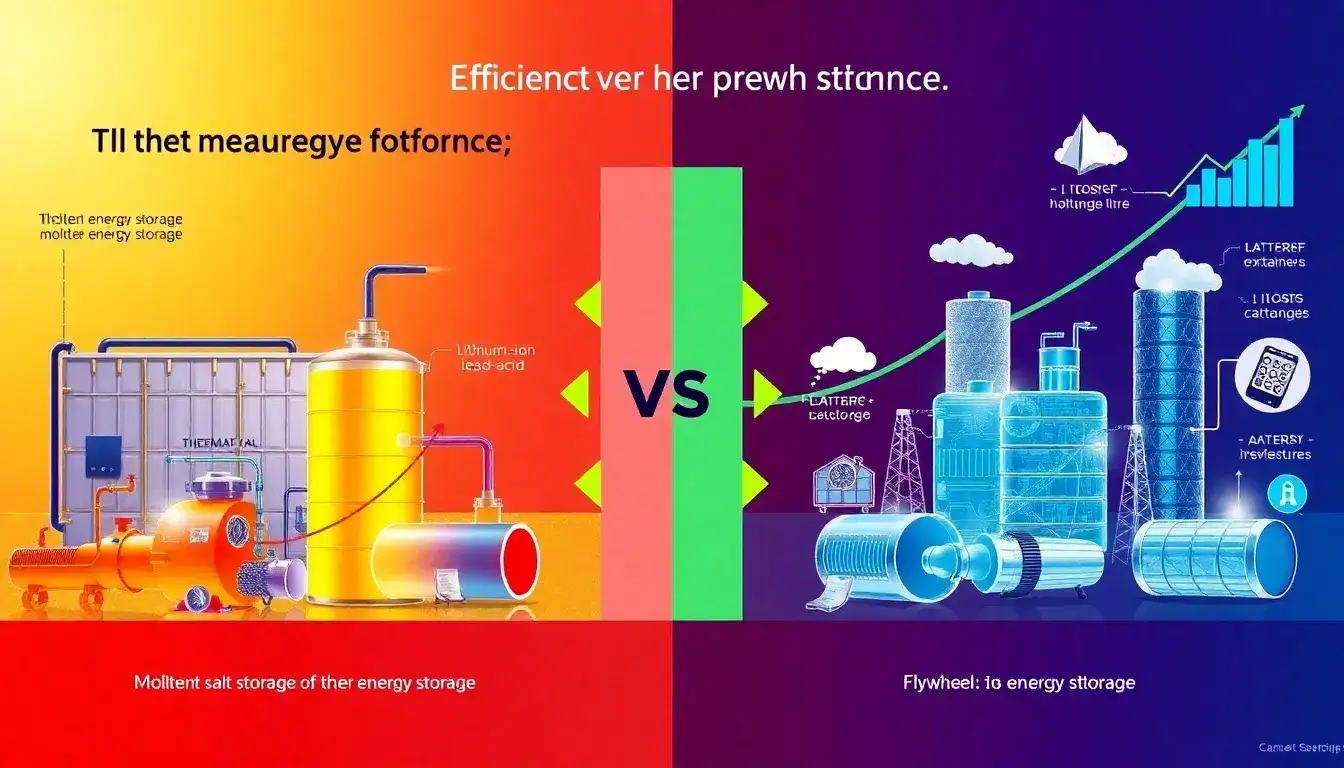
The efficiency of thermal energy storage (TES) systems varies significantly depending on the technology used, but they generally offer high efficiency compared to some other energy storage methods in certain contexts.
Thermal Energy Storage Efficiency
- Technology Overview: TES can be categorized into sensible heat, latent heat (using phase change materials), and thermochemical storage. Sensible heat storage efficiencies range from 50% to 90%, while phase change materials can achieve efficiencies from 75% to 90%.
- Recent Advancements: Researchers at KTH have developed a high-temperature thermal energy storage system with over 90% efficiency, using a radial packed bed design with hot air and pebbles or copper slags.
- ThermalBattery™: This technology uses high-performance concrete and achieves an efficiency over 98%, offering advantages in cost-effectiveness, recyclability, and versatility.
Comparison to Other Energy Storage Methods
Electrochemical Storage (e.g., Lithium-Ion Batteries)
- Efficiency: Lithium-ion batteries typically have a high charging and discharging efficiency, often exceeding 90%.
- Energy Density: They have a high energy density, making them suitable for mobile applications.
- Environmental Impact: The production process has environmental concerns due to lithium mining.
Other Energy Storage Technologies
- Compressed Air Energy Storage (CAES) and Pumped Hydro Storage (PHS): These technologies are primarily used for large-scale energy storage but have lower efficiencies compared to thermal energy storage.
Advantages of Thermal Energy Storage
- Cost and Scalability: TES systems can be cost-effective and scalable, especially when integrated with renewable energy sources like solar thermal.
- Application Flexibility: Thermal energy can be used directly in industrial processes or for heating/cooling applications, offering versatile usage scenarios.
- Environmental Benefits: Many TES technologies use environmentally friendly materials and can reduce waste heat.
In summary, thermal energy storage offers high efficiency, especially with advanced designs and technologies like the ThermalBattery™. Its applications are diverse, and it is particularly beneficial for long-duration energy storage and industrial processes. However, it may not be as portable or energy-dense as lithium-ion batteries, which are better suited for mobile applications.
Original article by NenPower, If reposted, please credit the source: https://nenpower.com/blog/how-does-the-efficiency-of-thermal-energy-storage-compare-to-other-energy-storage-methods/

