

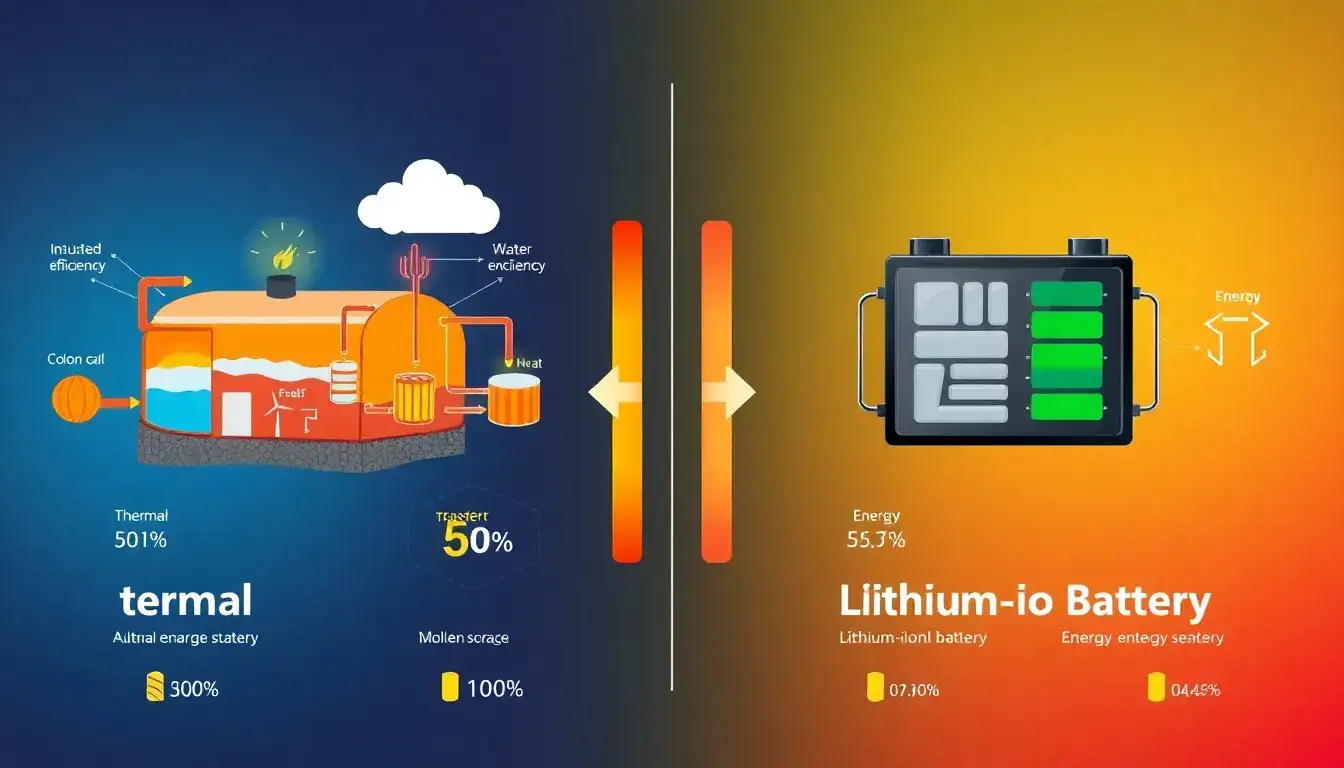
Efficiency Comparison: Thermal Energy Storage vs. Lithium-Ion Batteries
Thermal energy storage (TES) and lithium-ion batteries are both used to store energy but serve different purposes and have different efficiency profiles.
Lithium-Ion Batteries
- Efficiency: Lithium-ion batteries typically have an efficiency of around 95% to 98% for charging and discharging cycles. This means about 2% to 5% of the energy is lost as heat during each cycle.
- Purpose: Primarily used for portable electronics, electric vehicles, and storing electricity for short to medium durations.
- Limitations: Lithium-ion batteries are not suited for long-term energy storage or high-temperature applications and require rare materials like lithium and cobalt.
Thermal Energy Storage
- Efficiency: TES systems can achieve very high efficiency, depending on the technology used. For example, some TES systems using molten salts or hot silicon can reach efficiencies over 90%. In specific cases, like the Solar Two project, annual efficiencies of up to 99% have been reported.
- Purpose: Used for storing thermal energy for long durations, often in large-scale applications like power generation, heating, or cooling.
- Advantages: TES is highly efficient for thermal energy and can be used for seasonal storage, utilizing abundant materials like water or rock.
Key Differences
- Storage Medium: Lithium-ion batteries store electrical energy, while TES stores thermal energy.
- Duration and Scale: TES is more suitable for long-term and large-scale energy storage, often supporting renewable grid stability over days or months. In contrast, lithium-ion batteries are better for short-term and mobile applications.
- Cost and Materials: TES typically uses more abundant and cheaper materials compared to lithium-ion batteries.
In summary, thermal energy storage can achieve comparable or even higher efficiencies than lithium-ion batteries in their respective applications. However, they serve different roles in energy systems—TES for thermal energy, particularly in large-scale and long-duration applications, and lithium-ion batteries for short-term electrical energy storage.
Original article by NenPower, If reposted, please credit the source: https://nenpower.com/blog/how-does-the-efficiency-of-thermal-energy-storage-compare-to-lithium-ion-batteries/

