

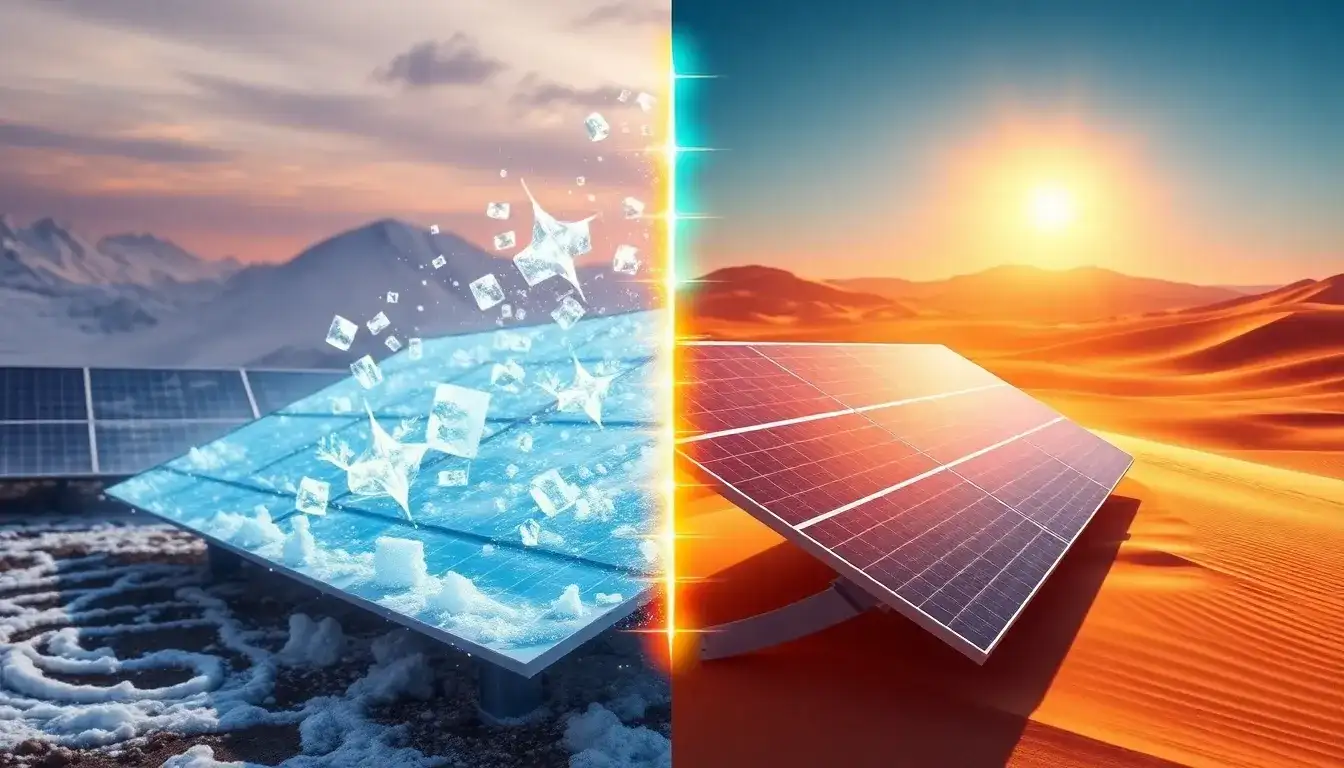
The efficiency of solar panels is significantly affected by extreme temperatures, with heat generally causing a decline in performance and cold conditions sometimes leading to improved output.
How Heat Affects Solar Panel Efficiency
- Solar panels are typically rated and tested at around 25°C (77°F) and perform optimally between about 15°C and 35°C (59°F to 95°F).
- For every degree Celsius above 25°C (77°F), the efficiency of solar panels typically declines by approximately 0.3% to 0.5% due to decreased output voltage in photovoltaic cells.
- On very hot days, panel surface temperatures can reach 60°C to 65°C (140°F to 149°F) or higher, which can lead to a loss in efficiency of 10% to 25% compared to rated performance.
- Despite this decrease in efficiency at high temperatures, overall energy production on hot sunny days might still be higher than on cloudy or cold days due to greater solar irradiance.
- The decrease in efficiency with increasing temperature is continuous: for example, at an 80°F day (3°F above 77°F), efficiency decreases by about 1.05% (0.35% per degree Fahrenheit).
How Cold Temperatures Affect Solar Panel Efficiency
- Conversely, solar panels can perform above their rated efficiency in cold weather. For example, at 0°C (32°F), output can increase by 5% to 7% because lower temperatures improve the electrical properties of the solar cells, boosting voltage and power output.
- Solar panels are built to withstand extreme outdoor conditions like freezing weather without significant damage, so cold does not harm their functionality but often improves efficiency.
Summary Table
| Temperature Range | Effect on Efficiency | Approximate Efficiency Change |
|---|---|---|
| 15°C to 35°C (59–95°F) | Optimal efficiency range | Peak rated efficiency |
| Above 25°C (77°F) | Efficiency decreases with rising temperature | 0.3% – 0.5% decrease per °C above 25°C |
| ~60°C to 65°C (140–149°F) | Significant efficiency loss | Up to 10-25% lower than rated output |
| Around 0°C (32°F) | Efficiency improves in cold conditions | 5-7% higher than rated efficiency |
In practical terms, while solar panels produce their best efficiency at moderate temperatures, extreme heat reduces their efficiency considerably though total energy may remain high due to strong sunlight. Cold weather can enhance efficiency but may come with reduced sunlight hours depending on season and location.
Original article by NenPower, If reposted, please credit the source: https://nenpower.com/blog/how-does-the-efficiency-of-solar-panels-change-in-extreme-temperatures/

