

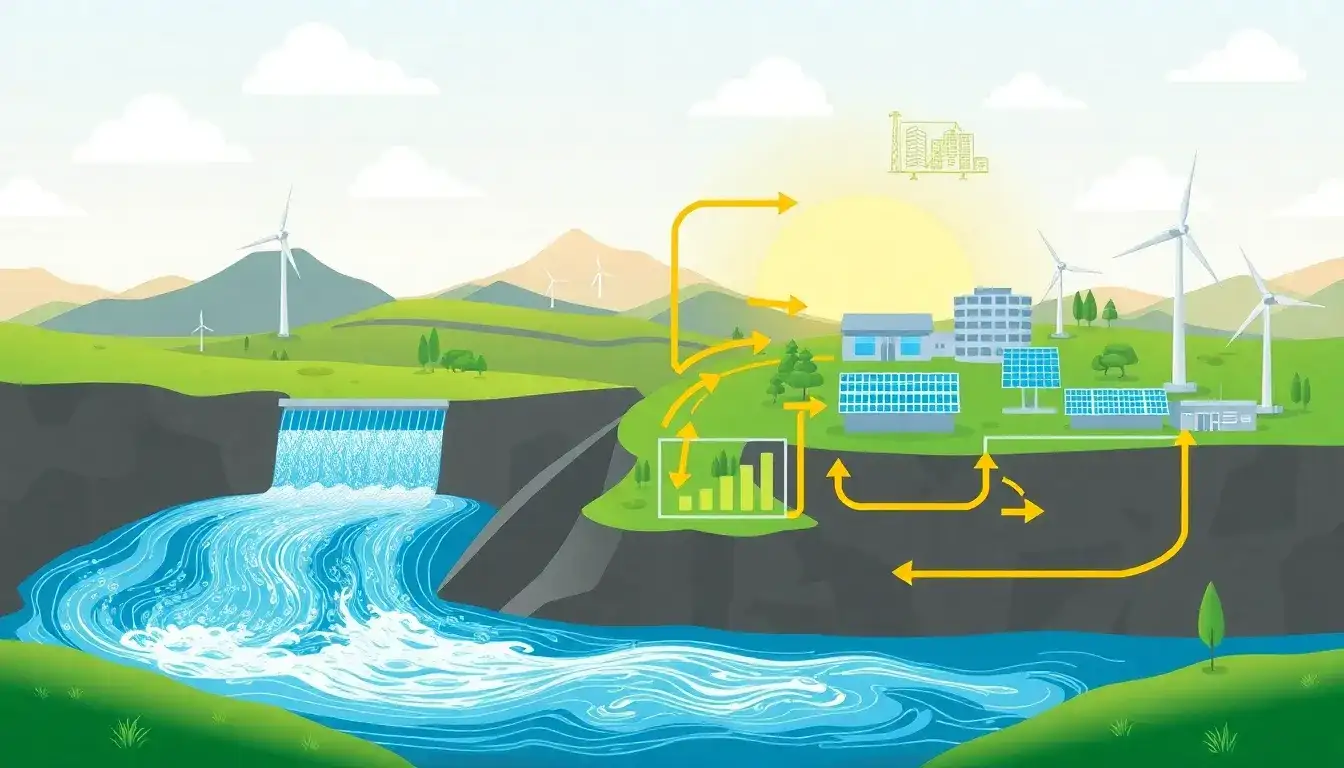
Pumped hydroelectric energy storage (PHES) is a method used for storing energy by shifting water between two reservoirs at different elevations. It is highly efficient as a storage mechanism, but its efficiency in generating new electricity depends on the source of power used to pump the water.
Efficiency Comparison with Renewable Energy Sources
1. Solar Energy
- Efficiency: Solar panels can achieve efficiencies over 20% with some types like monocrystalline panels. However, PHES itself is not a source but a storage method. When solar power is used to pump water in PHES, the overall efficiency involves both solar electricity generation and the storage efficiency of PHES.
- Application: Solar energy has minimal environmental impact compared to hydropower and is simpler to maintain than wind energy.
2. Wind Energy
- Efficiency: Wind turbines vary in efficiency based on design and location. While they can provide a significant amount of clean energy, their efficiency is influenced by weather conditions.
- Application: Wind energy offers a high return on energy input but requires regular maintenance and suitable locations.
3. Biomass Energy
- Efficiency: Biomass power has a relatively high efficiency of 20-30%, making it effective for areas with abundant organic waste.
- Application: Biomass energy is more environmentally intensive compared to solar energy but can be efficient in converting organic waste into energy.
4. Hydroelectricity
- Efficiency: Hydroelectricity is one of the most efficient forms of renewable energy, with power plants typically achieving efficiencies of 90% or higher. PHES uses hydroelectric principles but for storage, with round-trip efficiencies typically around 80-90%.
- Application: Hydroelectricity, including PHES, requires large water reservoirs and specific geographic conditions, which can have environmental impacts.
5. Geothermal Energy
- Efficiency: Geothermal energy is highly efficient, often achieving efficiencies of 10-23% when converting heat to electricity, depending on the technology used.
- Application: It is effective in regions with suitable geology and can provide both electricity and heating/cooling, making it a versatile renewable energy source.
Pumped hydroelectric energy storage is particularly valuable because it can effectively store excess energy generated by various renewable sources during off-peak hours and release it during peak demand times. While it does not generate new energy from a renewable source, it enhances the reliability and efficiency of renewable energy systems by stabilizing the grid and optimizing energy distribution.
Original article by NenPower, If reposted, please credit the source: https://nenpower.com/blog/how-does-the-efficiency-of-pumped-hydroelectric-energy-storage-compare-to-other-renewable-energy-solutions/

