

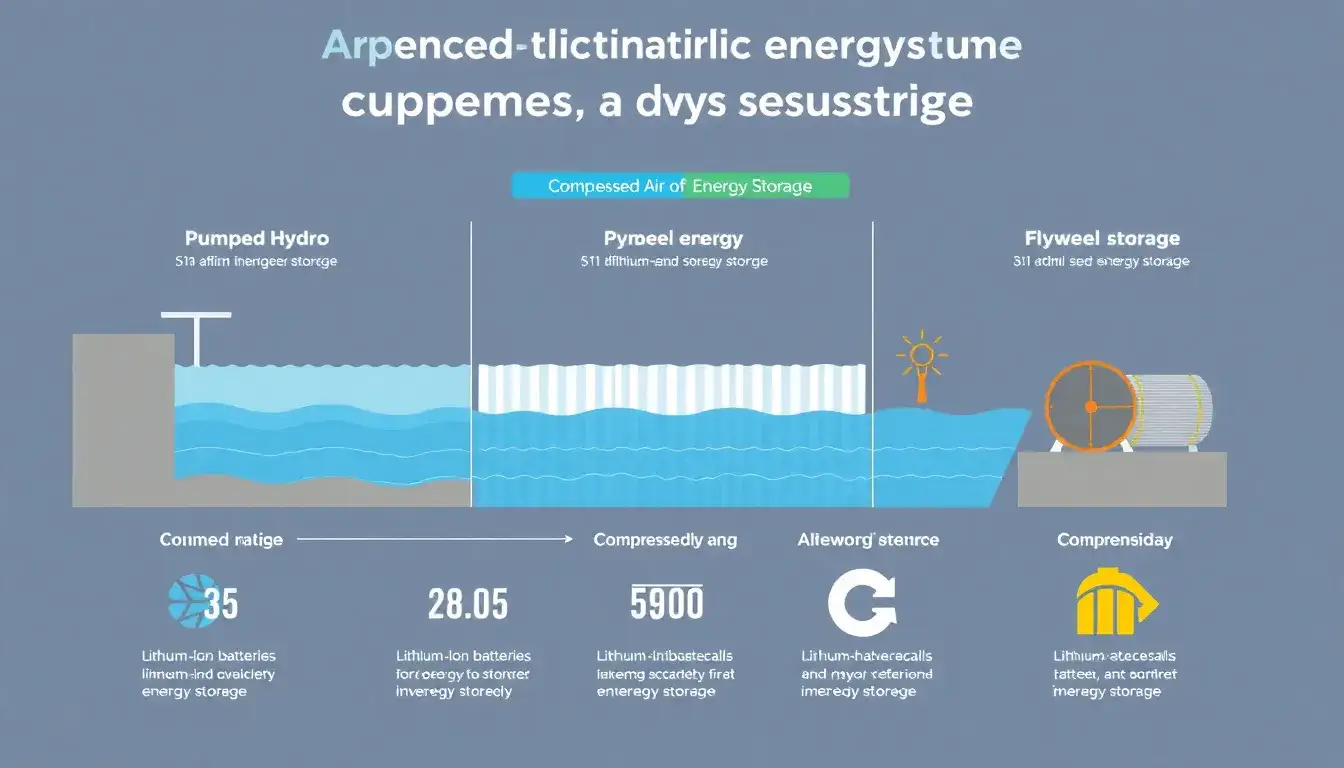
Pumped hydroelectric energy storage (PSH) generally exhibits higher efficiency and cost-effectiveness compared to many other forms of energy storage, making it a leading technology for large-scale energy management.
Efficiency Comparison
- Pumped Hydro Storage Efficiency:
- Round-trip energy efficiency typically ranges between 70% and 80%, with some sources citing efficiencies slightly over 80% through a full cycle.
- PSH systems can provide about 10 hours of electricity supply on average, which is longer than the typical 6 hours for lithium-ion batteries.
- Other Energy Storage Technologies:
- Lithium-ion batteries: Usually have slightly lower efficiency compared to PSH and shorter discharge durations (around 6 hours typical).
- Hydrogen storage: Has a considerably lower energy efficiency, about 40% to 60% due to conversion losses in electrolysis and fuel cells.
- Compressed Air Energy Storage (CAES): Efficiency lies around 60% to 65%.
- Flow Batteries: Can have efficiencies as low as about 70%.
Economic and Operational Advantages
- PSH is currently the most cost-effective option for storing large amounts of electricity, especially for grid-scale applications.
- Capital costs are high, but these are offset by very long service lifetimes—often several decades to over a century—far exceeding that of battery technologies.
- It enables grid stability and flexibility by flattening load variations, allowing base-load plants to run efficiently while reducing the need for more expensive and less efficient peaking power plants.
- PSH plants can benefit financially from electricity price fluctuations, buying electricity at low or even negative prices to pump water uphill and selling power during peak demand periods at higher prices.
Summary Table of Round-Trip Energy Efficiency
| Storage Type | Round-Trip Efficiency | Typical Discharge Duration | Notes |
|---|---|---|---|
| Pumped Hydro Storage (PSH) | 70% – 80%+ | ~10 hours | Proven, large scale, long lifetime |
| Lithium-ion Batteries | ~85% (varies) | ~4-6 hours | Higher efficiency but shorter duration and lifespan |
| Flow Batteries | ~70% | Varies | Lower efficiency, specialized uses |
| Compressed Air Energy Storage (CAES) | 60% – 65% | Hours to tens of hours | Moderate efficiency, geography dependent |
| Hydrogen Storage | 40% – 60% | Variable | Conversion losses reduce efficiency |
(Note: Lithium-ion batteries can have round-trip efficiencies comparable or sometimes higher than PSH but tend to have shorter storage duration and higher cost per MWh stored at grid scale.)
Conclusion
Pumped hydroelectric storage stands out as an efficient and economically viable option for utility-scale, long-duration energy storage. Its round-trip efficiency is competitive, especially when considering its longevity, scale, and the ability to support grid stability. Other storage technologies have varied efficiencies and are often limited by duration, cost, or lifecycle factors, making PSH the preferred choice for large-scale energy storage needs.
Original article by NenPower, If reposted, please credit the source: https://nenpower.com/blog/how-does-the-efficiency-of-pumped-hydroelectric-energy-storage-compare-to-other-forms-of-energy-storage/

