

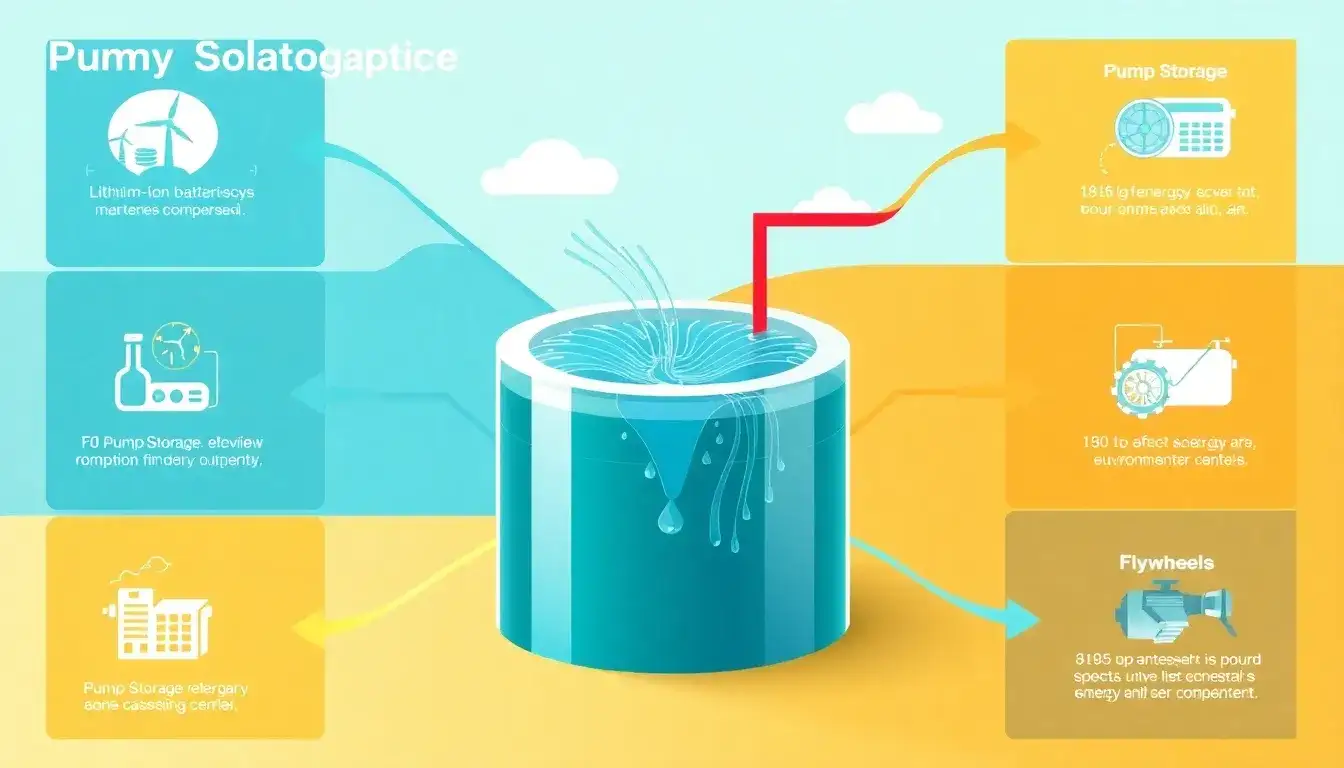
Pumped hydro storage (PHS) is one of the most efficient large-scale energy storage technologies, with round-trip efficiencies ranging from 70% to 87% or typically around 80%. Here’s a comparison of its efficiency with other common energy storage methods:
Comparison of Energy Storage Efficiencies
| Energy Storage Method | Typical Round-Trip Efficiency |
|---|---|
| Pumped Hydro Storage | 70%–87% (typically around 80%) |
| Lithium-Ion Batteries | 80%–95% |
| Flow Batteries | 75%–85% |
| Compressed Air Energy Storage (CAES) | 42%–55% |
| Sodium-Ion Batteries | Similar to Li-ion but still developing |
| Hydrogen Storage | 30%–40% (including electrolysis and fuel cell efficiency) |
Key Points for Comparison
- Scale and Cost: Pumped hydro storage is highly cost-effective for large-scale applications and offers one of the lowest costs per stored kWh. However, it requires suitable geography, which can limit locations.
- Efficiency and Durability: While lithium-ion batteries have higher efficiencies, pumped hydro storage provides long-term durability with equipment lifetimes exceeding 40 years and dams lasting over a century.
- Response Time: Pumped hydro storage provides rapid response capabilities, which are crucial for grid stability, especially with variable speed technologies.
- Environmental Impact: PHS can have minimal environmental impact, particularly in closed-loop systems that do not disrupt natural water flows.
Overall, while pumped hydro storage is among the most efficient large-scale energy storage systems, its capital costs and geographical requirements can make other technologies, like lithium-ion batteries, more favorable for smaller-scale applications or locations without suitable geography.
Original article by NenPower, If reposted, please credit the source: https://nenpower.com/blog/how-does-the-efficiency-of-pumped-hydro-storage-compare-to-other-energy-storage-methods-2/

