

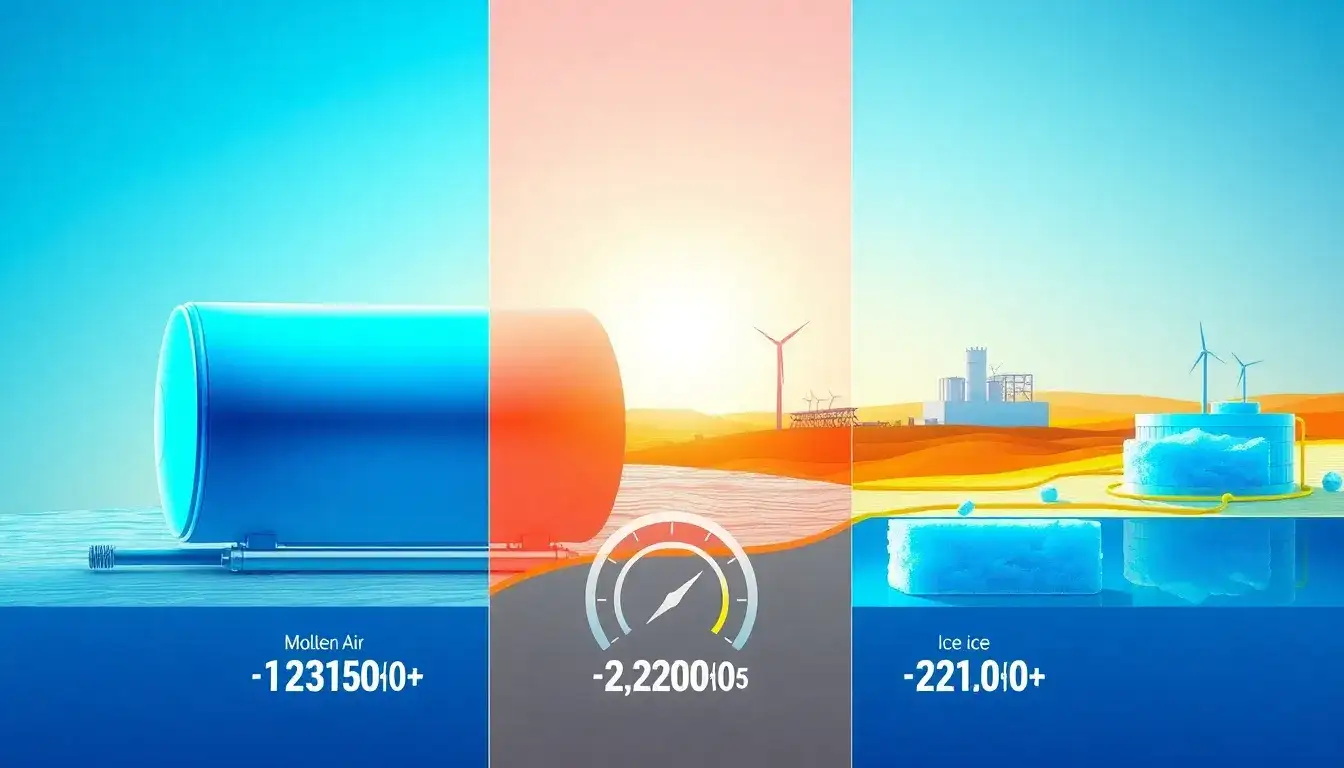
Liquid air energy storage (LAES) is a novel approach to thermal energy storage that has several advantages and efficiencies compared to other technologies. Here’s a comparison with some key points:
Efficiency of LAES
- Round-Trip Efficiency: Standalone LAES systems can achieve an efficiency of up to 57%. Improvements in efficiency are crucial for enhancing economic benefits and widening its applications.
- Thermal Efficiency Enhancement: LAES systems can utilize low-grade waste heat to improve thermal efficiency, which is beneficial in environments with available waste heat sources.
Comparison with Other Technologies
- Liquid Air vs. Lithium-Ion Batteries: The levelized cost of storage (LCOS) for LAES is significantly lower than that of lithium-ion batteries—about one-third. However, lithium-ion batteries generally have higher round-trip efficiencies compared to LAES.
- Liquid Air vs. Pumped Hydro: While pumped hydro is a mature and efficient technology, its geographical limitations make LAES a more versatile option. The LCOS of LAES is about half that of pumped hydro.
- Liquid Air vs. Other Thermal Storage: LAES offers unique benefits by converting low-grade waste heat into usable power, enhancing its overall energy efficiency compared to some traditional thermal storage methods.
Innovative Systems
- Advanced LAES Systems: New concepts like the oxy-fuel combustion method can significantly improve power output and efficiency, providing additional benefits such as CO2 capture and sale of by-products like nitrogen.
Overall, while LAES may not offer the highest round-trip efficiency compared to some technologies like lithium-ion batteries, its potential for low cost, versatility, and ability to utilize waste heat make it an attractive option for grid-scale energy storage.
Original article by NenPower, If reposted, please credit the source: https://nenpower.com/blog/how-does-the-efficiency-of-liquid-air-energy-storage-laes-compare-to-other-thermal-energy-storage-technologies/

