

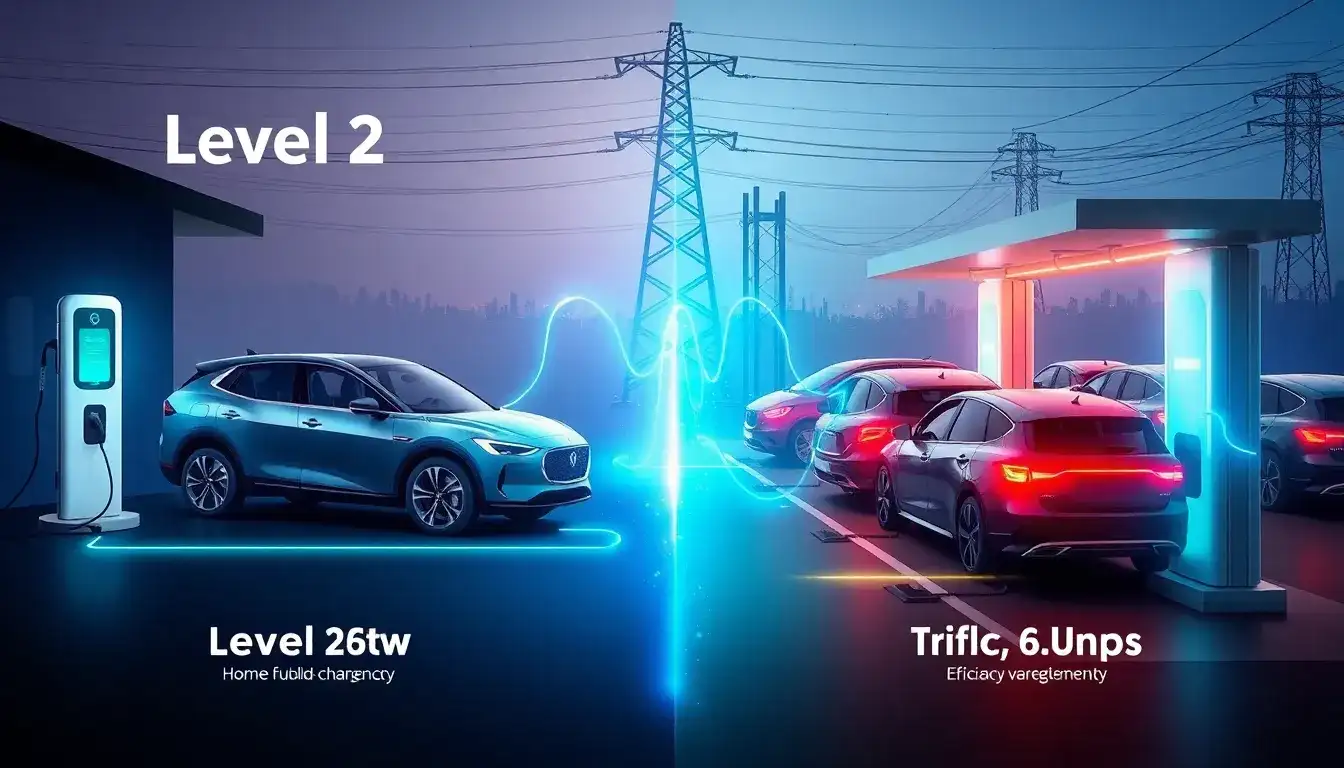
Level 2 chargers are generally quite efficient, with efficiency rates typically ranging from about 83% to over 94% depending on the charger and conditions. Studies have found average Level 2 charging efficiencies around 89-90%, which means a high percentage of the energy drawn from the grid actually reaches the vehicle battery. In comparison to Level 1 chargers, which average around 80-84% efficiency, Level 2 chargers offer about 10% greater efficiency on average.
When comparing Level 2 chargers to public charging stations, it is important to distinguish the type of public charger. Public chargers usually include both Level 2 AC chargers and DC fast chargers.
- Public Level 2 chargers have efficiencies similar to home Level 2 chargers, typically above 90%, due to similar technology and power levels.
- DC Fast Chargers (commonly found at public charging stations) generally achieve high efficiencies as well, often above 90%, and sometimes up to around 93% depending on temperature and charger power rating. DC fast chargers bypass the vehicle’s onboard AC charger, which can improve efficiency by reducing conversion losses.
Thus, the efficiency of Level 2 chargers at home or public Level 2 stations is broadly comparable, typically around 90%. DC fast charging stations at public locations frequently achieve slightly higher efficiencies than Level 2 chargers because they bypass the onboard charger and operate at higher power.
In summary:
| Charger Type | Typical Efficiency Range |
|---|---|
| Level 1 (home) | ~80-84% |
| Level 2 (home/public) | ~83-94%, average ~89-90% |
| DC Fast Chargers (public) | ~85-93%, often >90% |
Therefore, Level 2 chargers are quite efficient and comparable in efficiency to public Level 2 chargers, while public DC fast chargers can be marginally more efficient due to their design.
Original article by NenPower, If reposted, please credit the source: https://nenpower.com/blog/how-does-the-efficiency-of-level-2-chargers-compare-to-public-charging-stations/

