

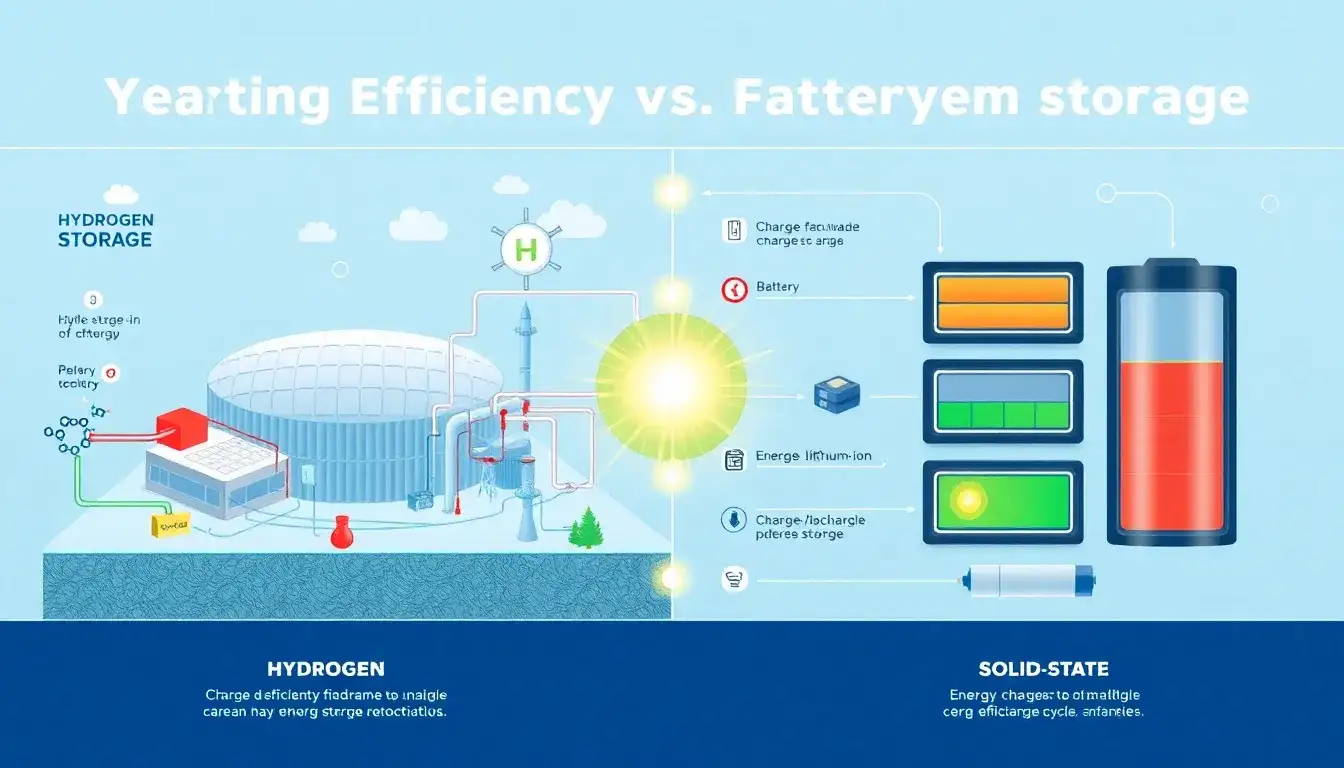
Hydrogen Storage Efficiency:
- Typical round-trip efficiency for hydrogen storage, when using electrolysis to produce hydrogen and fuel cells to convert it back to electricity, is about 40% to 50%.
- This relatively low efficiency is due to energy losses during hydrogen production, compression or liquefaction, storage, and conversion back to electricity.
- Recent advancements in hydrogen storage materials, such as nanoporous magnesium borohydride structures, have improved hydrogen storage density and capacity significantly but do not directly impact round-trip energy efficiency.
Battery Storage Efficiency:
- In contrast, battery storage systems, such as lithium-ion batteries, exhibit much higher round-trip efficiencies of around 75% to 80%.
- This higher efficiency is due to fewer energy conversions and less energy loss during charging and discharging compared to hydrogen.
Summary Comparison:
| Storage Type | Round-Trip Efficiency | Notes |
|---|---|---|
| Hydrogen Storage | ~40–50% | Energy intensive processes; recent material advances increase capacity, not efficiency |
| Battery Storage | ~75–80% | Higher efficiency due to direct electrical storage and retrieval |
In conclusion, battery storage systems currently offer significantly higher round-trip efficiency than hydrogen storage systems, making batteries more efficient for many grid and portable energy storage applications. Hydrogen’s advantage lies in its potential for large-scale, long-duration storage despite its lower energy efficiency.
Original article by NenPower, If reposted, please credit the source: https://nenpower.com/blog/how-does-the-efficiency-of-hydrogen-storage-compare-to-battery-storage/

