

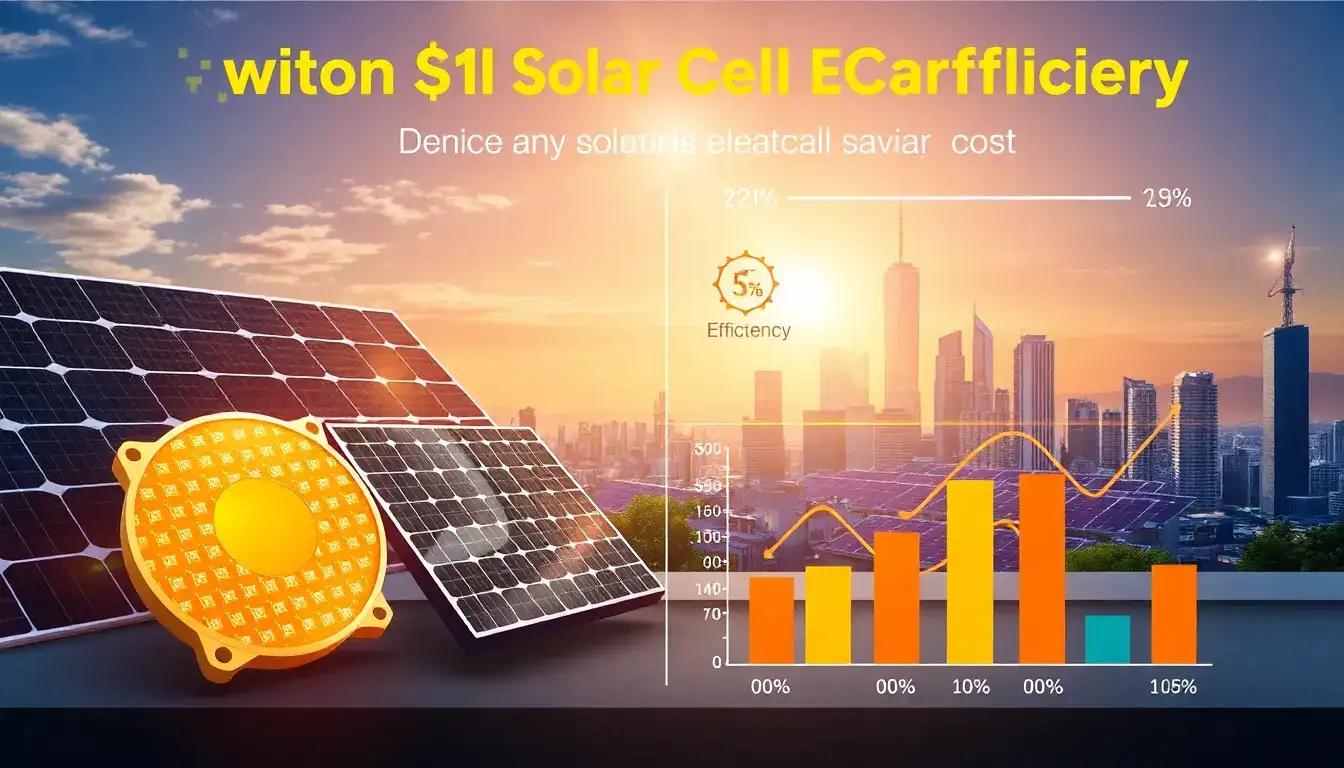
The efficiency of hybrid solar batteries significantly impacts their overall cost by influencing how much usable energy can be stored and subsequently delivered from the system, thereby affecting both system sizing and economic value.
Efficiency and Its Impact on Cost
- Energy Conversion Efficiency: Hybrid solar battery systems typically have an overall efficiency of about 75% to 80%. This means that from the energy initially captured by the solar panels and sent through the charger, battery, and inverter, only roughly 75-80% ends up available for use in the home or business. Losses occur due to charging/discharging inefficiencies, inverter conversion losses, and battery storage characteristics.
- Cost Implications: Because some energy is lost in storage and conversion, to meet a specific energy demand, a system must be sized larger than the actual consumption requirement. This directly increases the cost of the hybrid solar system because more battery capacity and potentially larger inverters are needed to compensate for inefficiency.
- System Sizing Based on Efficiency: For example, if a household needs 10 kW of usable solar power, due to efficiency losses, the system might need to be sized for more than 10 kW in capacity to ensure that after losses, the needed 10 kW is reliably available. Larger capacity translates into higher upfront equipment and installation costs.
- Economic Balance: Higher efficiency batteries and inverters often come at a premium cost due to advanced technology and materials. While this increases the initial cost, better efficiency reduces energy loss and can improve savings over time, making the overall investment more cost-effective. Conversely, less efficient systems may have lower upfront costs but yield higher losses and operational costs over the system lifetime.
Summary Table
| Aspect | Impact of Efficiency | Cost Effect |
|---|---|---|
| Battery and inverter efficiency | 75-80% typical system efficiency | Lower efficiency requires larger capacity, increasing cost |
| Energy losses | Energy loss during storage and conversion | More energy input required for same usable output, raising costs |
| System sizing | Larger systems needed to compensate inefficiency | Higher upfront equipment and installation expenses |
| Technology quality | Higher efficiency often correlates with higher cost | Better value long-term despite greater initial investment |
Conclusion
Hybrid solar battery efficiency plays a central role in determining the overall cost of the system. Lower efficiency means more capacity and higher costs to meet energy needs, while higher efficiency can reduce size and operational losses but usually comes with a higher upfront price. Finding the right balance between efficiency and cost is key to optimizing hybrid solar battery investments.
Original article by NenPower, If reposted, please credit the source: https://nenpower.com/blog/how-does-the-efficiency-of-hybrid-solar-batteries-impact-their-overall-cost/

