

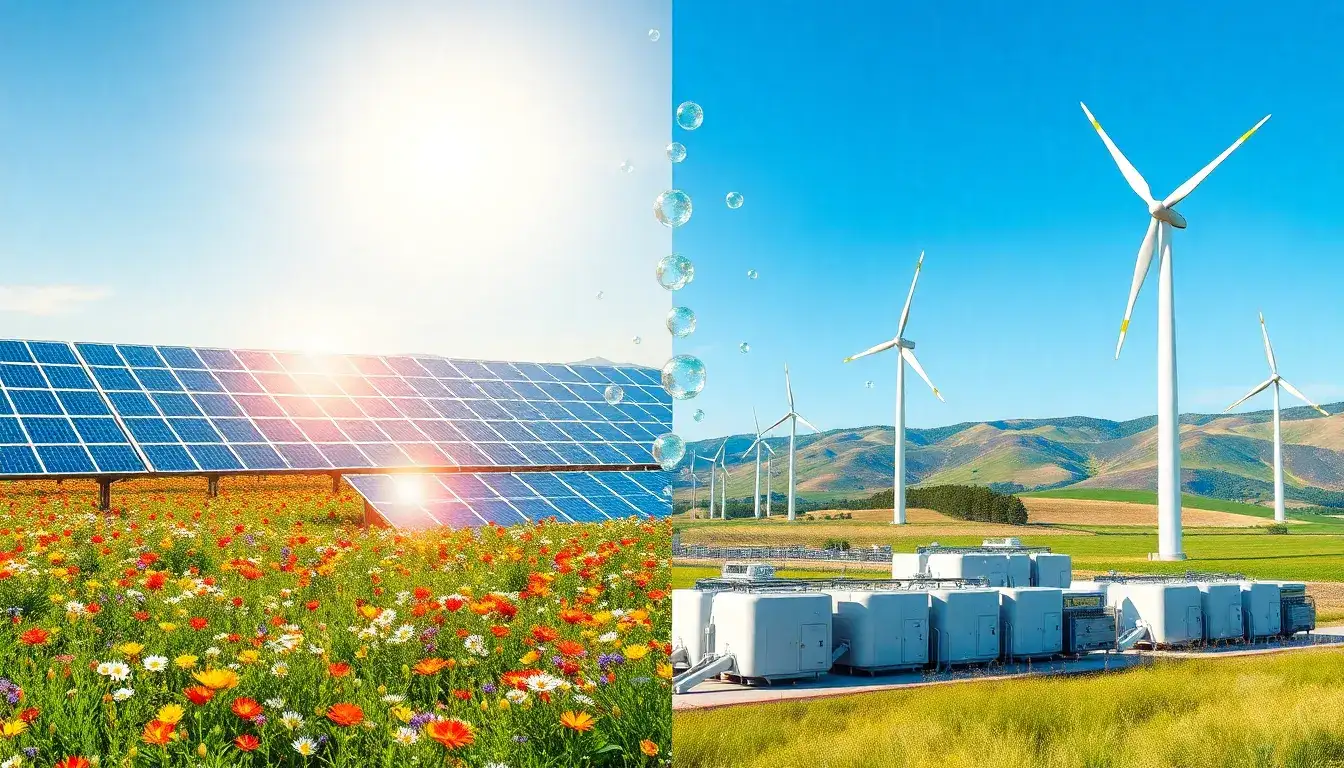
The efficiency of green hydrogen production varies between solar and wind energy mainly due to the different characteristics of these energy sources and their integration with electrolysis technologies.
Efficiency Comparison
Solar Energy-Based Hydrogen Production:
- Solar photovoltaic (PV) systems convert sunlight directly into electricity with relatively high efficiency.
- Studies have shown solar-to-hydrogen efficiency can be higher in certain setups—for example, one study highlighted about 14% greater efficiency in solar-driven hydrogen production scenarios compared to other uses.
- However, solar energy availability is limited to daylight hours and affected by weather, which can reduce overall operational efficiency unless paired with energy storage or hybrid systems.
Wind Energy-Based Hydrogen Production:
- Wind turbines convert kinetic energy from wind into electricity, which then powers electrolysis.
- Wind energy can be more consistent over day/night cycles, though it also fluctuates due to weather conditions.
- Wind-driven hydrogen production tends to have a slightly lower instantaneous conversion efficiency compared to solar PV, but wind can provide more continuous power, which benefits electrolyzer operation and hydrogen output stability.
Hybrid and Integrated Systems
- Hybrid systems combining solar PV and onshore wind turbines are considered promising for improving green hydrogen production efficiency and cost-effectiveness. They mitigate variability and enhance capacity utilization of electrolyzers.
- The variability of both solar and wind poses challenges; integrating them with storage or other energy sources can optimize hydrogen production efficiency and economics.
Summary Table
| Aspect | Solar Energy | Wind Energy |
|---|---|---|
| Energy Conversion Efficiency | Higher instant solar-to-hydrogen efficiency (~14% better in some studies) | Slightly lower instantaneous efficiency |
| Energy Availability | Limited to daylight, weather-dependent | More continuous, but weather-dependent |
| Variability Management | Requires storage or hybrid integration | Can be more stable but benefits from hybrid solutions |
| Cost-effectiveness Potential | Improved with hybrid systems and storage | Improved with hybrid systems and storage |
Overall Assessment
- Solar energy offers higher peak efficiency in converting sunlight to hydrogen due to efficient PV and electrolyzer coupling.
- Wind energy provides more continuous and stable power input, which can lead to better utilization of electrolyzers over time.
- Combining solar and wind in hybrid systems is typically the best approach to maximize green hydrogen production efficiency and economic viability.
Thus, neither source is universally superior; the choice depends on local resource availability, system design, and integration strategies. Hybrid solar and wind systems tend to outperform single-source systems in efficiency and cost-effectiveness for green hydrogen production.
Original article by NenPower, If reposted, please credit the source: https://nenpower.com/blog/how-does-the-efficiency-of-green-hydrogen-production-compare-between-solar-and-wind-energy/

