

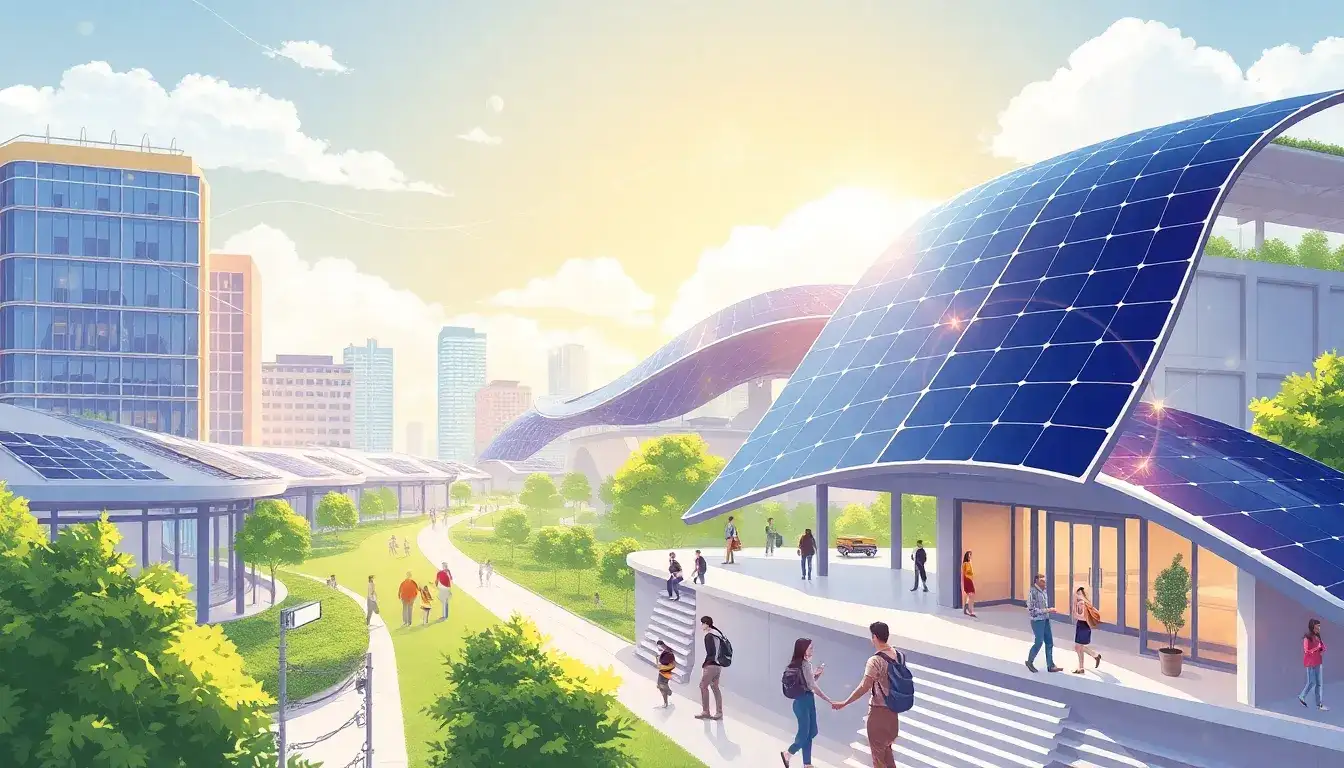
The efficiency of flexible solar panels is a key factor that significantly impacts their overall performance, influencing power output, suitability for various applications, cost-effectiveness, durability, and lifespan.
Efficiency and Its Impact on Performance
- Lower Efficiency Compared to Rigid Panels: Flexible solar panels typically have an efficiency range of about 10% to 20%, often around 15-18%, whereas rigid traditional panels commonly achieve 20-25% efficiency under ideal conditions. This means flexible panels convert less sunlight into electricity per unit area.
- Effect on Power Output: Due to their lower efficiency, flexible panels generate less power compared to rigid panels of the same size. Flexible panels generally provide low-wattage outputs, typically from 50 to 300 watts, making them suitable for small-scale, portable, or low-energy applications like RVs, boats, or camping equipment but not ideal for whole-home energy systems.
- Need for More Surface Area: To match the power output of rigid panels, flexible panels require more surface area, which can sometimes limit their use if space is constrained.
Trade-offs Due to Efficiency
- Cost vs. Efficiency: Flexible solar panels, while often more expensive per watt due to the specialized materials and manufacturing processes, sacrifice efficiency for flexibility and lightweight design. Higher efficiency flexible panels tend to be costlier.
- Lifespan and Durability: Lower efficiency is correlated with shorter lifespan; flexible panels typically last 5 to 15 years, whereas rigid panels commonly last 25 years or more. The materials enabling flexibility are more prone to degradation from environmental exposure (UV, heat, moisture), issues that also reduce panel efficiency over time. Moreover, flexible panels are more vulnerable to physical damage, which can further reduce their effective efficiency and operational lifespan.
Innovations Improving Efficiency
- Recent advances in flexible solar cell technology, such as new fabrication techniques for perovskite-based flexible cells, have boosted efficiencies to over 24-25%, approaching rigid panel efficiencies. These innovations also improve durability and stability under bending and environmental stresses, suggesting the efficiency-performance gap may narrow in the near future.
Overall Impact on Use and Performance
- Performance Suitability: The relatively lower efficiency limits flexible solar panels mainly to portable, curved-surface, and lightweight applications where traditional panels cannot be easily used. They are less reliable for powering large household loads due to their limited power output and shorter lifespan.
- Energy Cost and Yield: Lower efficiency means higher installation costs per watt and potentially more panels needed, affecting the return on investment and economic viability for high-demand users.
In summary, the efficiency of flexible solar panels directly limits their power generation capability and impacts their durability and lifespan, confining their optimal use to niche applications where flexibility, weight, and form factor are prioritized over power output. However, emerging technologies are improving efficiencies, which may enhance their overall performance and broaden practical applications in the future.
Original article by NenPower, If reposted, please credit the source: https://nenpower.com/blog/how-does-the-efficiency-of-flexible-solar-panels-impact-their-overall-performance/

