

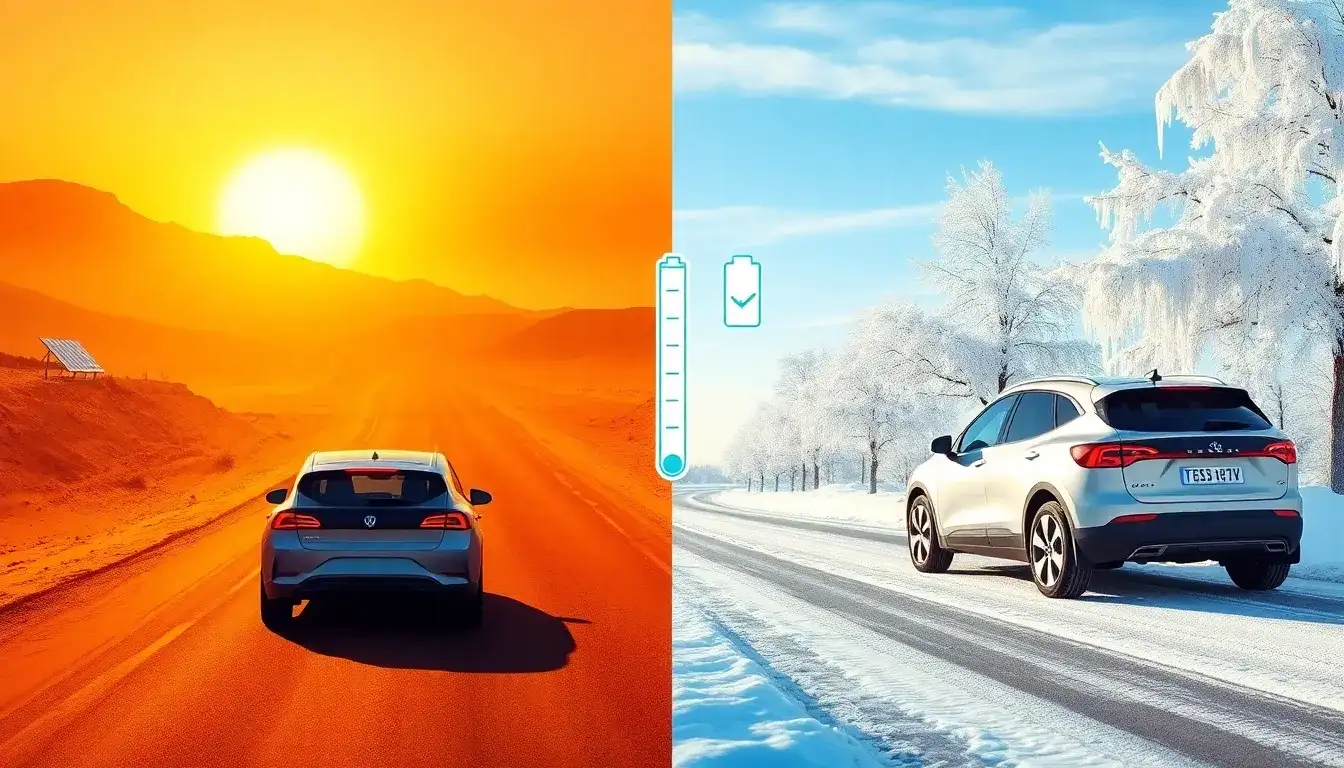
Electric vehicle (EV) efficiency varies notably between hot and cold regions, impacting the vehicle’s driving range due to factors related to battery performance and climate control energy use.
Efficiency Differences in Hot vs. Cold Regions
- Optimal Temperature for EV Efficiency:
EVs achieve their highest efficiency and range at moderate temperatures around 68–70°F (20–22°C), often exceeding their rated range by about 15% under these conditions. This sweet spot coincides with ambient temperatures where neither heating nor excessive cooling is needed, and battery chemistry operates optimally. - Cold Regions:
Cold temperatures have a more severe impact on EV efficiency compared to hot temperatures. At very low temperatures (e.g., 5°F or -15°C), EV range can drop to approximately 50–54% of the rated range. For example, a vehicle rated for 250 miles might only achieve about 135 miles under such cold conditions. This significant range loss is primarily due to reduced battery efficiency in the cold and the additional energy required to heat the cabin and battery packs. - Hot Regions:
High temperatures also reduce EV range, but the impact is generally less severe compared to cold weather. As temperatures rise above the optimal range, range decreases, but most climates rarely exceed 122°F (50°C), so real-world losses tend to be less dramatic than in freezing conditions. Energy consumption goes up due to air conditioning use and battery thermal management to avoid overheating. - Speed and Temperature Interaction:
Temperature influences the optimal driving speed for maximum efficiency. For example, at 68°F, a small sedan’s efficiency peaks at slower speeds (~16 mph), but for practical purposes, efficiency at moderate speeds (25 mph or higher) is considered. At freezing temperatures, optimal speeds for efficiency increase slightly but remain low due to greater drag and energy demands from heating.
Summary Table
| Condition | Typical Range Impact | Main Causes | Notes |
|---|---|---|---|
| Optimal (68-70°F) | +15% above rated range | Battery optimal performance, minimal HVAC use | Highest efficiency sweet spot |
| Cold (~5°F/-15°C) | ~50-54% of rated range (up to 50% drop) | Battery inefficiency, heating cabin & battery | Largest negative impact on range |
| Hot (>85°F/30°C) | Moderate range reduction | AC use, battery cooling demand | Less impact than cold, rarely extreme losses |
In conclusion, EVs are most efficient and achieve their greatest range in moderate, temperate climates. Cold regions cause a more pronounced reduction in EV range compared to hot regions, primarily due to battery chemistry and thermal management challenges that increase energy consumption in cold weather. Hot weather reduces range as well but to a lesser extent in typical climate conditions.
Original article by NenPower, If reposted, please credit the source: https://nenpower.com/blog/how-does-the-efficiency-of-evs-compare-between-hot-and-cold-regions/

