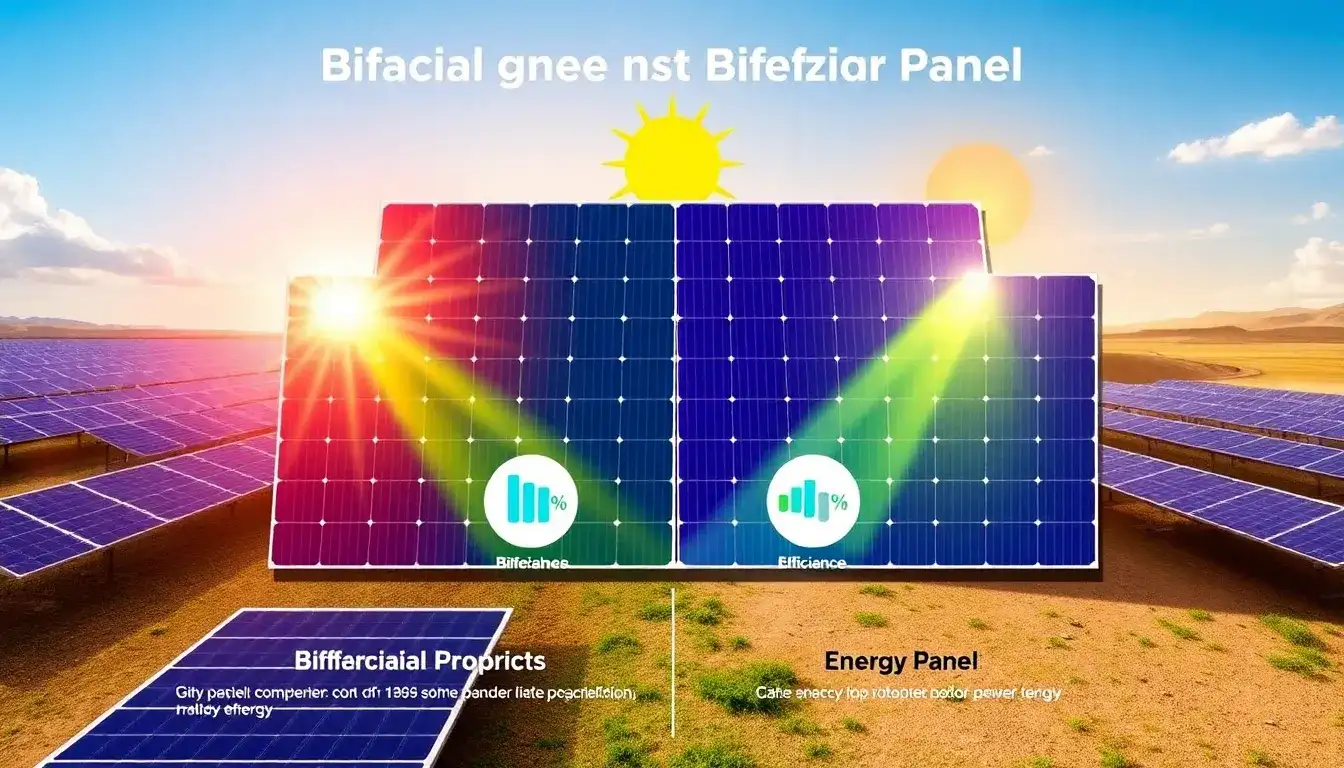
Bifacial solar panels are generally more efficient than monofacial panels because they can generate electricity from both their front and rear sides. This allows bifacial panels to capture additional reflected sunlight from the ground and nearby surfaces, increasing their overall energy output. The efficiency gain for bifacial panels typically ranges around 11-12% higher than monofacial panels, depending on installation conditions and the reflectivity (albedo) of the surface beneath them.
In contrast, monofacial panels only absorb sunlight on their front surface, resulting in lower total energy generation compared to bifacial panels. However, monofacial panels are simpler, lighter, and often more cost-effective, working well without needing reflective surfaces underneath.
In summary, bifacial panels offer improved efficiency and durability and perform especially well in environments with highly reflective surfaces such as snow or sand. Monofacial panels remain a reliable and less expensive option for many standard installations but do not match the energy yield potential of bifacial technology.
Original article by NenPower, If reposted, please credit the source: https://nenpower.com/blog/how-does-the-efficiency-of-bifacial-panels-compare-to-monofacial-panels/