

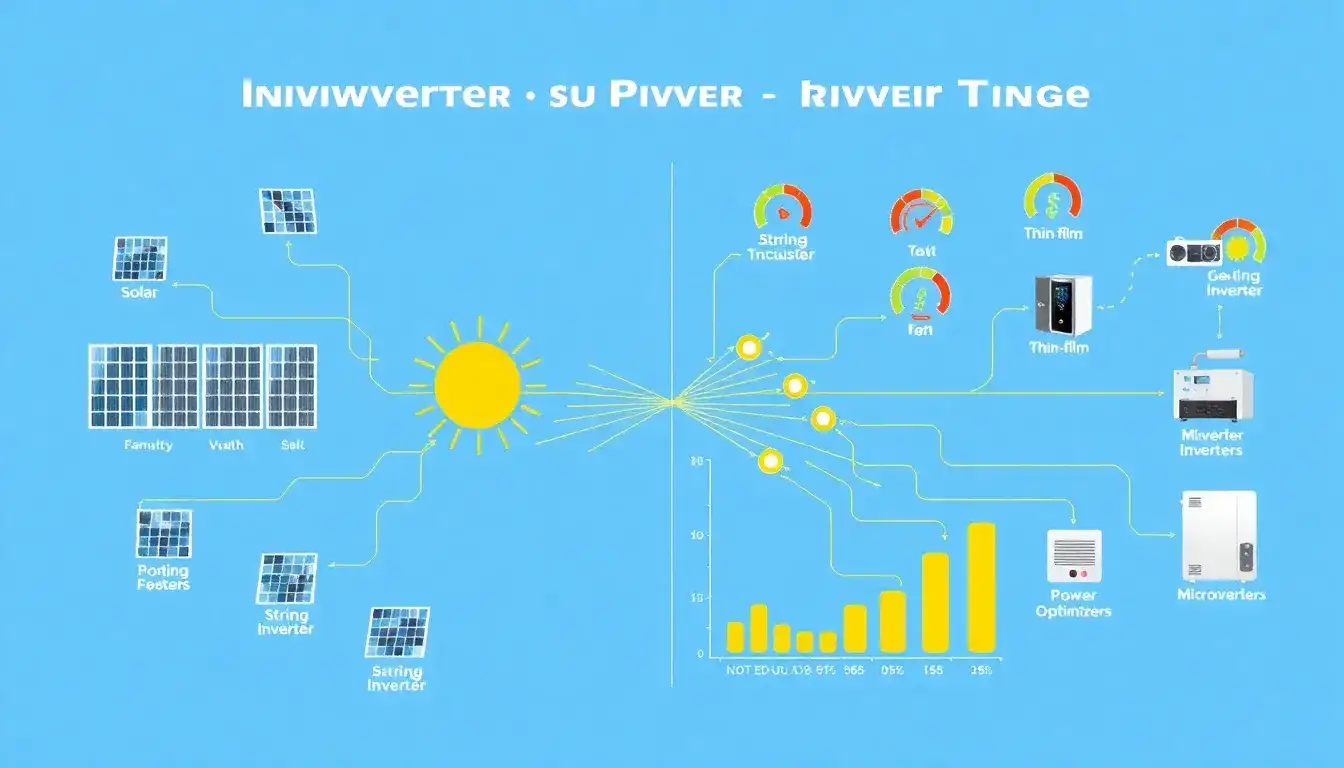
The efficiency of a solar inverter
—that is, how well it converts the DC electricity generated by solar panels into usable AC power—can vary depending on the type and characteristics of the solar panels it is paired with. Here is a detailed explanation of how different types of solar panels affect inverter efficiency:
Key Factors Influencing Inverter Efficiency with Different Solar Panels
1. Matching Solar Panel Output to Inverter Input Range
- An inverter operates most efficiently when the DC power input from the solar panels falls within its optimal operational window. If the input voltage or power is too low or too high relative to the inverter’s design, efficiency drops. Different solar panels produce varying voltage and current levels based on their technology, size, and configuration, which affects how well the inverter can operate near its peak efficiency.
- For example, crystalline silicon panels generally have a higher voltage and more stable output compared to thin-film panels, allowing the inverter to function closer to its optimal input window and maintaining higher efficiency.
2. Inverter Sizing Relative to Panel Array Size (DC:AC Ratio)
- The ratio between the total wattage of solar panels (DC side) and the inverter’s rated capacity (AC side) impacts efficiency. Panels with higher wattage or more output than the inverter rating lead to clipping (power being capped by the inverter), which can lower effective efficiency during peak sun hours.
- Slightly oversizing panel capacity relative to inverter size (e.g., 1.2x to 1.33x) can increase overall system efficiency over the day by providing more power during low irradiance times, despite some clipping at peak times.
3. Panel Voltage and Current Characteristics
- The inverter efficiency depends on the voltage and current of the DC input. Panels that produce voltage and current levels well matched to the inverter’s MPPT (Maximum Power Point Tracking) range maintain better efficiency. Poor matches cause the inverter’s MPPT to work less optimally, reducing conversion efficiency.
4. Effect of Panel Technology Type
- Mono- and polycrystalline silicon panels usually have higher efficiency and produce more consistent power output, which generally leads to better inverter efficiency because the inverter operates more often near its optimal point.
- Thin-film panels produce lower voltages and may have a wider voltage variation, potentially causing the inverter to operate less efficiently if not designed to accommodate these variations.
5. Shade and Panel-Level Variations
- Shading or mismatched panels can cause fluctuations in the power input, affecting inverter efficiency especially with string inverters. Microinverters or power optimizers associated with individual panels can improve overall system efficiency by optimizing conversion panel-by-panel, reducing losses from panel mismatches.
Typical Efficiency Ranges and Influences
- Modern high-quality string inverters typically achieve peak efficiencies between 90% to 98%, depending on the load and operating conditions.
- Efficiency varies with load; at low power output, inverter efficiency decreases due to fixed standby losses. When paired with panels that frequently operate at lower power (due to shading, angle, or technology), efficiency can drop accordingly.
- Microinverters and power optimizers can raise effective efficiency by enabling maximum power extraction from each panel, especially when panels differ in output or shading occurs.
Summary Table: How Panel Types Affect Inverter Efficiency
| Panel Type/Condition | Impact on Inverter Efficiency | Reason/Details |
|---|---|---|
| Mono/Polycrystalline | Higher inverter efficiency | Higher, stable voltage/power output matches inverter sweet spot |
| Thin-film panels | Potentially lower inverter efficiency | Lower voltage, more variation may reduce MPPT efficiency |
| Panels slightly oversizing inverter | Possible efficiency gain overall, some clipping during peak | Increased power during low irradiance; clipping at peaks |
| Shaded/mismatched panels | Lower string inverter efficiency, higher with microinverters | Power losses concentrated; microinverters optimize each panel |
| Long cable runs (voltage drop) | Reduced efficiency | Voltage drop reduces power reaching inverter input |
Conclusion
The efficiency of an inverter changes based on the type and arrangement of solar panels it is paired with mainly due to how well the DC output voltage and current from the panels match the inverter’s optimal input range. Highly efficient crystalline panels with stable output generally enable higher inverter efficiency while thin-film or heavily shaded panels can reduce it. Proper sizing of the inverter relative to panel wattage and use of microinverters or power optimizers can mitigate efficiency losses and improve overall system performance.
Original article by NenPower, If reposted, please credit the source: https://nenpower.com/blog/how-does-the-efficiency-of-an-inverter-change-with-different-types-of-solar-panels/

