

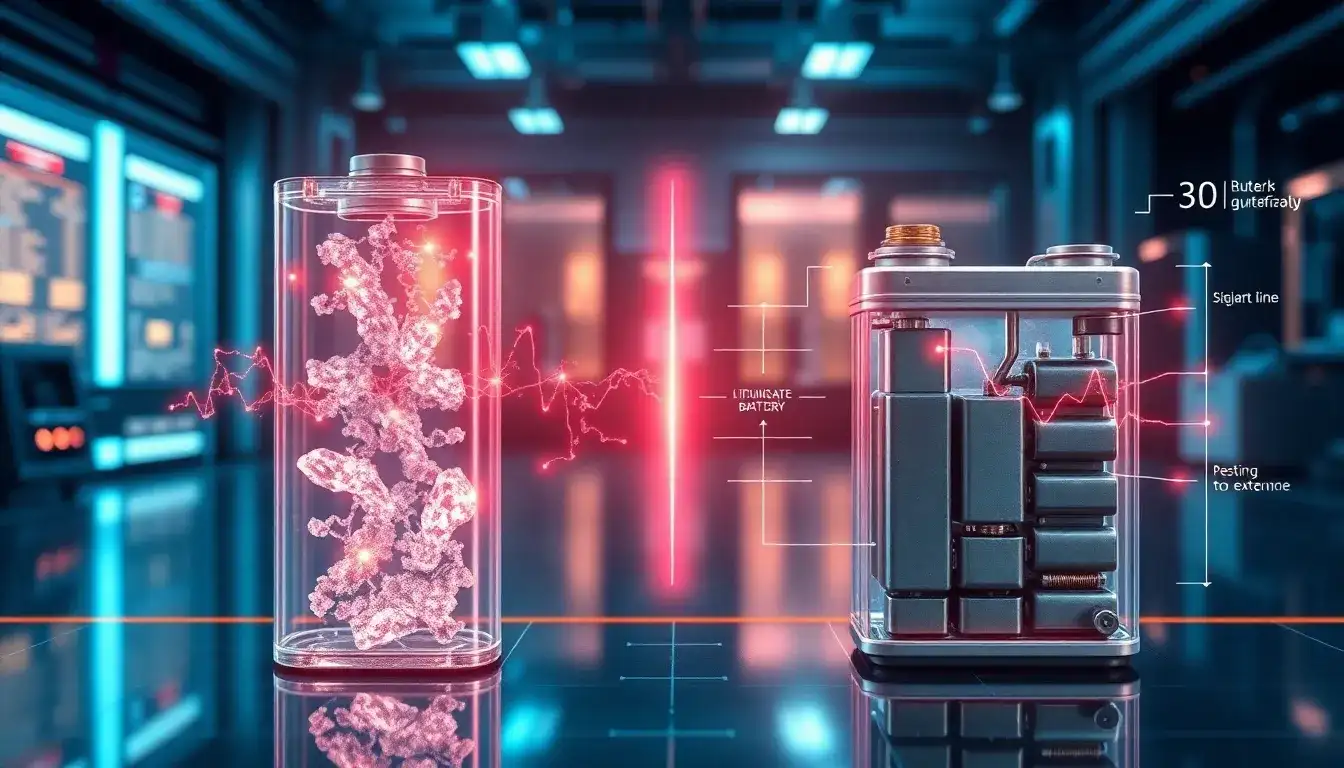
Solid-state batteries generally exhibit superior durability compared to lithium-ion batteries in several key areas:
- Charge Cycles:
- Lithium-Ion Batteries: Typically last for about 1,500 to 2,000 charge cycles.
- Solid-State Batteries: Can endure significantly more, ranging from estimates of 1,000 to 3,000 cycles under certain conditions, to as high as 8,000 to 10,000 cycles in more advanced designs.
- Lifespan:
- Lithium-Ion Batteries: Generally have a lifespan of around 8 to 15 years in electric vehicles.
- Solid-State Batteries: Some designs promise a lifespan of up to 20 years, thanks to their more stable solid electrolytes and resistance to degradation.
- Operational Stability:
- Lithium-Ion Batteries: Can be prone to thermal management issues and performance degradation in extreme temperatures.
- Solid-State Batteries: Offer improved performance in a wider range of temperatures, reducing the need for complex thermal management systems and improving overall safety and efficiency.
Overall, solid-state batteries are designed to be more durable and long-lasting, making them a promising alternative to traditional lithium-ion batteries for applications requiring high reliability and extended use.
Original article by NenPower, If reposted, please credit the source: https://nenpower.com/blog/how-does-the-durability-of-solid-state-batteries-compare-to-lithium-ion-batteries/

