

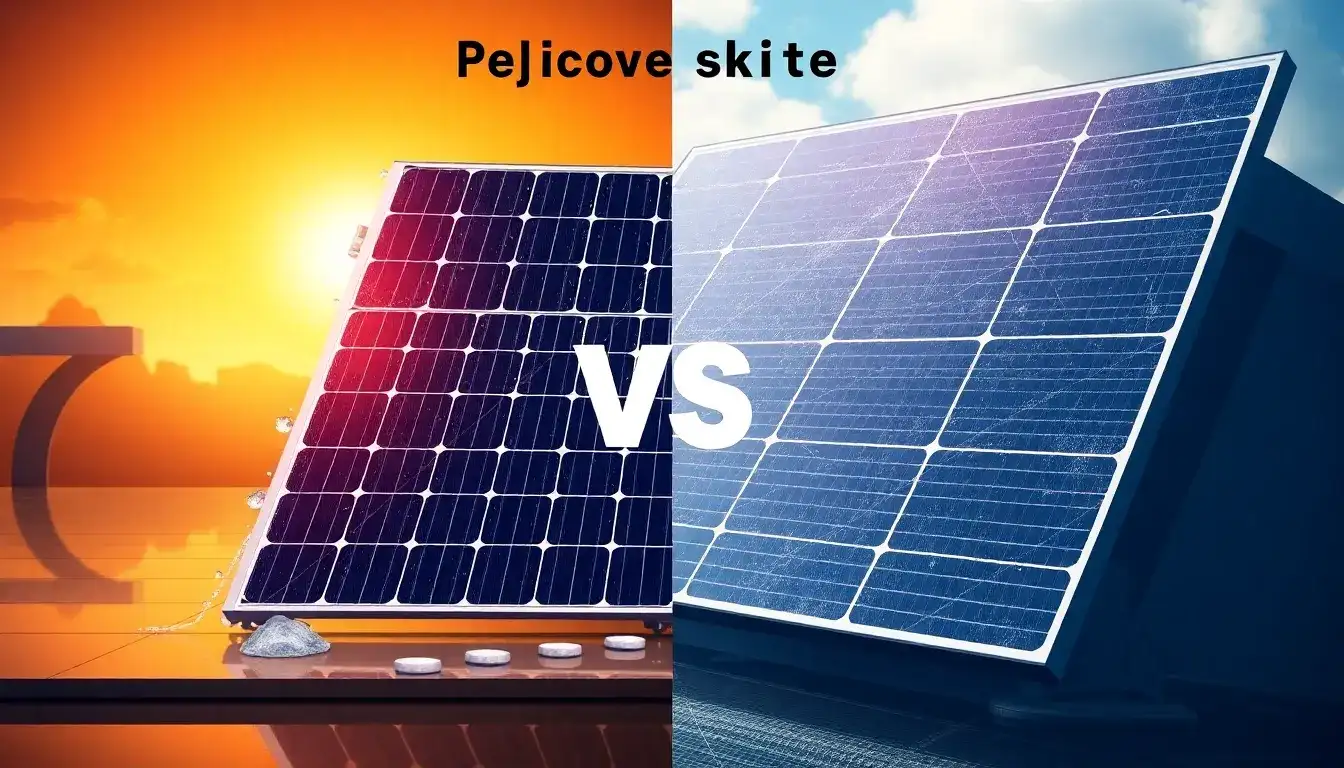
Perovskite solar panels currently have lower durability compared to traditional silicon solar panels due to their vulnerability to environmental factors such as heat, humidity, and UV light. These factors cause perovskite cells to degrade relatively quickly in outdoor conditions, which is a major limitation for their long-term use.
Traditional silicon solar panels, by contrast, are well-known for their robustness and long lifespan, often reliably operating for 25 years or more without significant efficiency loss. Perovskite cells historically have not met this durability benchmark.
However, recent research advances have significantly improved the durability of perovskite solar cells. For example, a new surface functionalization method involving a chemical called 5-ammonium valeric acid iodide (5-AVAI) enables the growth of a protective aluminum oxide layer that suppresses halide migration—a key cause of instability—by over an order of magnitude. This barrier helps perovskite cells retain about 90% of their initial power conversion efficiency after extended usage, bringing their stability closer to that of traditional panels.
Other innovations, such as using 2D crystal templates for improved structural stability, have also shown promise in enhancing both efficiency and longevity. There is ongoing research aimed at meeting the standard durability expectations of 25–30 years for solar panels while maintaining high efficiency in perovskite technology.
Summary Comparison
| Feature | Traditional Silicon Panels | Perovskite Solar Panels |
|---|---|---|
| Durability outdoors | High; often 25+ years lifespan | Historically low; rapid degradation in heat, humidity, UV exposure |
| Stability improvements | Mature technology, well-established | New methods (e.g., 5-AVAI surface functionalization) greatly improve stability and durability |
| Current lifespan outlook | 25+ years typical | Emerging research aims for 25–30 years durability, not yet fully commercialized |
| Efficiency | Moderate to high (~15–22%) | High efficiency with potential for improvement |
In essence, perovskite solar panels are rapidly closing the durability gap due to cutting-edge scientific advances, but traditional panels remain more durable under current commercial conditions.
Original article by NenPower, If reposted, please credit the source: https://nenpower.com/blog/how-does-the-durability-of-perovskite-solar-panels-compare-to-traditional-solar-panels/

